
Built-in elements session with Andrés Alfaro Hofmann
DATE
22.05.2026
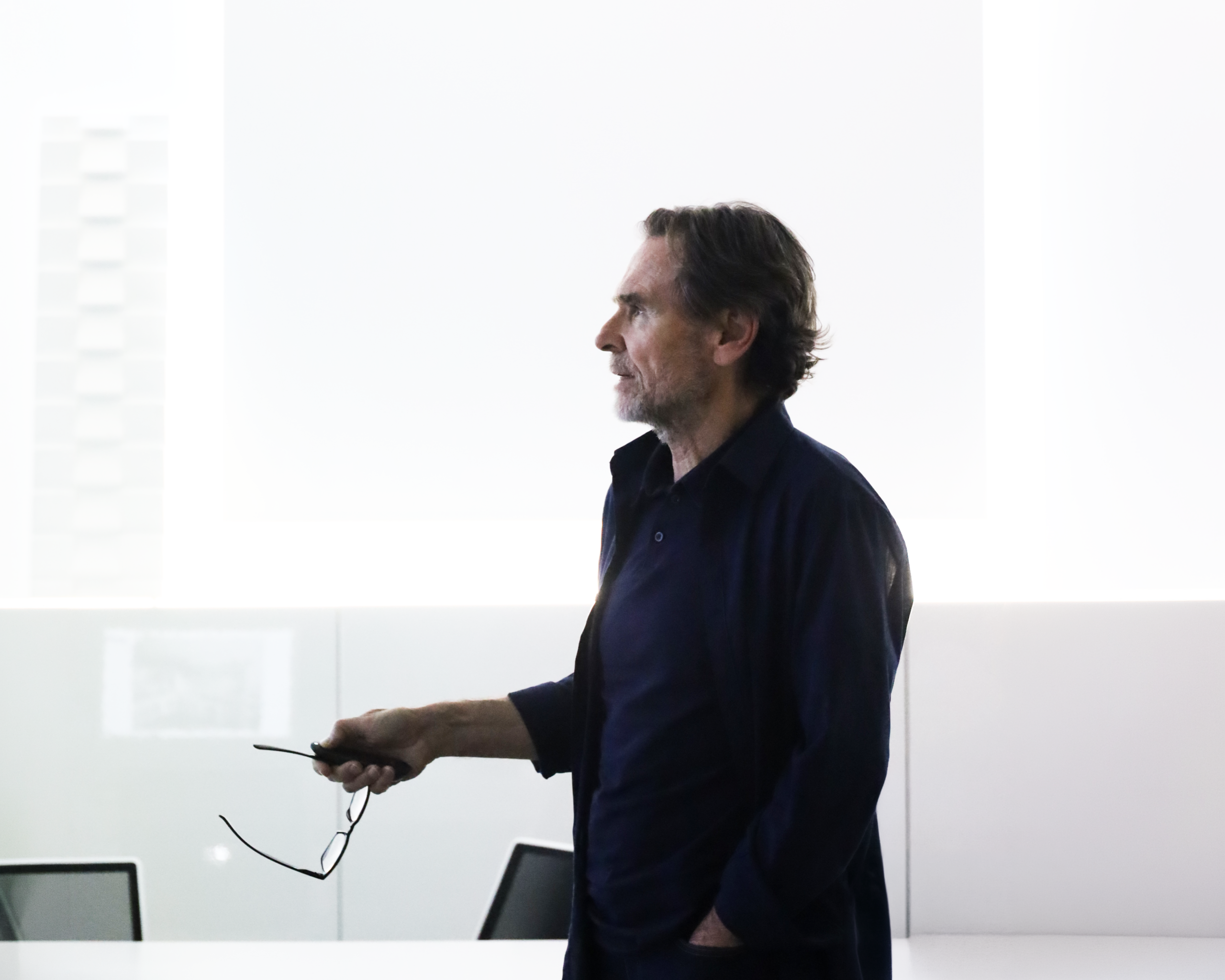
Andrés Alfaro Hofmann gave the Built-in elements session within the postgraduate program in Industrialized Architecture at MArch Valencia, speaking on the evolution of domestic space and its importance within the home. During the lecture, he thoroughly analyzed how the kitchen has transitioned from being a purely residual service area into the true driver that opened the doors to design and technological modernization in our homes. Through a historical and critical journey, he exposed how the optimization of this space has completely transformed the conception of contemporary housing.
The session granted fundamental prominence to the historical figures who laid the foundations of the modern kitchen from a functional and scientific perspective. Alfaro Hofmann broke down the contributions of North American pioneers such as Catherine Beecher, who as early as the 19th century proposed the first criteria for domestic organization and ergonomics. Likewise, the lecture examined the legacy of Christine Frederick and Lillian Gilbreth, whose research applied the principles of Taylorism and industrial efficiency to the home environment for the first time, aiming to reduce physical effort and unnecessary movements in daily tasks.
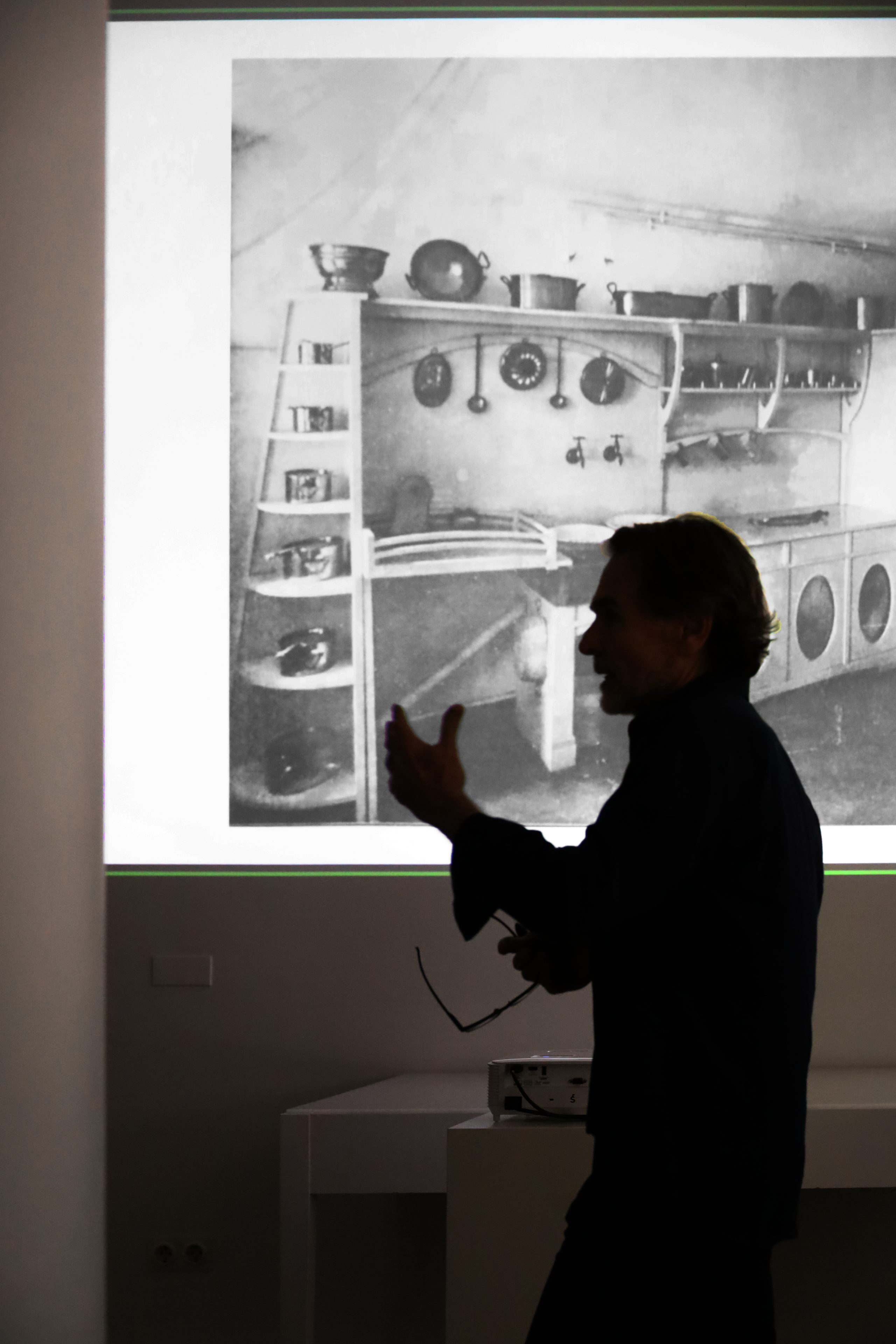
He also addressed the figure of Margarete Schütte-Lihotzky and her revolutionary “Frankfurt Kitchen” designed in 1926, analyzing this project as a foundational milestone in industrialized architecture by conceiving the kitchen as a prefabricated, standardized, and highly optimized module for the social housing of that era. Thanks to her work, it is possible to appreciate how the criteria of spatial economy and extreme functionality from the Bauhaus and the Modern Movement found their most radical and successful field of experimentation in kitchen design.
Beyond biographical analysis, the session relied on a carefully curated selection of visual and historical examples that allowed students to clearly and graphically grasp the different stages of this architectural metamorphosis. From the earliest fragmented spaces tied to open fire to today’s integrated and fluid solutions, Alfaro Hofmann showed how changes in social habits, the incorporation of household appliances, and new industrialized production systems have shaped the aesthetics and structure of these rooms over the decades.
This session within the Industrialized Architecture postgraduate course serves to provide students with a critical view of the design of fixed equipment in housing. Andrés Alfaro Hofmann’s lesson makes it clear that the kitchen is not an isolated element, but rather a laboratory for spatial innovation where sociology, technology, and architecture intersect. Understanding its historical evolution is essential for designing the homes of the future, where standardization and flexibility must align to improve the users’ quality of life.
MArch Valencia. Arquitectura y Diseño
© 2026 MArch Valencia. Arquitectura y Diseño
Privacy policy | Cookies policy | Terms of use