
Contemporary Architecture in Switzerland: Precision of Detail and Spatial Avant-garde
DATE
02.06.2026
Switzerland has established itself as one of the global epicenters of contemporary architecture thanks to a building tradition that combines millimeter-precise technical precision with a deep respect for the landscape and urban context. Far from indulging in empty spectacle, interventions in Swiss territory stand out for their formal restraint, their masterful use of materials, and an innate ability to dialogue with history or the surrounding nature. From the Alpine valleys to university campuses and urban centers, the country functions as a living laboratory where great international masters and prominent local studios continuously redefine the limits of space, light, and matter through iconic works that are already benchmarks of modernity.
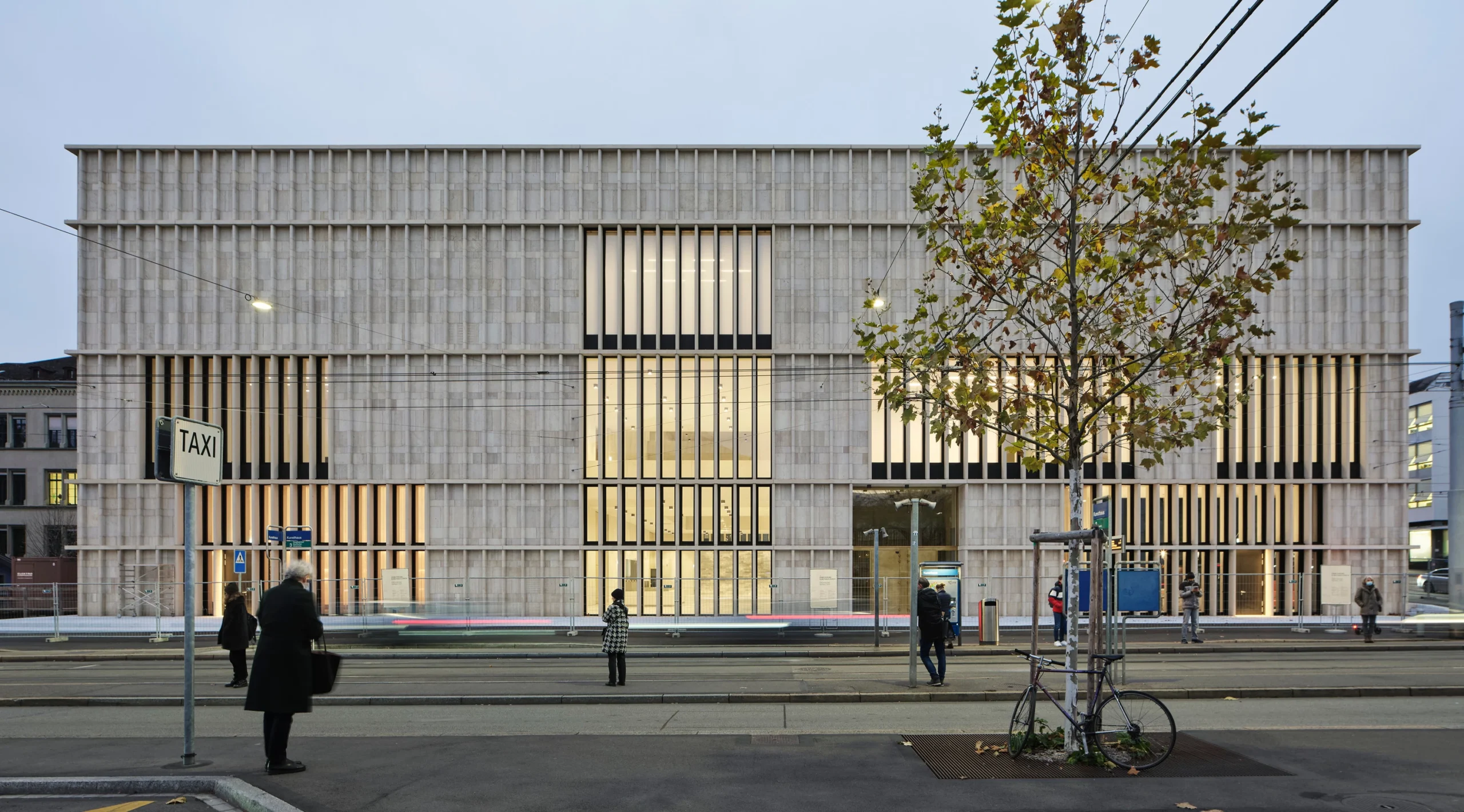
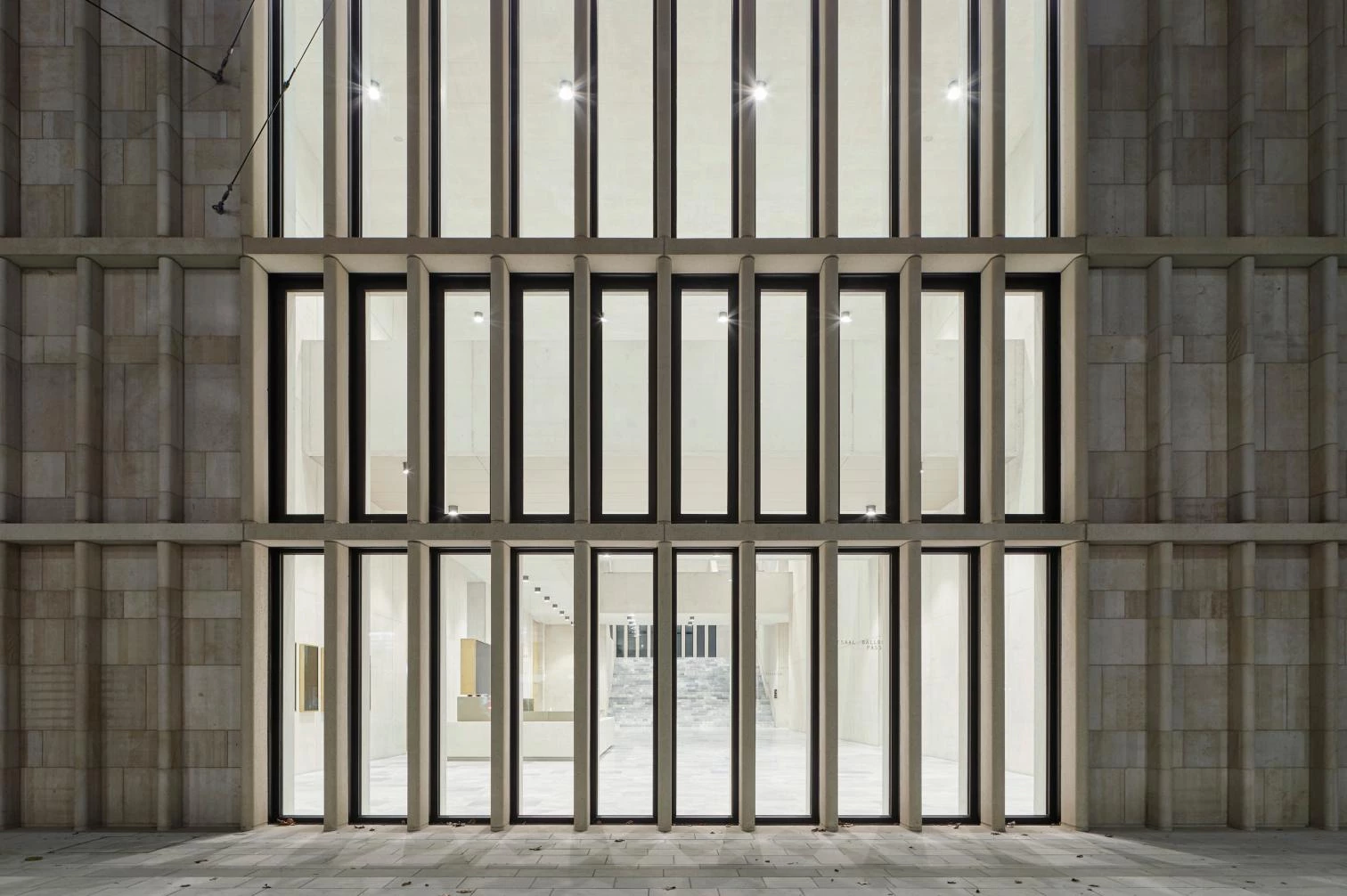
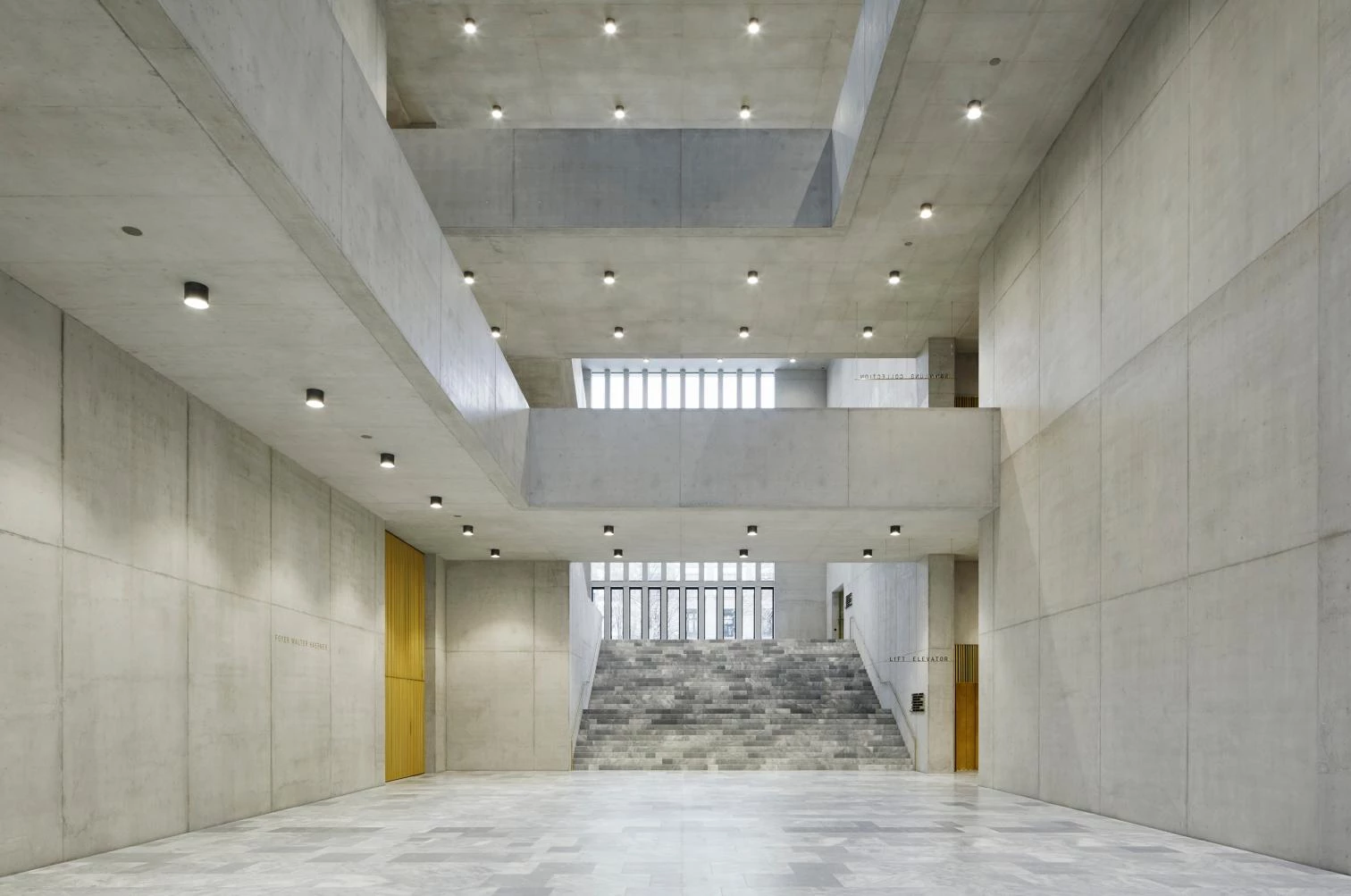
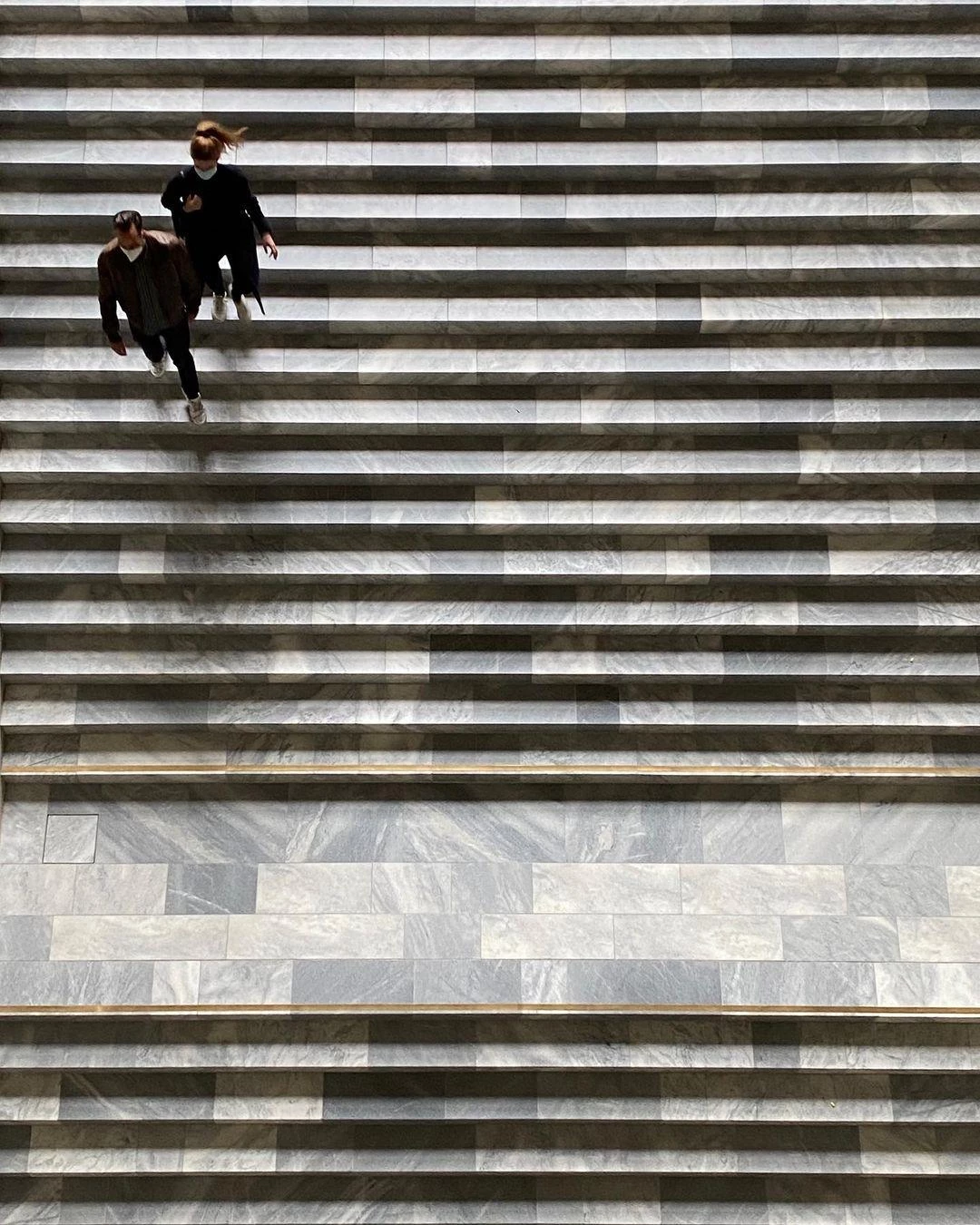
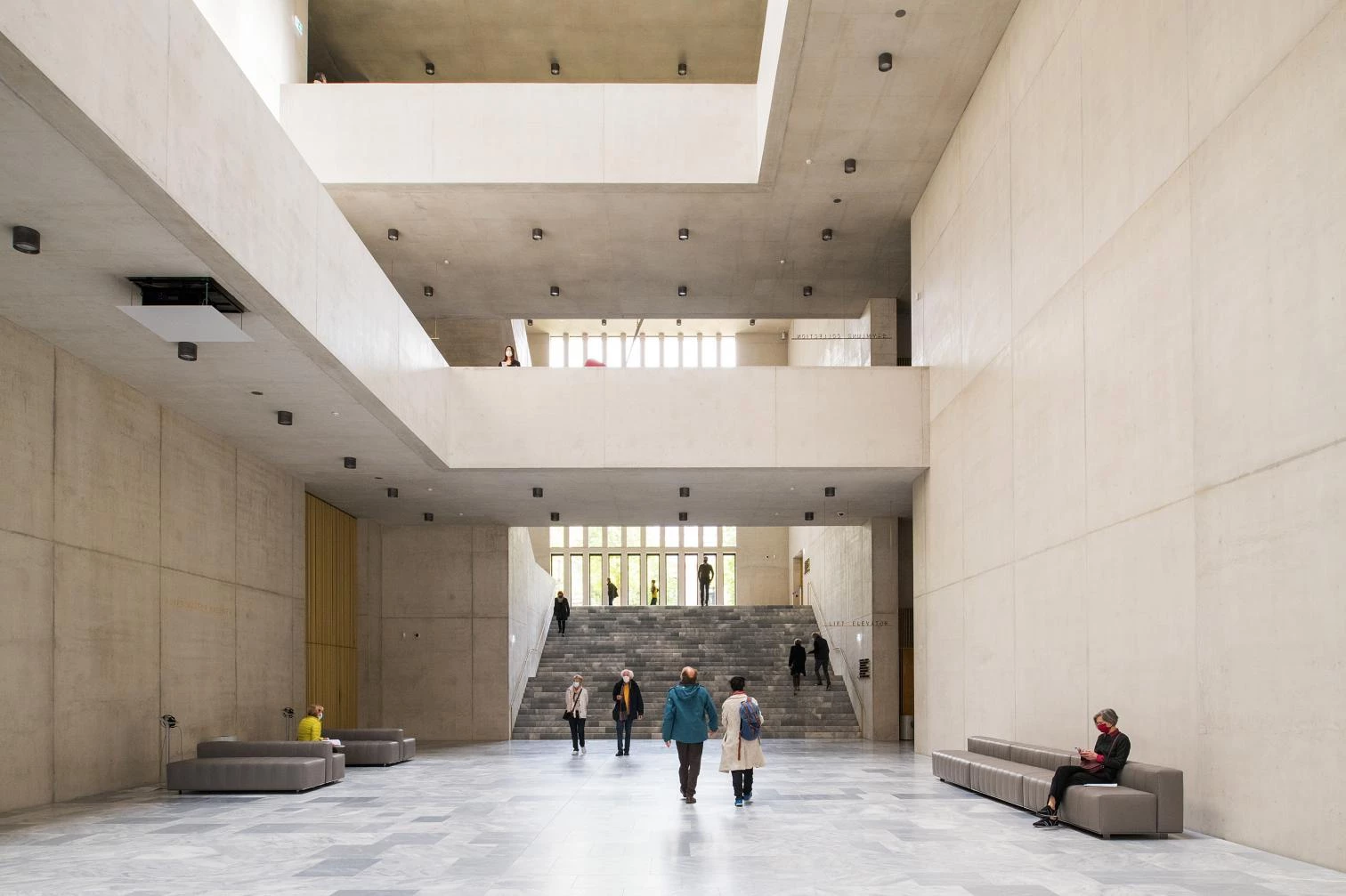
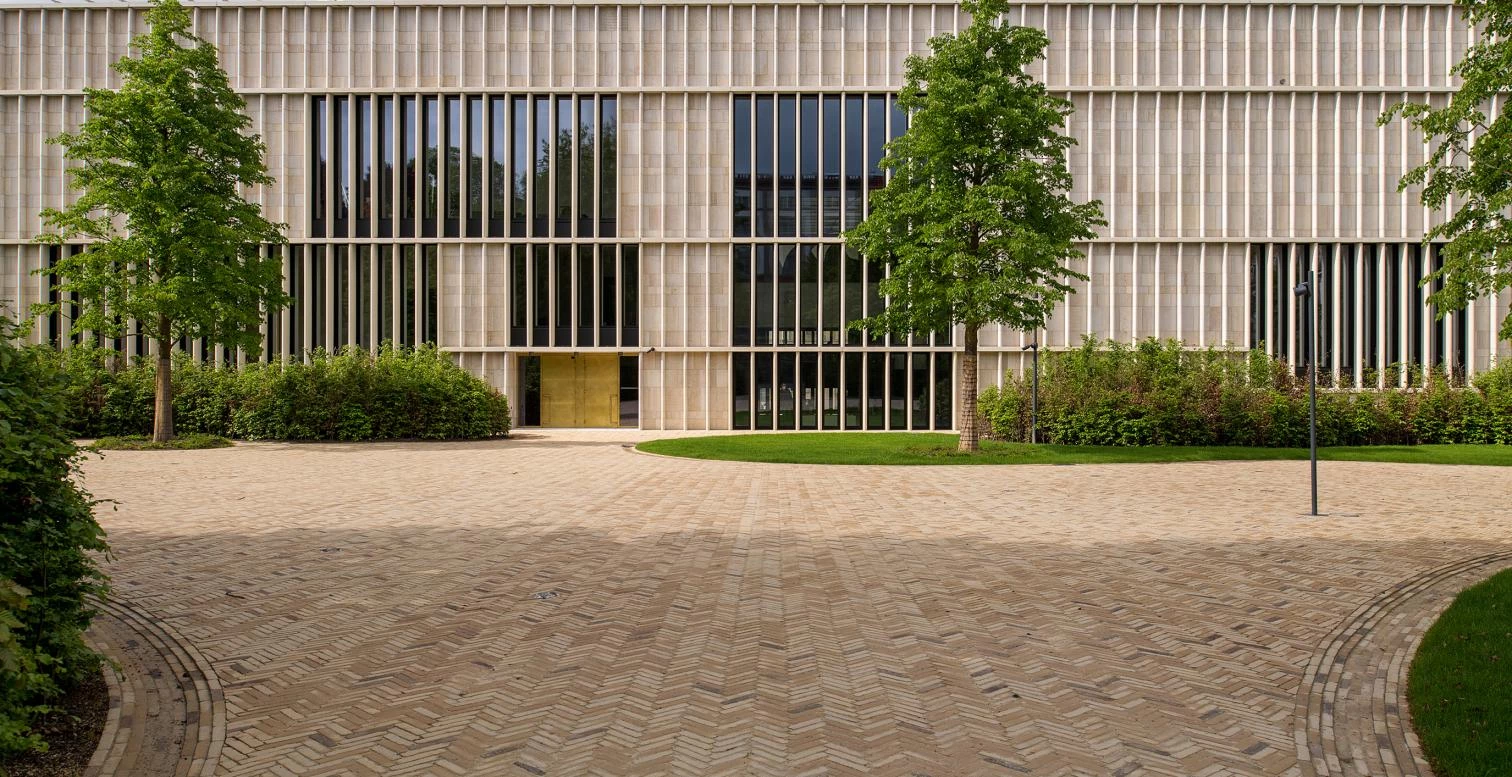
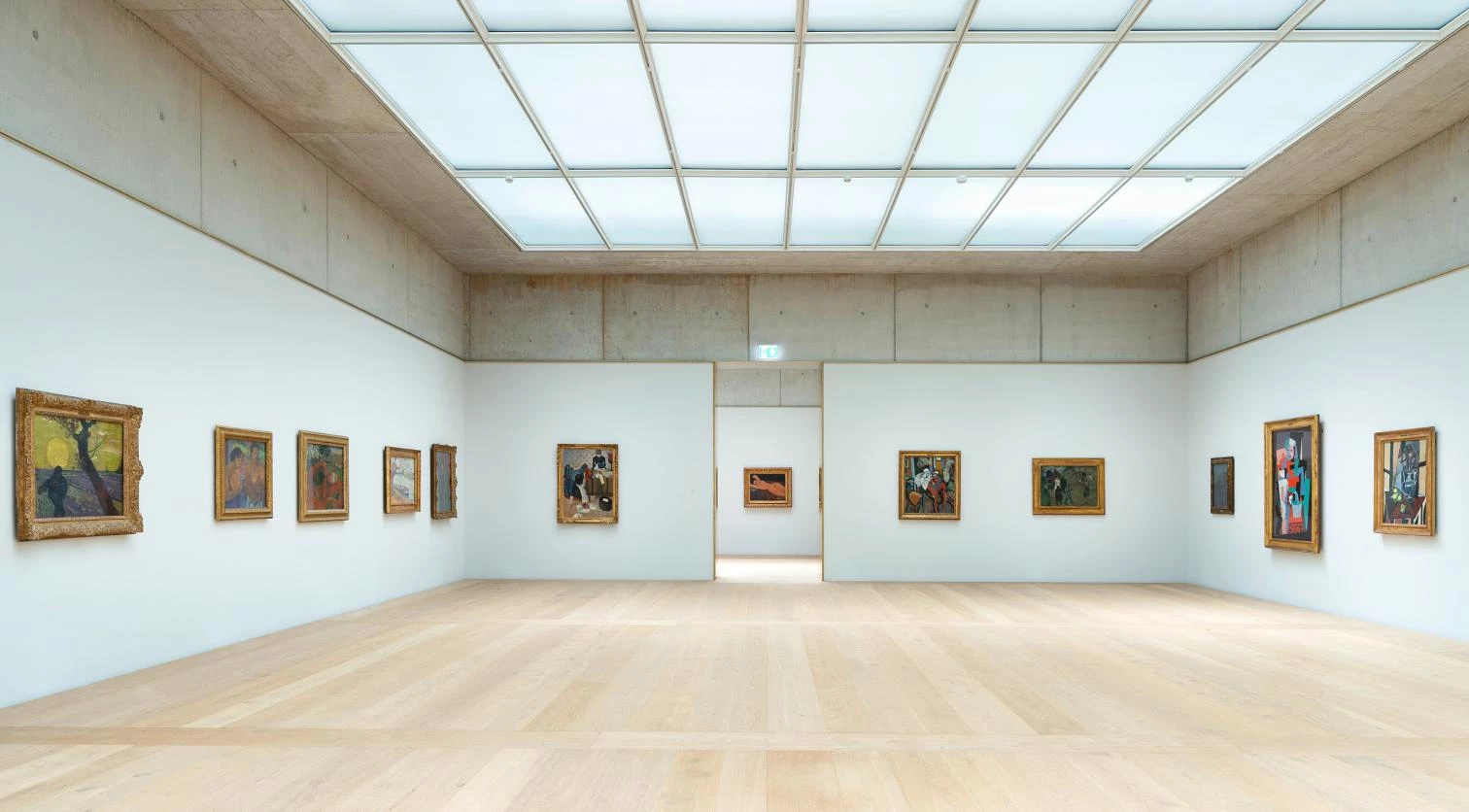
The journey through this architectural avant-garde finds a monumental starting point in the extension of the Kunsthaus Zürich, designed by David Chipperfield. This new freestanding pavilion integrates into the urban fabric as a clean and assertive geometric volume, clad with an elegant local limestone facade that pays homage to the city’s traditional public buildings. True to the British architect’s approach, the design stands out for its classic and timeless minimalism, where the exterior structure is modulated by subtle vertical pilasters. Inside, the imposing central lobby flooded with natural light organizes the exhibition spaces fluidly, demonstrating how large-scale architecture can be, at the same time, understated, welcoming, and profoundly urban.
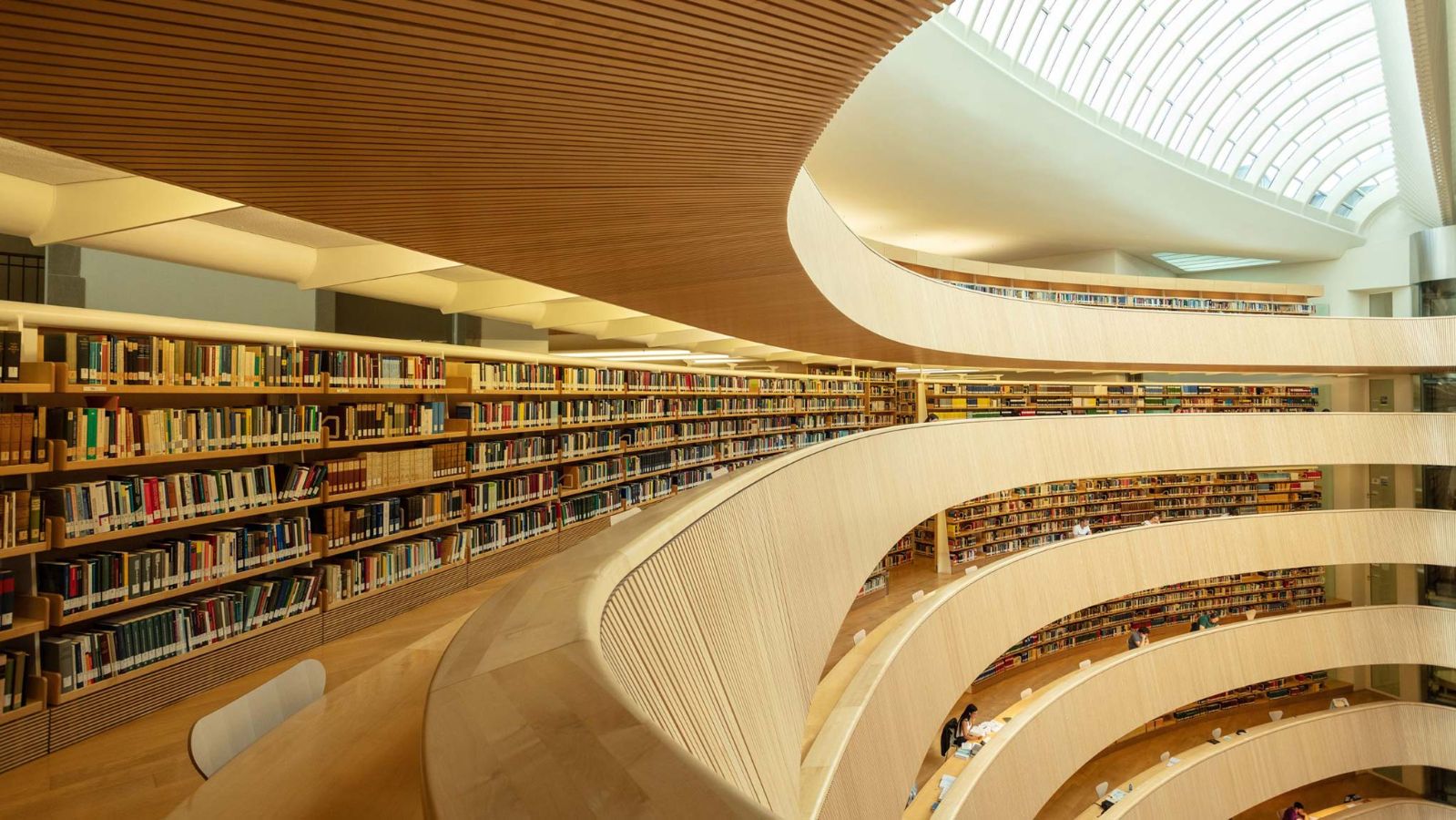
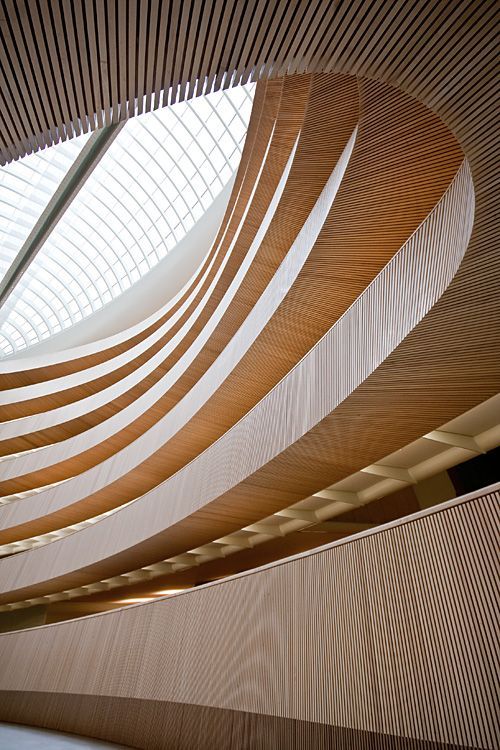
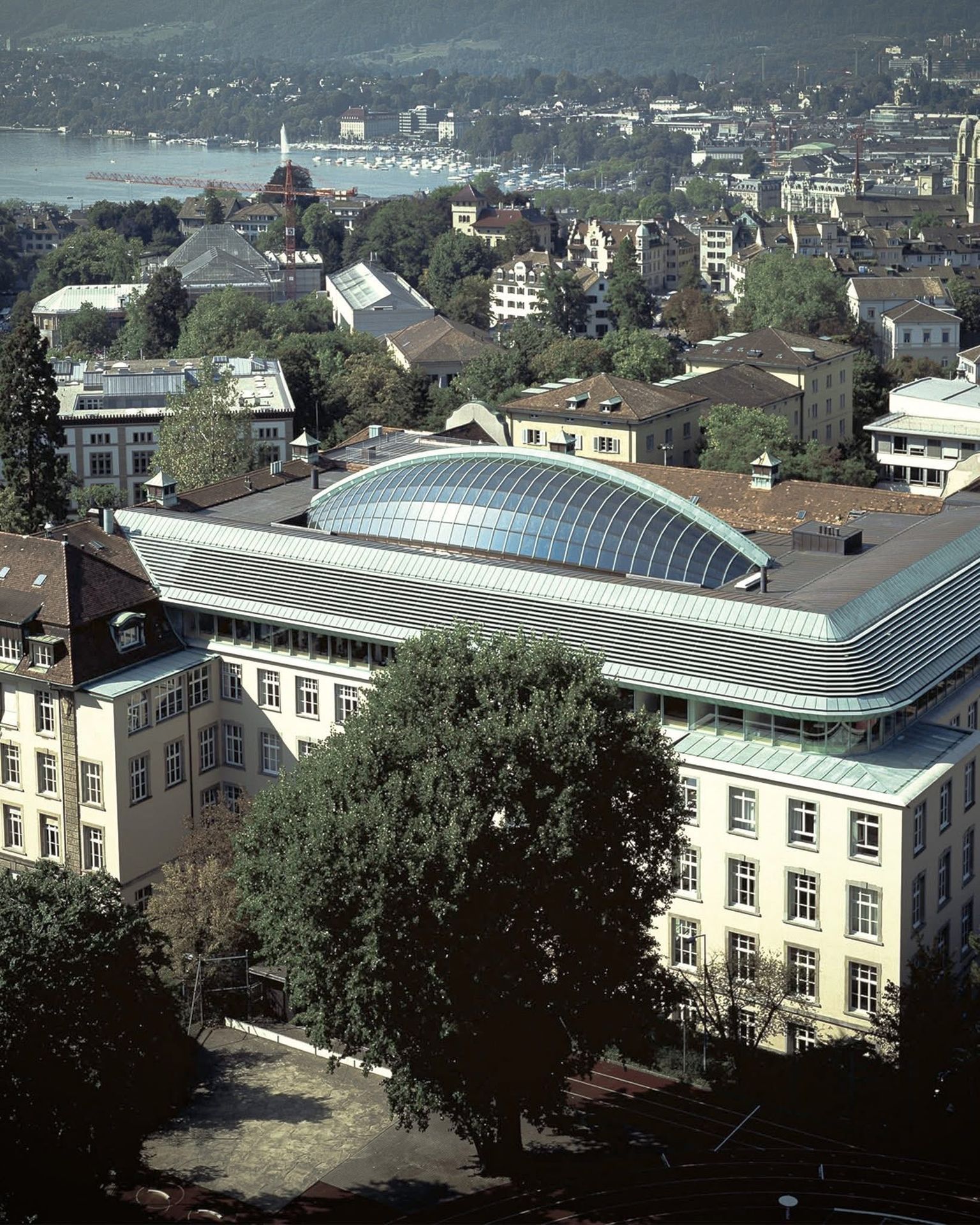
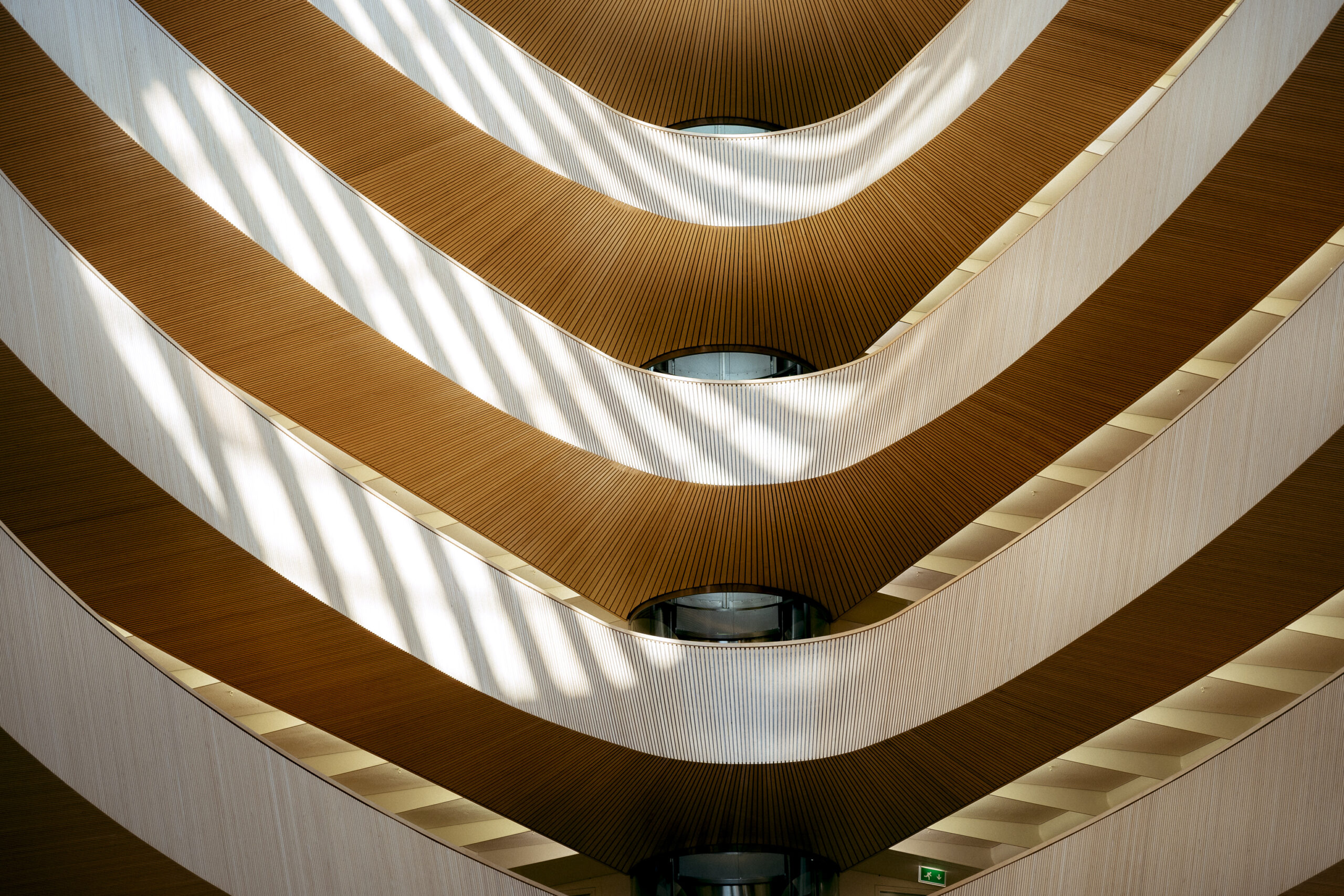
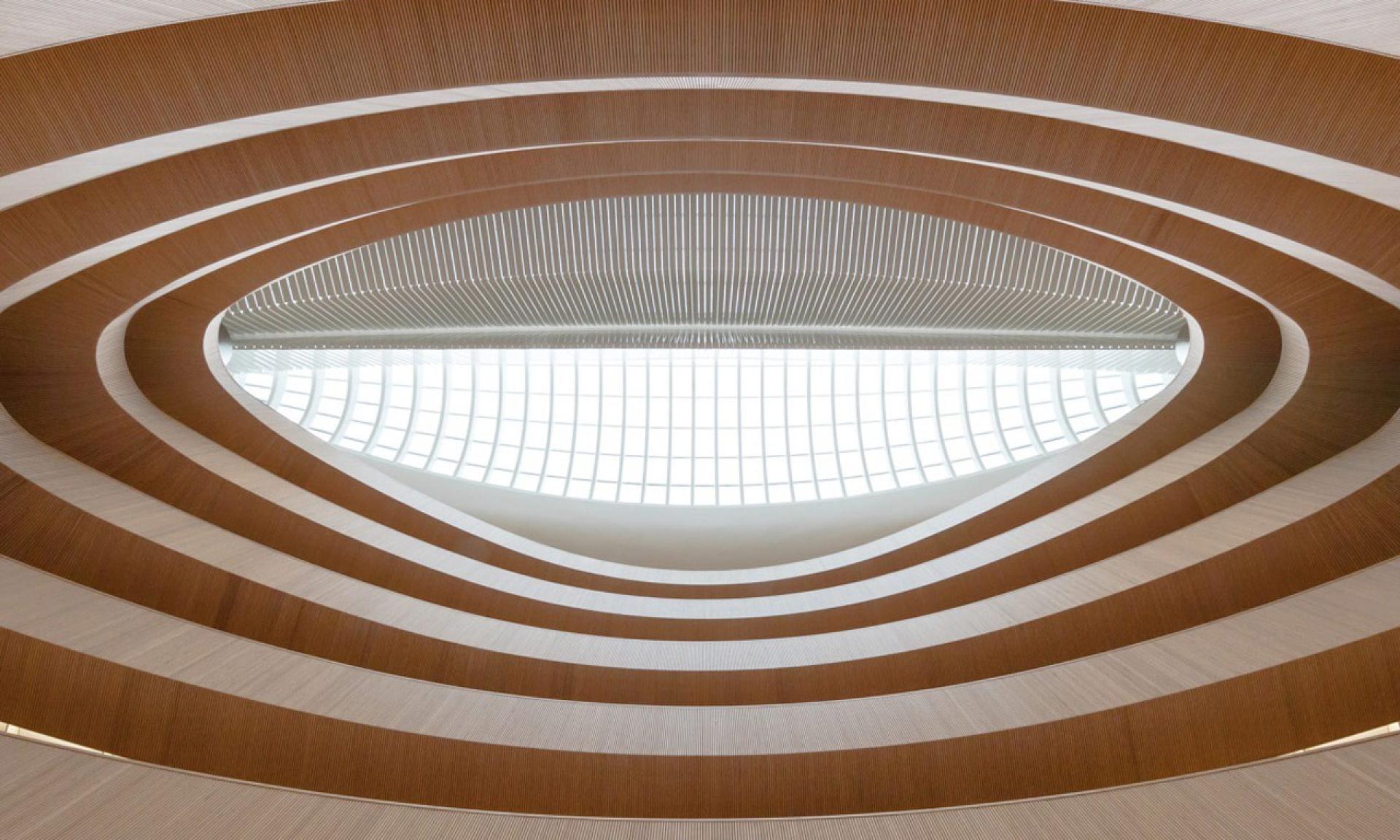
In a completely different formal register, the Law Faculty Library of the University of Zurich, designed by Santiago Calatrava, intervenes in a historic building with surprising structural audacity. The Valencian architect and engineer introduced a spectacular oval-shaped atrium into the pre-existing inner courtyard, crowned by a large glass dome that bathes the entire space in zenithal light. Along the central void, six levels of galleries are suspended, appearing to float like the ribs of a living organism, housing the study carrels. This intervention optimizes the university’s functional program and generates an atmosphere of introspection and visual lightness ideal for study, where the dynamism of the white lines masterfully contrasts with the neoclassical original structure.
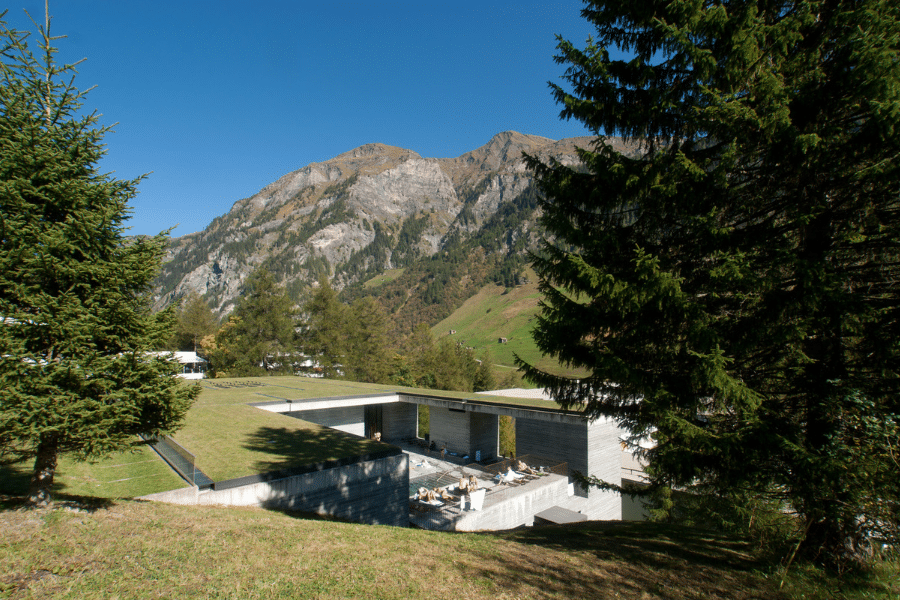
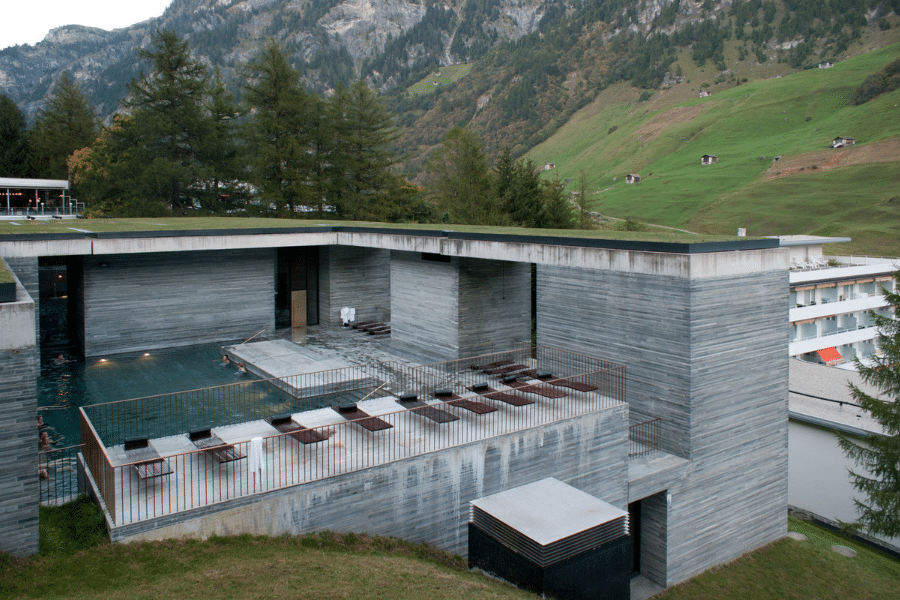
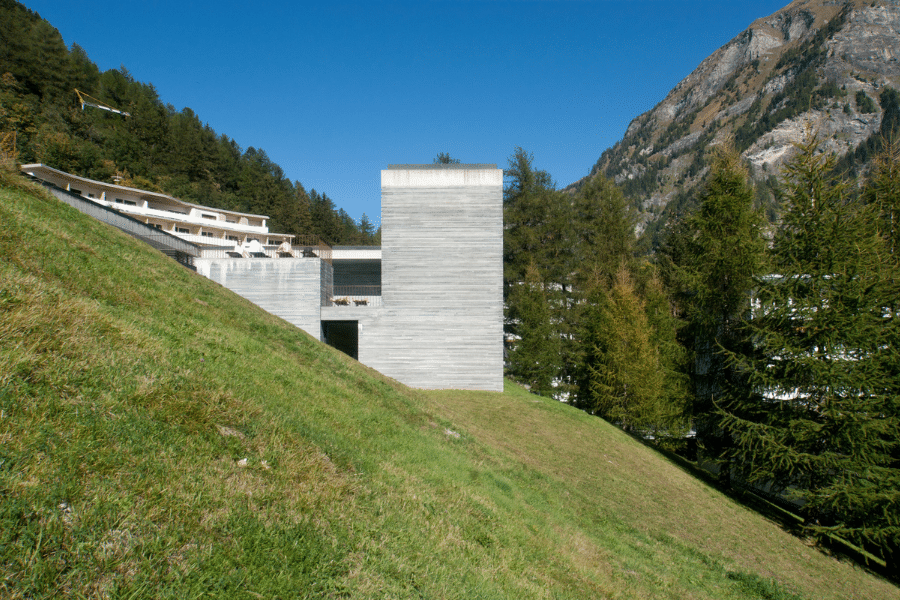
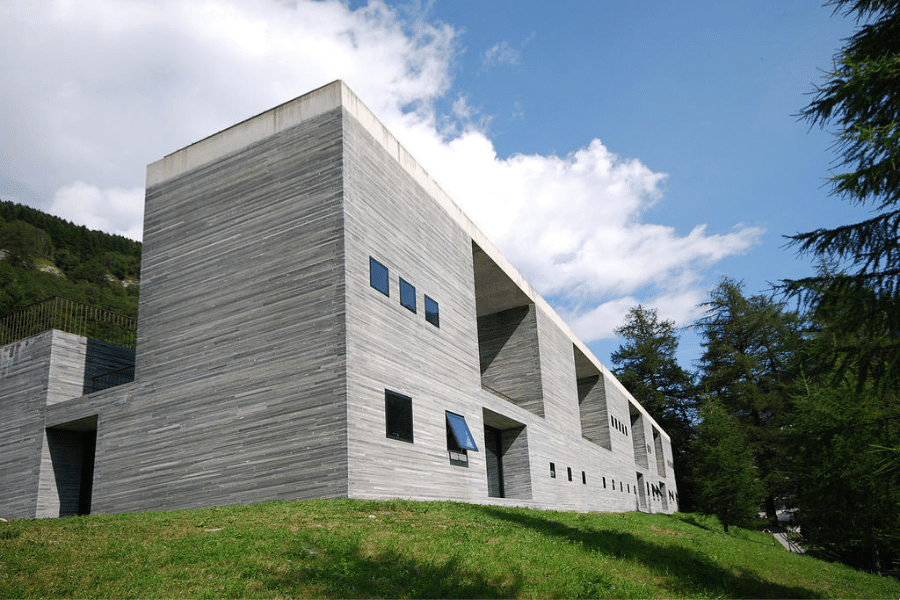
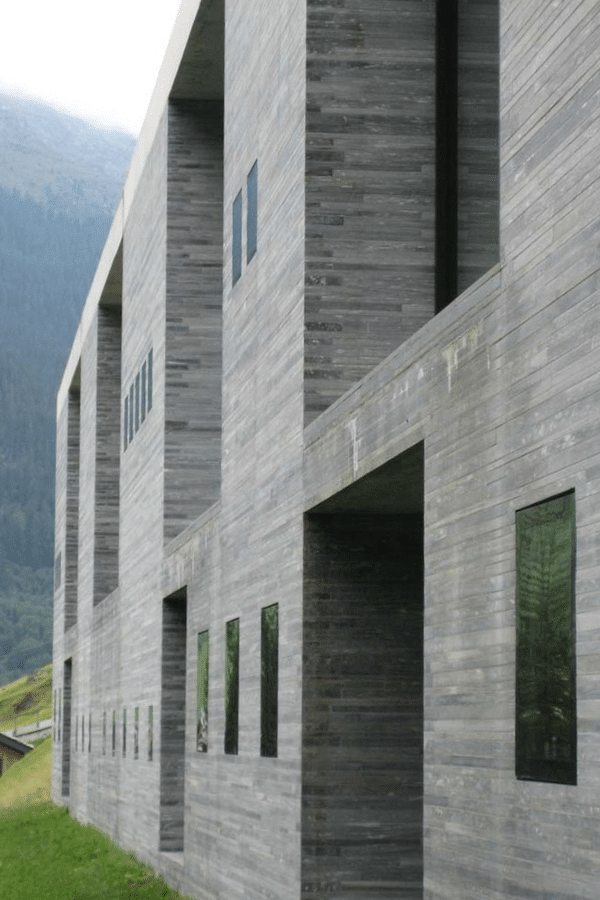
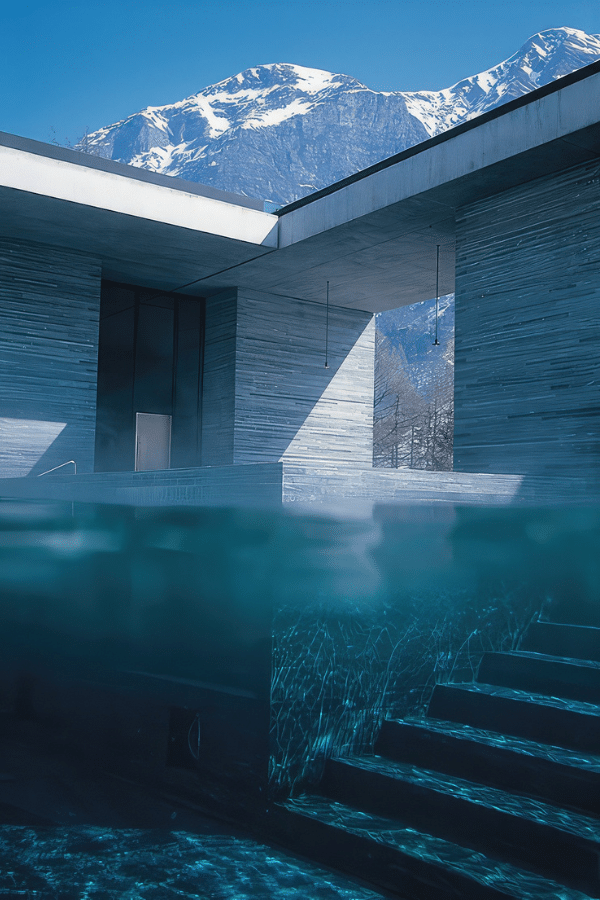
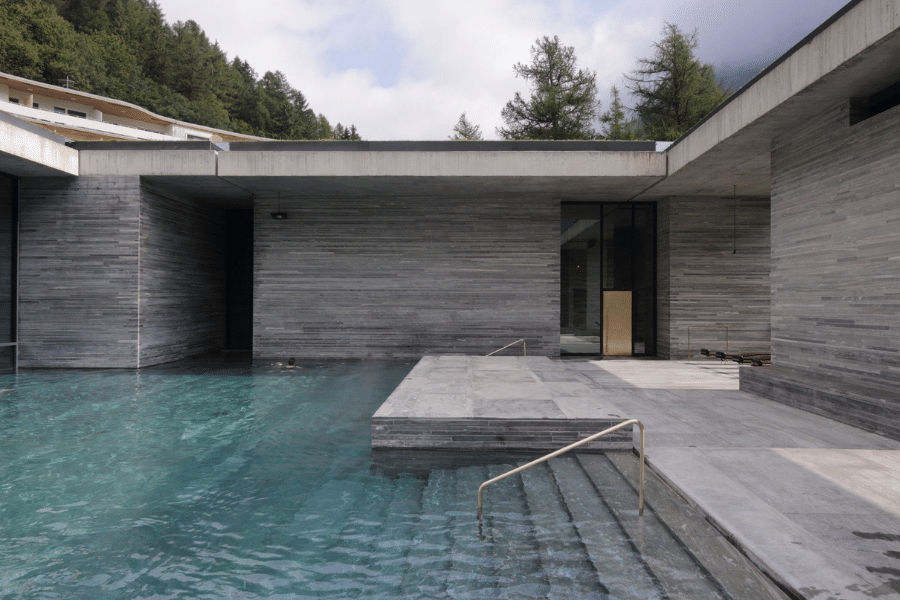
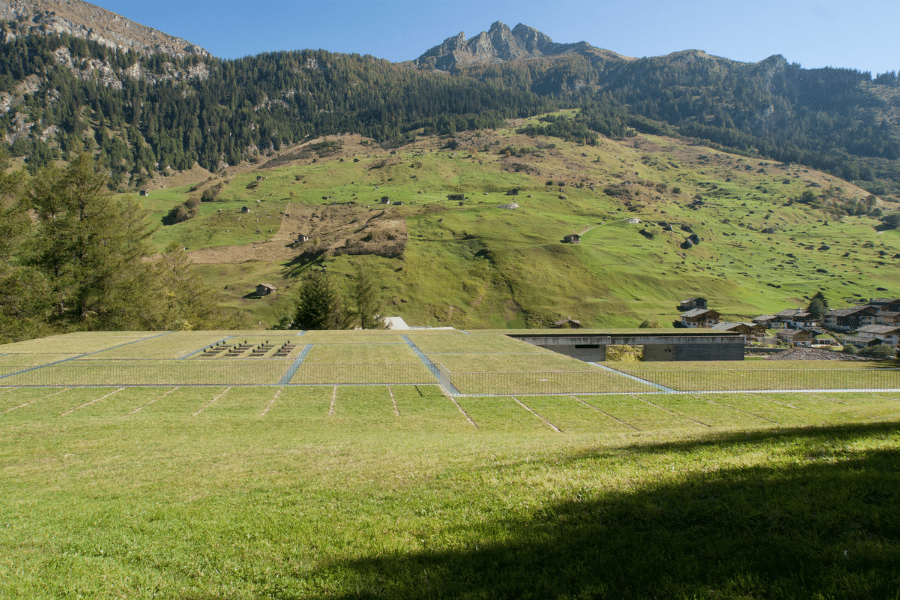
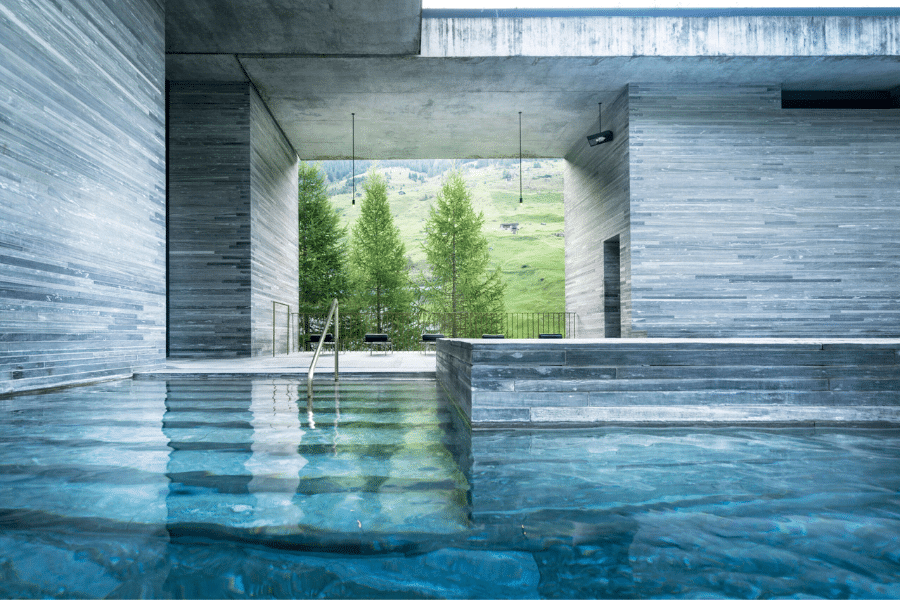
Nestled in the Swiss Alps, Peter Zumthor’s Therme Vals stands as an absolute masterpiece of sensory and tectonic architecture. The building is conceived as a primitive cave carved into the very mountainside, built through the superposition of thousands of slabs of local quartzite stone. Zumthor eschews all ornament to yield full prominence to the essential elements: stone, water, dim light, and shafts of filtered light that penetrate through narrow openings in the ceiling. Visiting the baths becomes a mystical and tactile ritual, where the density of the stone and the sound of the thermal water create a mystical experience that redefines the relationship between the human body, architectural space, and the natural landscape of the Helvetian valleys.
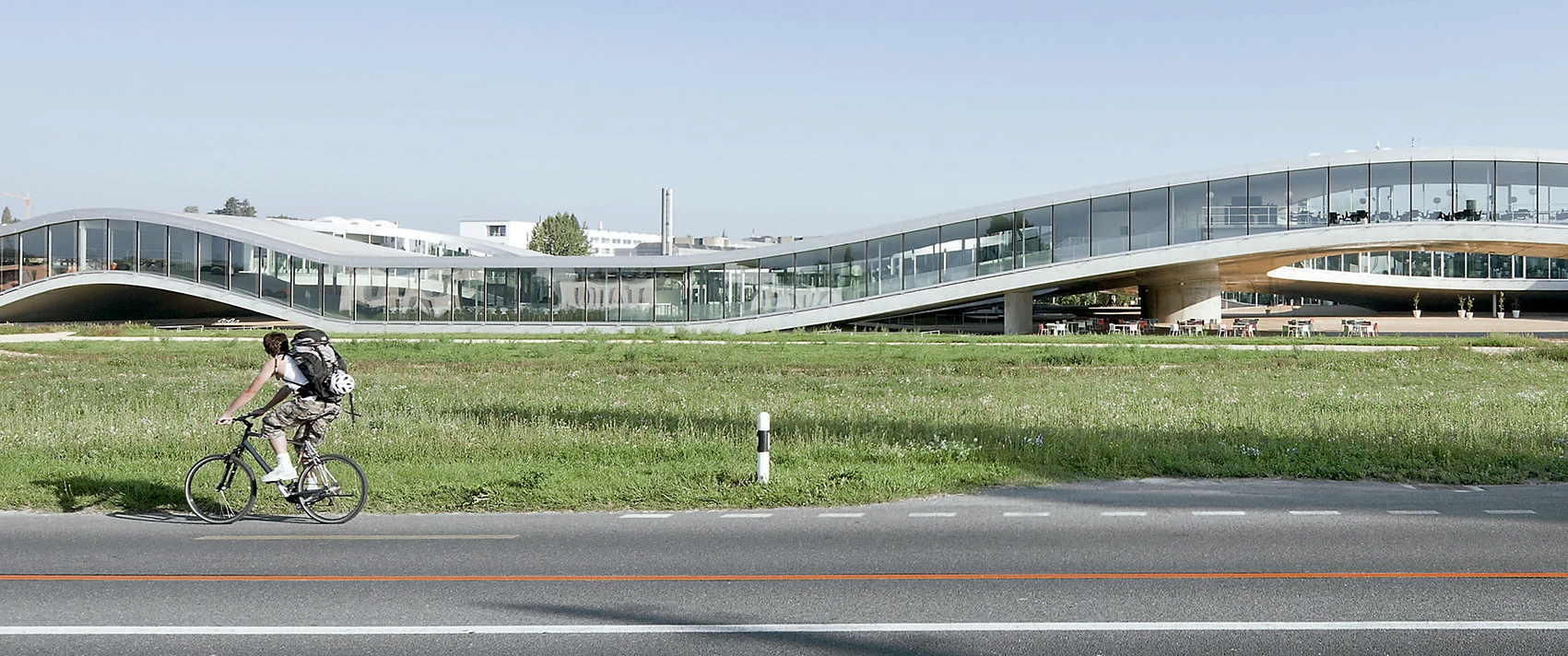
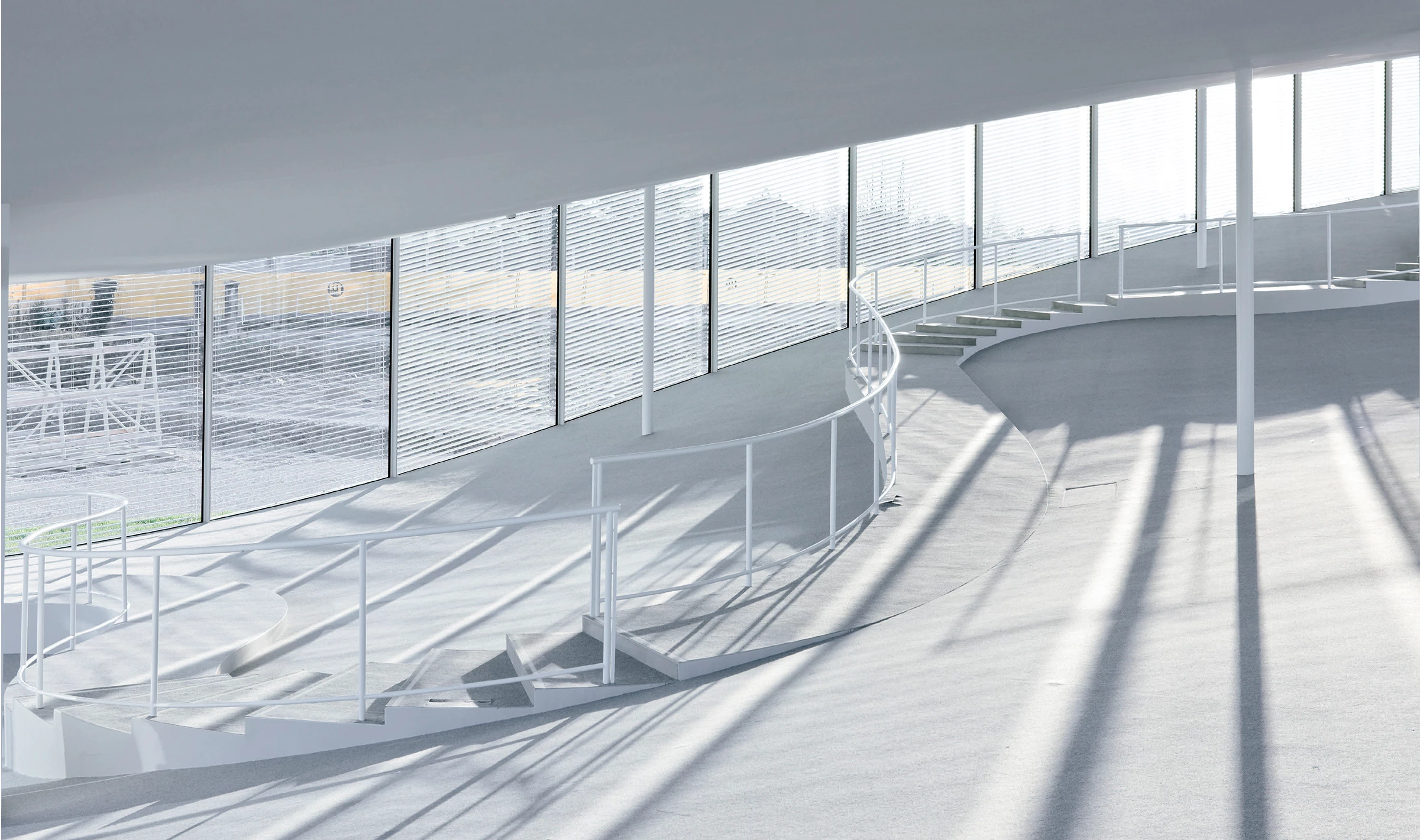
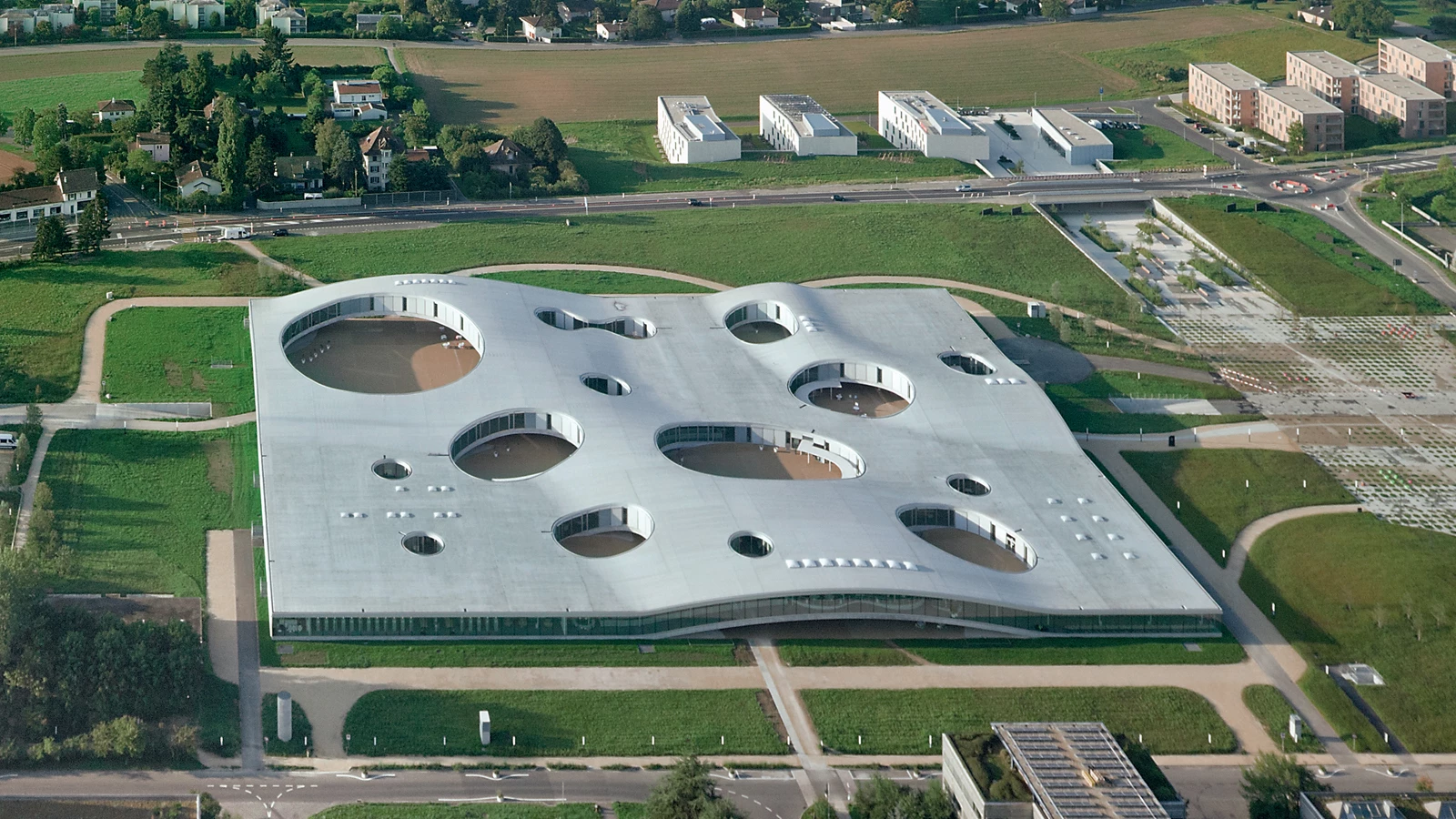
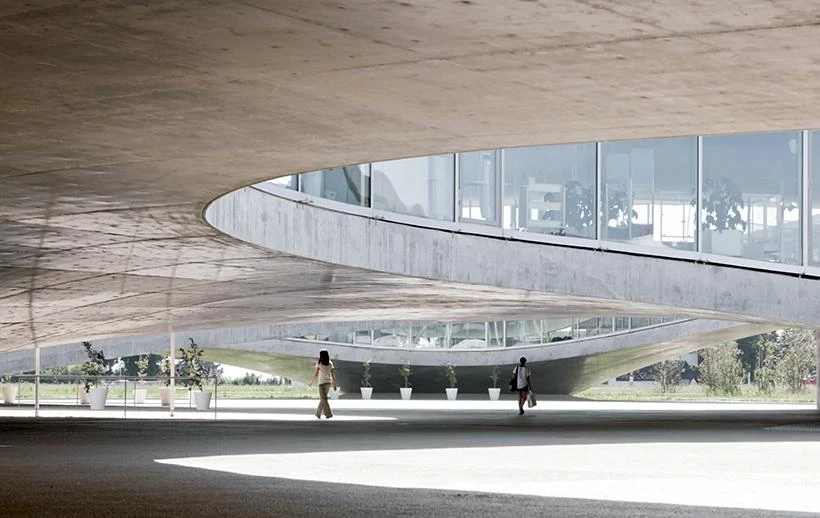
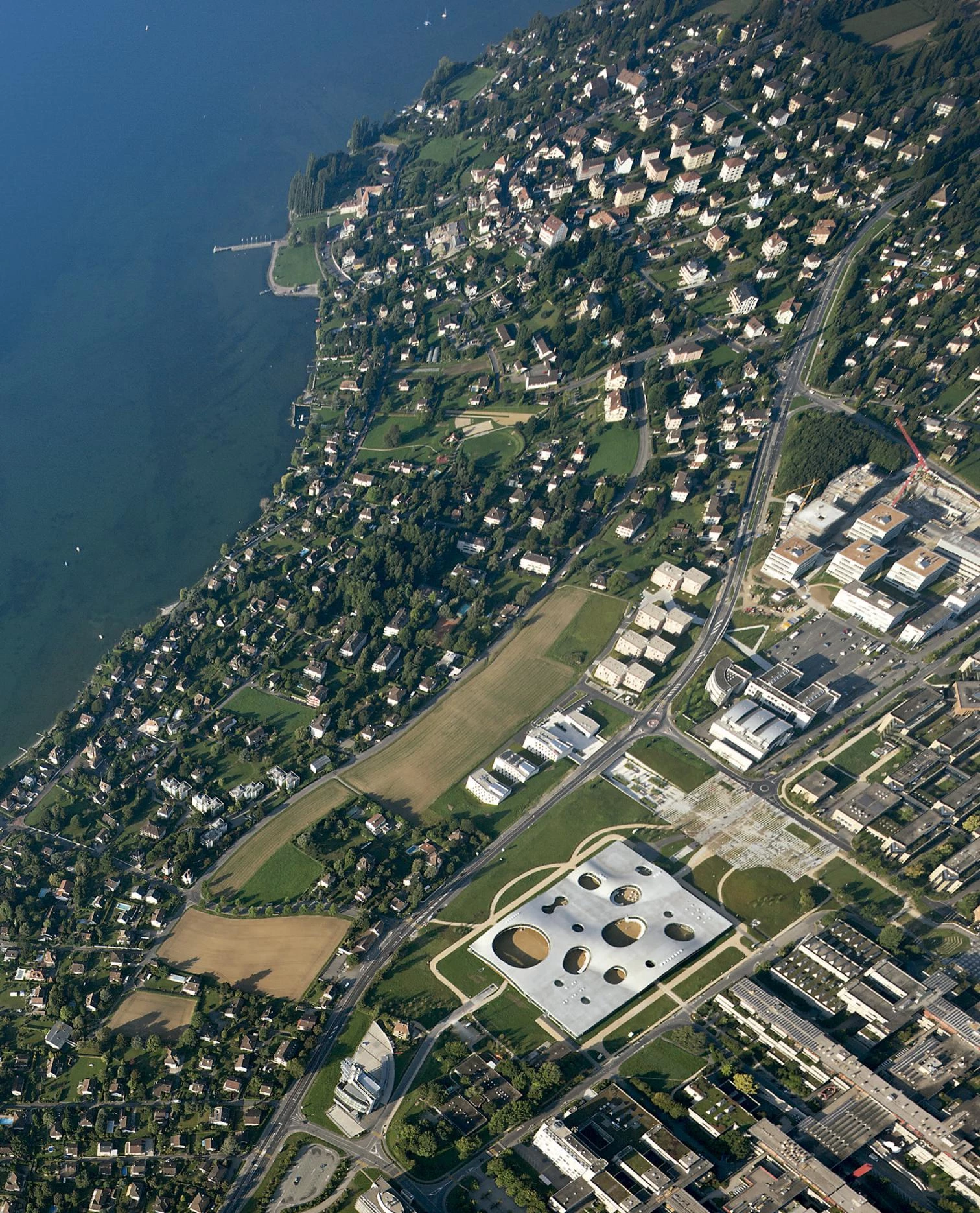
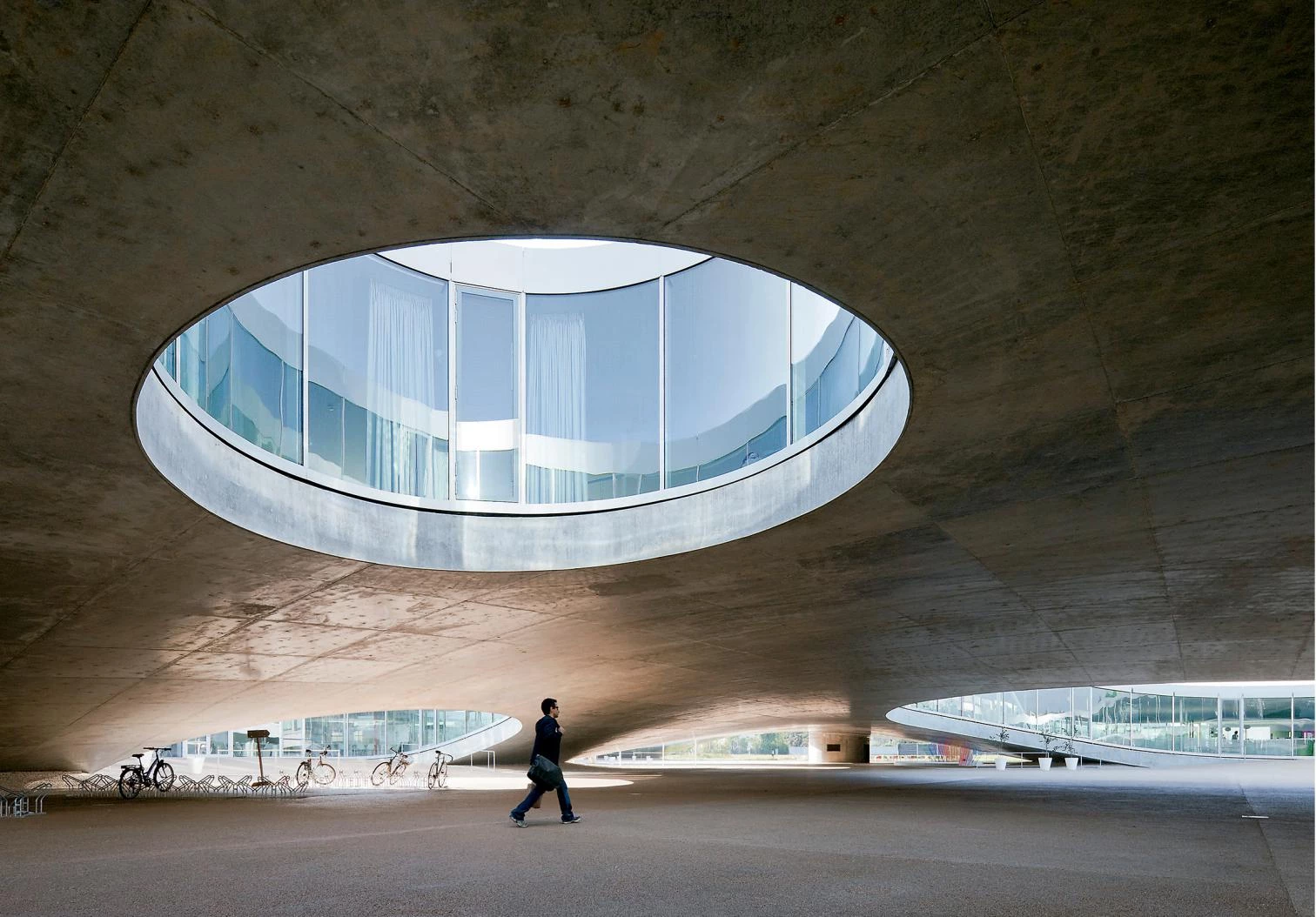
In the educational sphere, the Rolex Learning Center at EPFL in Lausanne, designed by the Japanese firm SANAA, radically breaks with the traditional conception of university campuses. It is a single, continuous, uninterrupted space of over twenty thousand square meters that gently undulates across the terrain, creating hills, valleys, and interior courtyards beneath a single, colossal concrete slab. Kazuyo Sejima and Ryue Nishizawa eliminated corridors and partition walls to foster spontaneous interaction and collaborative learning. Students navigate intuitively through this artificial topography where classrooms, the library, and rest areas are delimited solely by the slope of the floor itself, offering unprecedented spatial fluidity and transparency.
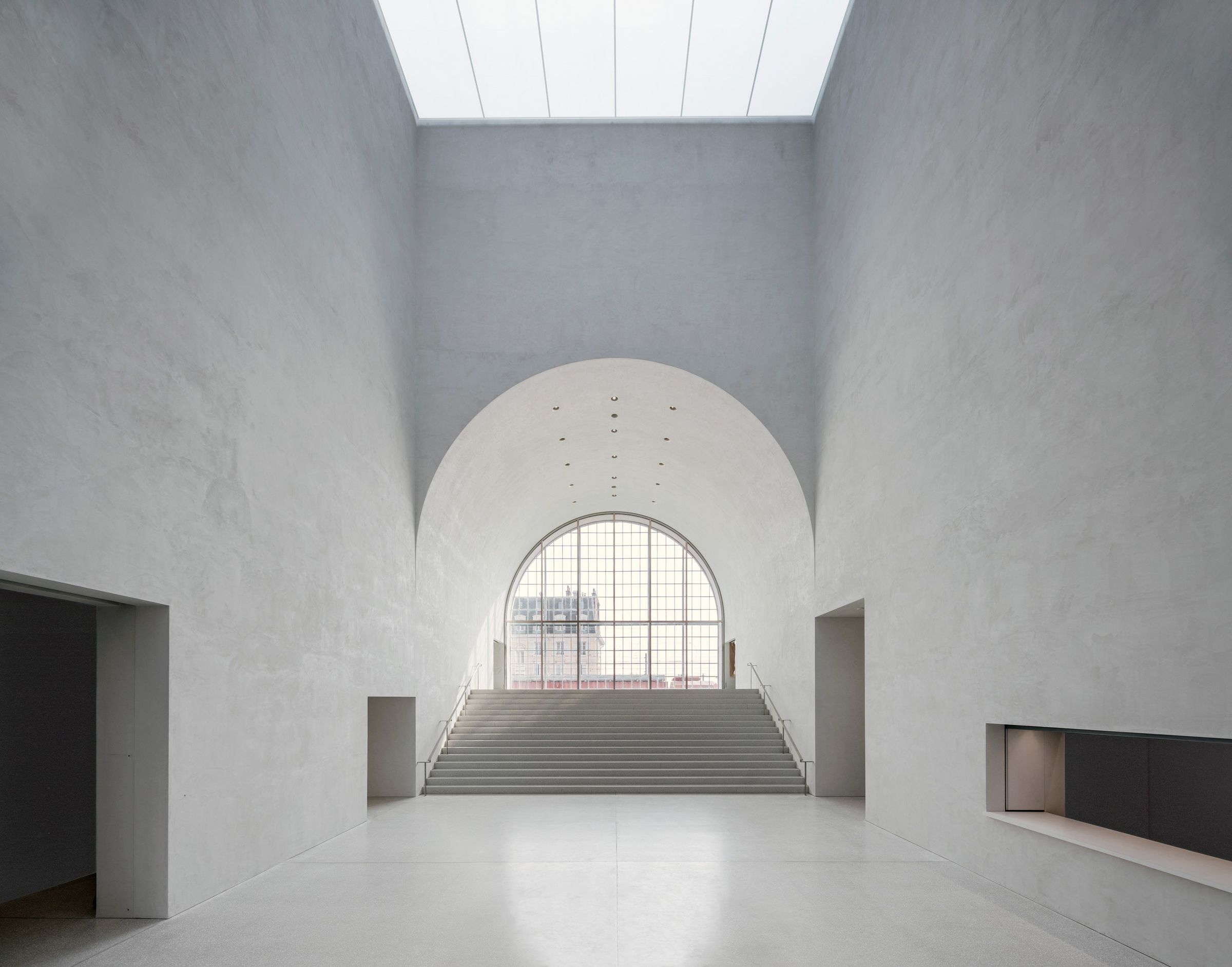
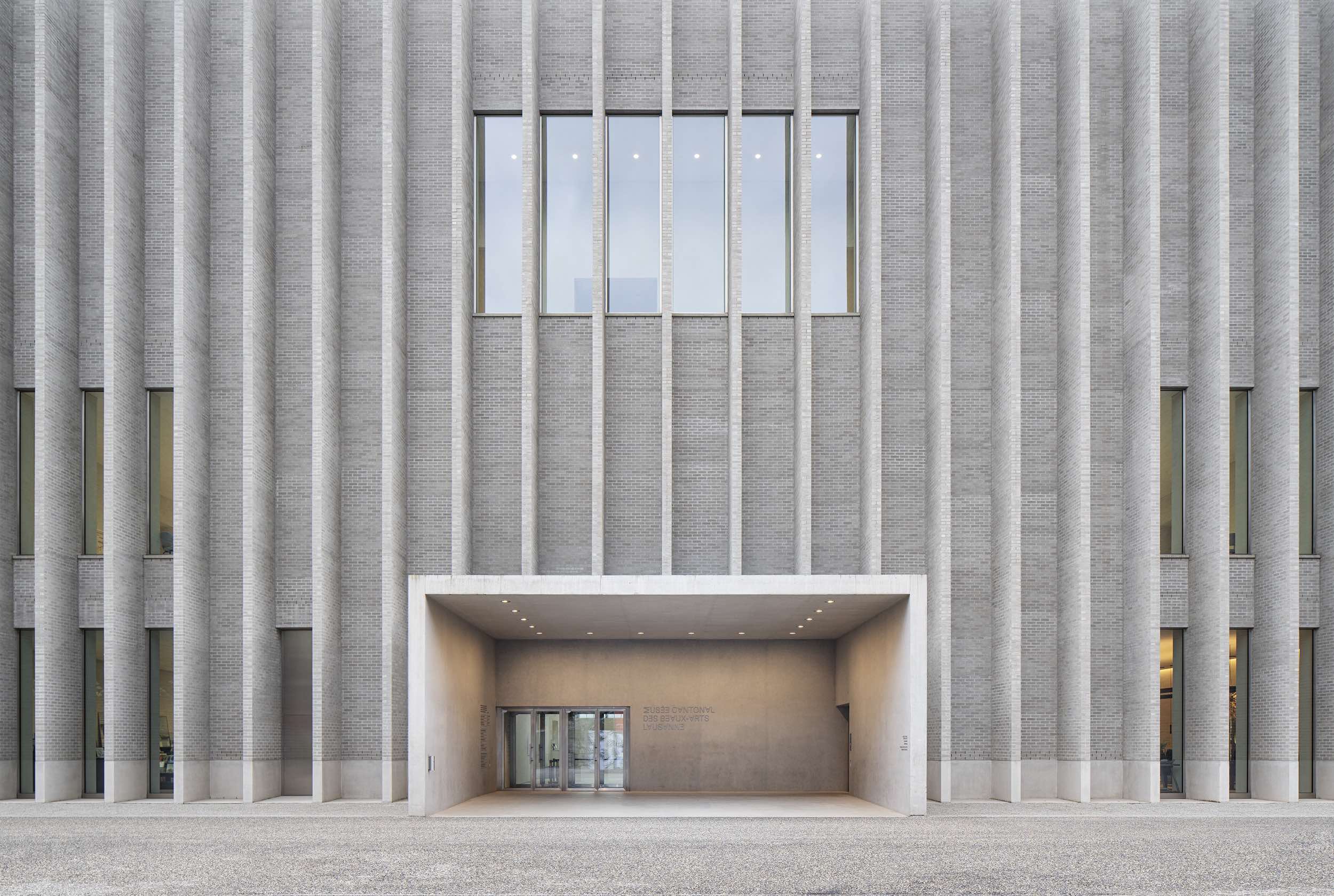
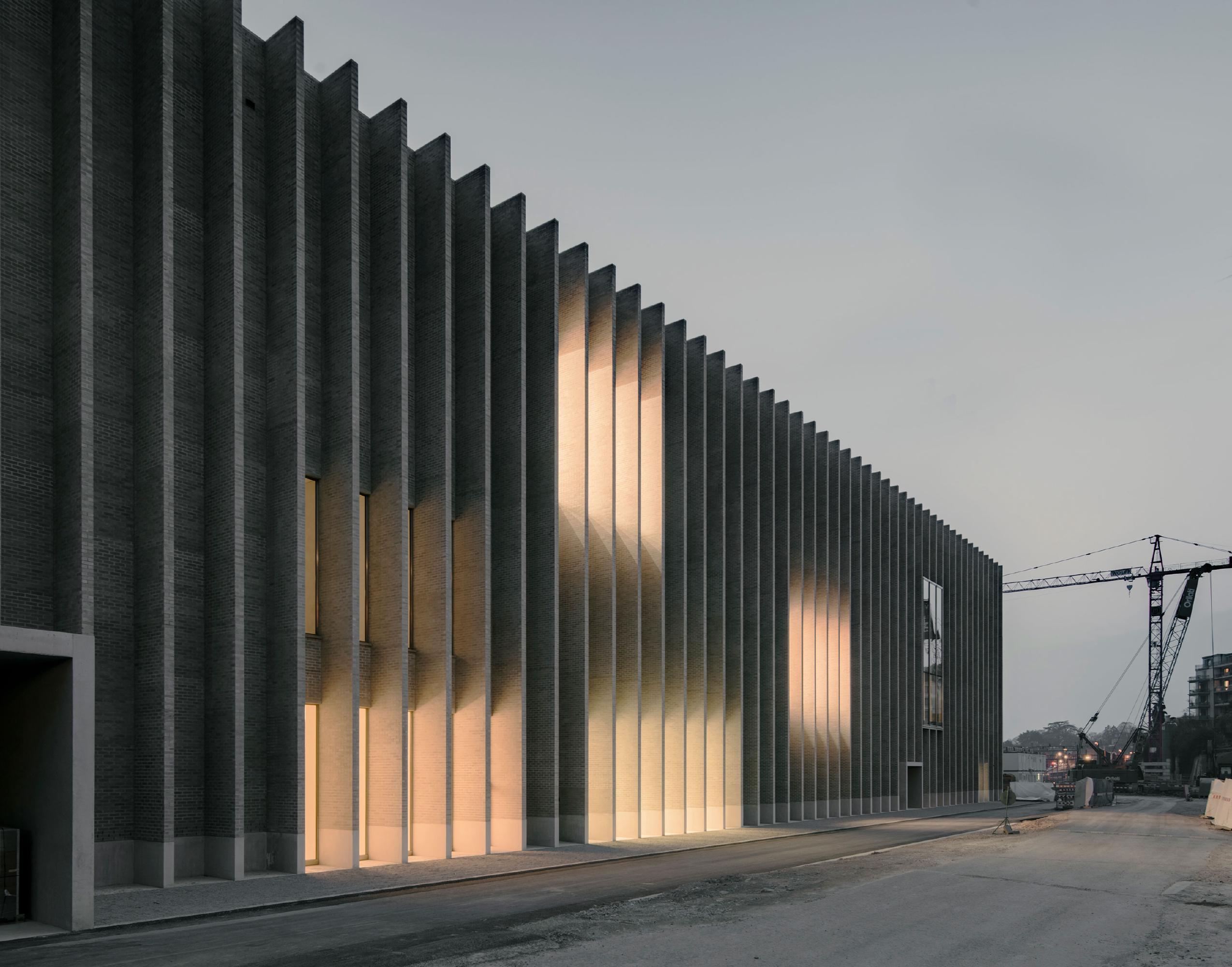
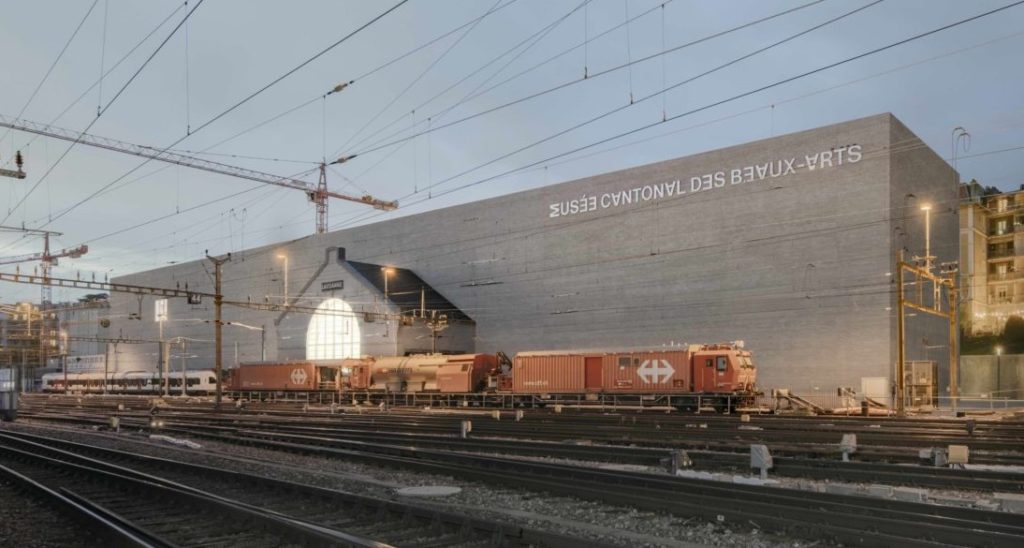
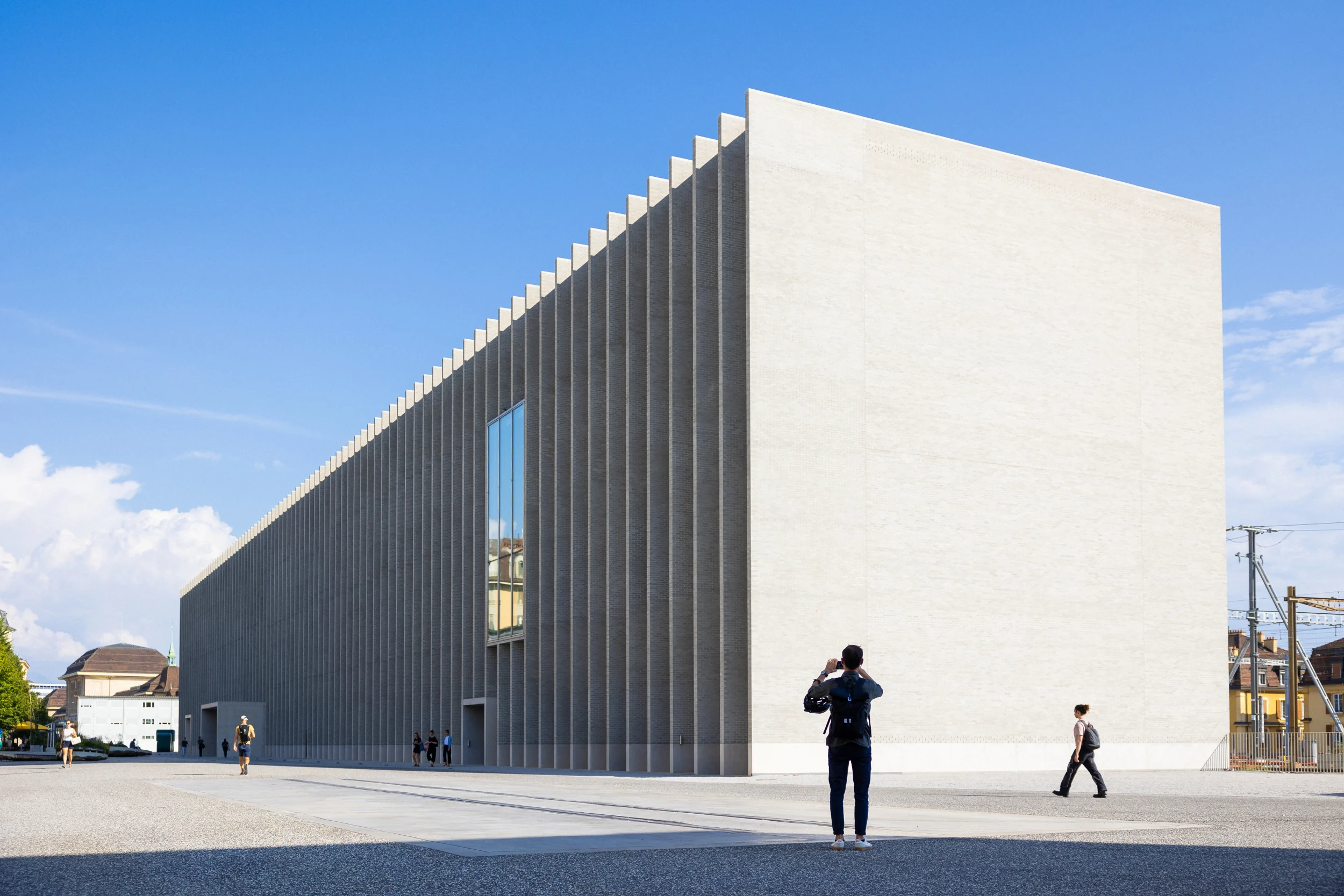
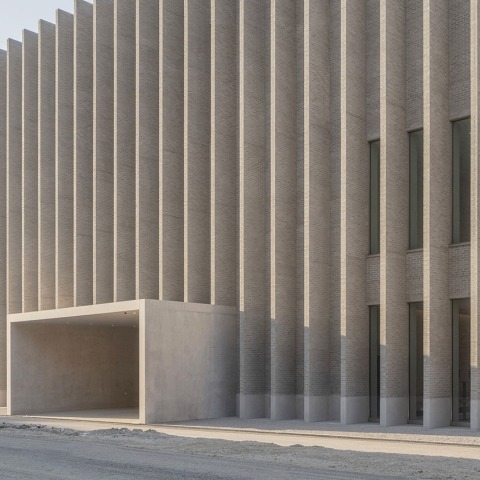
Nearby, the Musée Cantonal des Beaux-Arts (MCBA) in Lausanne, designed by the Barcelona-based studio Barozzi Veiga, demonstrates the power of pure geometry and formal rigor against the backdrop of the industrial railway landscape. The building is configured as a monolithic and longitudinal volume of grey brick that delineates the space of the train tracks, assuming its role as a key piece in the creation of the new cultural district Plateforme 10. Its exterior facade is fragmented by a rhythmic interplay of vertical pilasters that protect the interiors from direct sunlight, while the interior preserves a fragment of the old locomotive shed integrated into the main lobby. It is a project of striking sobriety, where the control of light and urban scale lend a dignified and monumental presence to the institution.
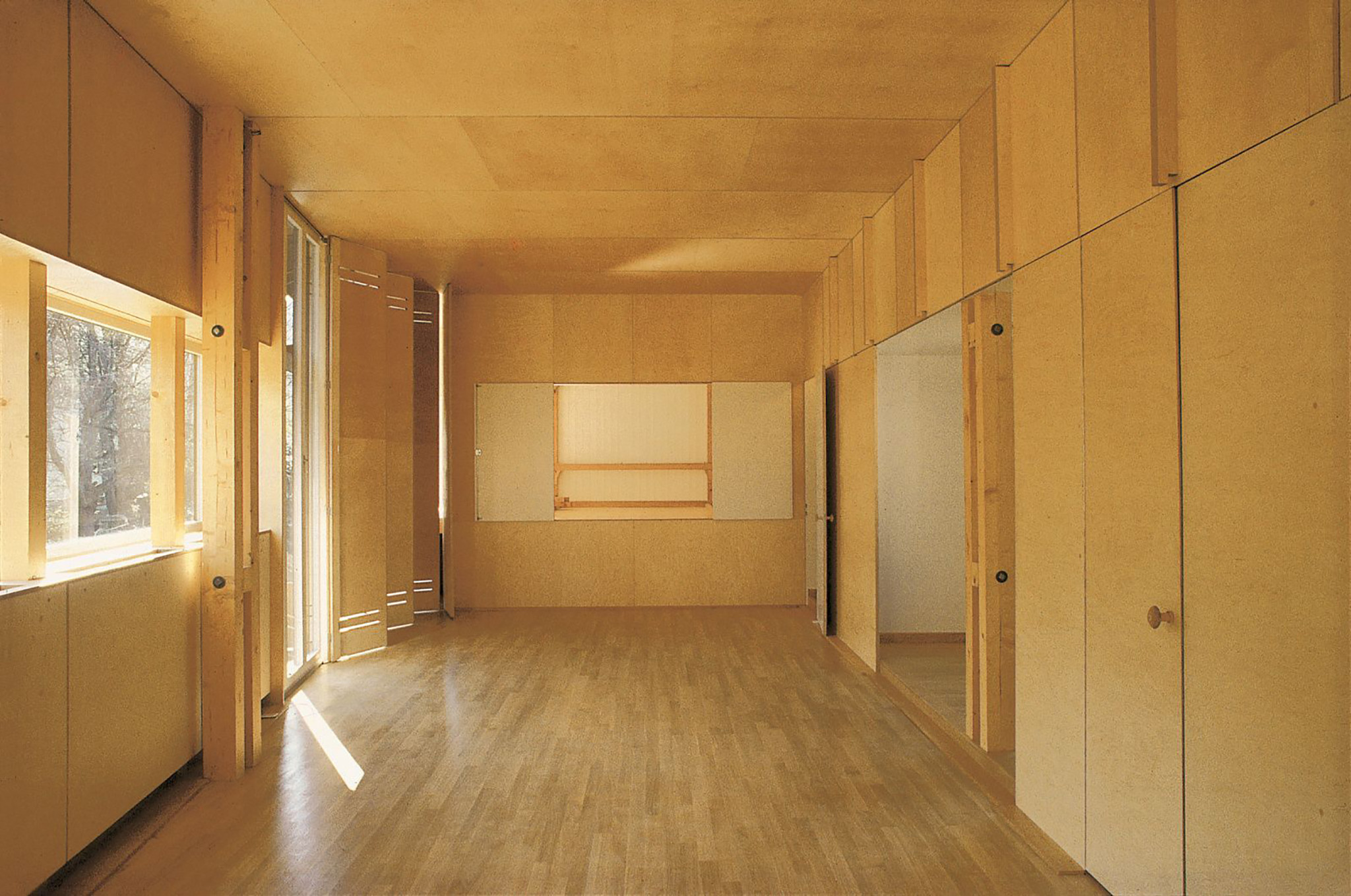
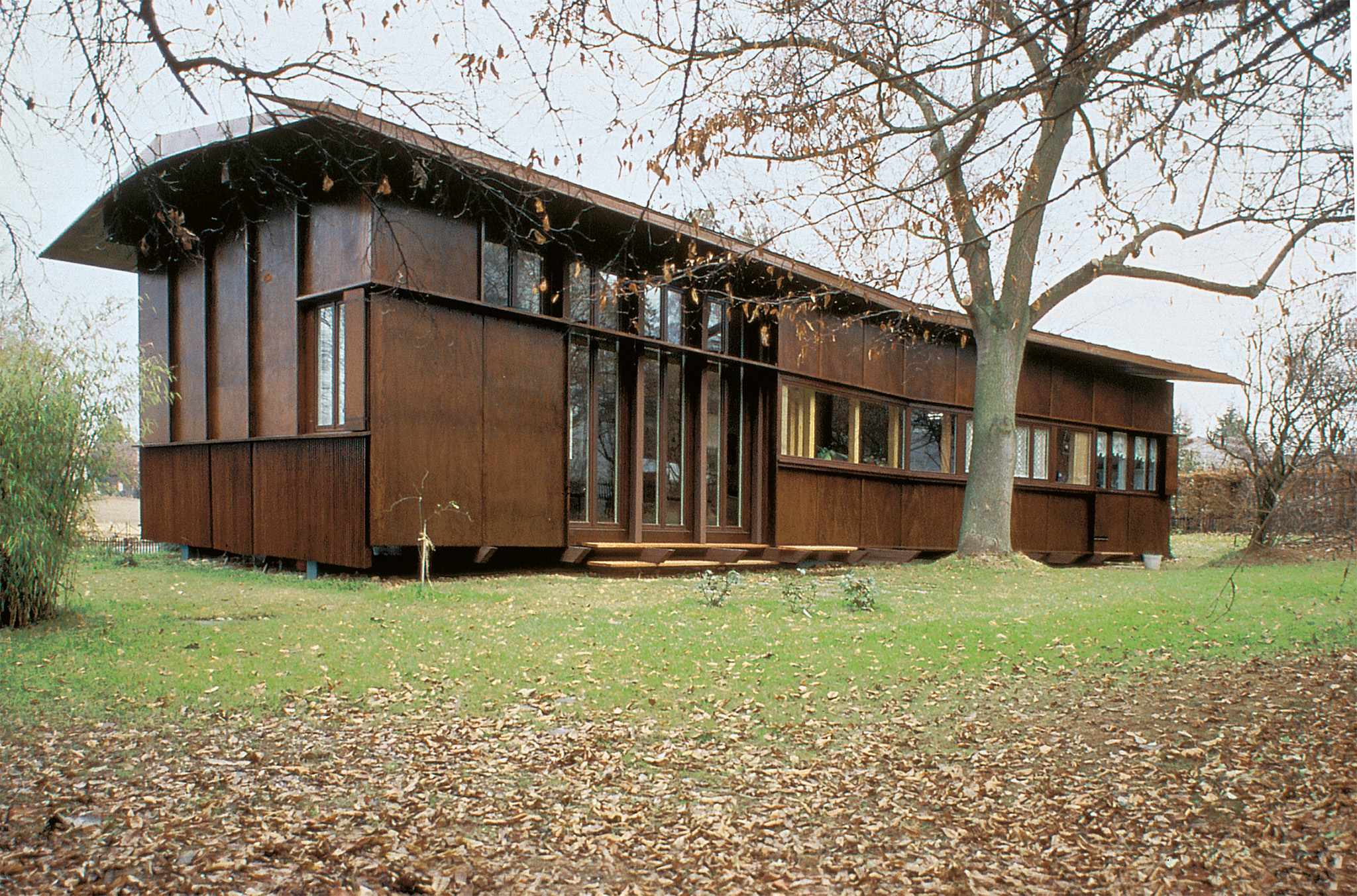
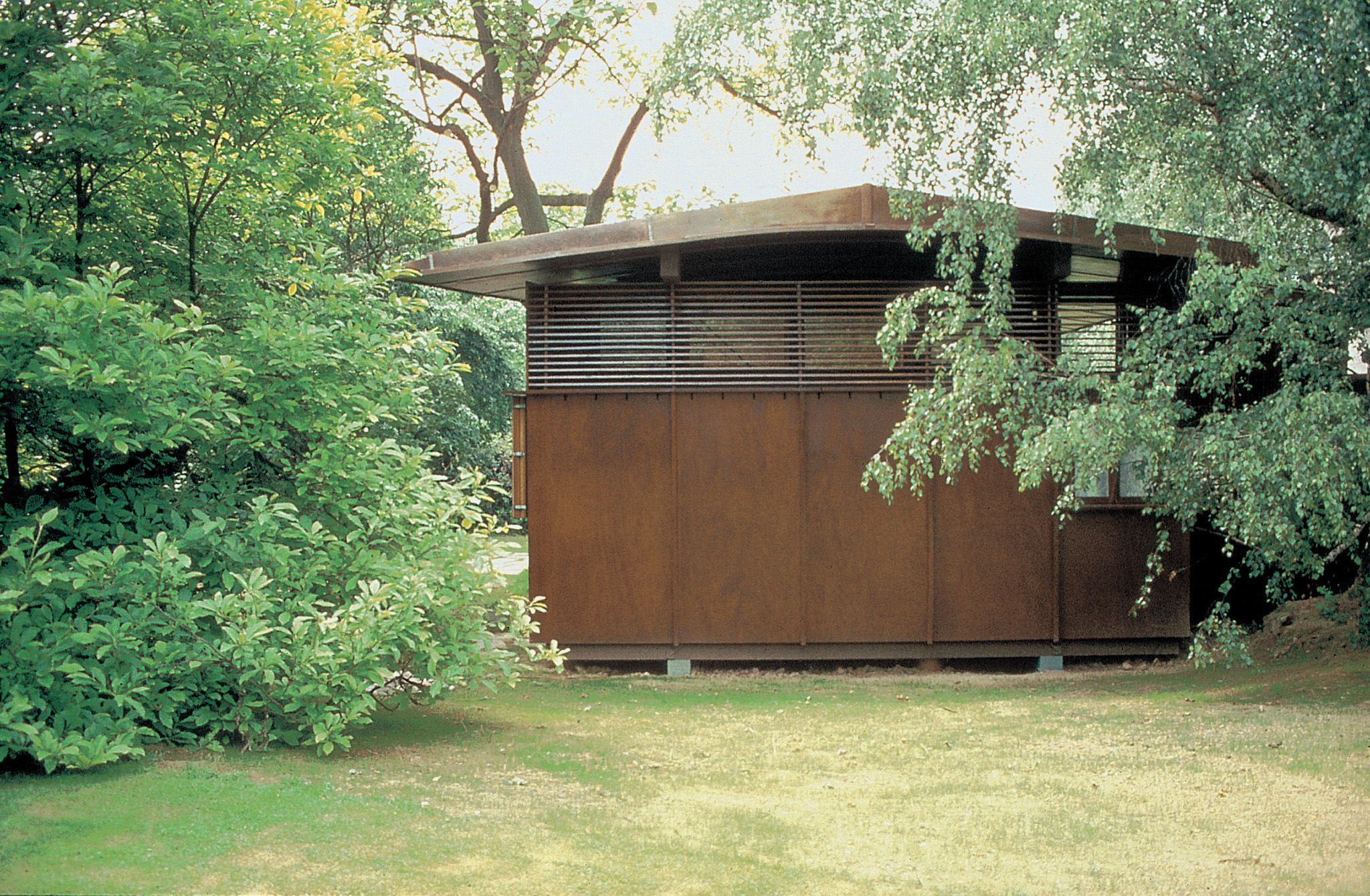
Finally, residential architecture in Switzerland distills a sublime material experimentation, exemplified by Herzog & de Meuron’s Wooden House and Valerio Olgiati’s House in Laax. In the former case, the Basel-based studio reinvents the typology of the single-family home by elevating a delicate plywood structure on stilts above a garden, where continuous horizontal planes and glazed enclosures completely blur the boundary between the interior and the surrounding nature, with a tree as the protagonist and main determinant of the dwelling’s floor plan distribution.
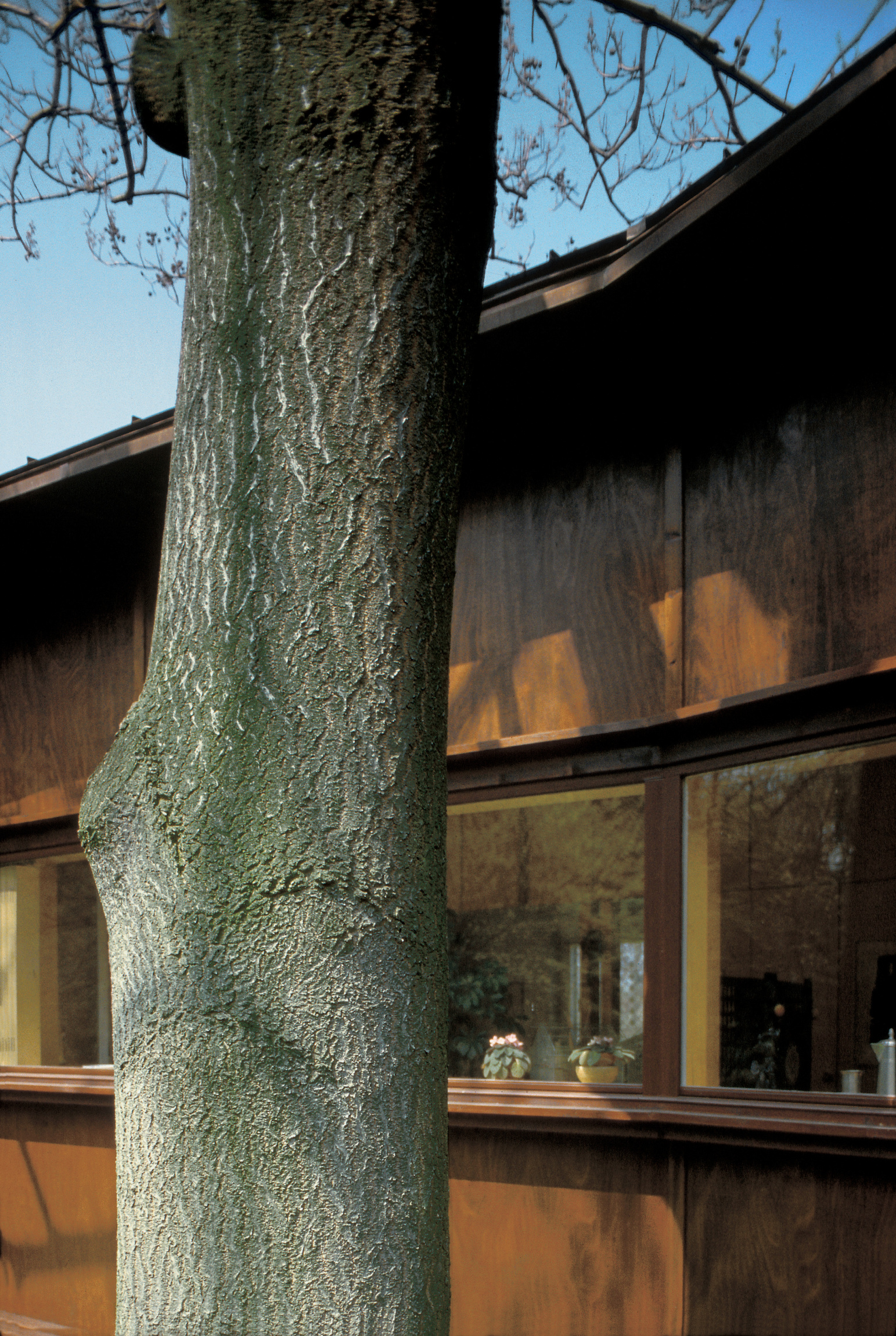
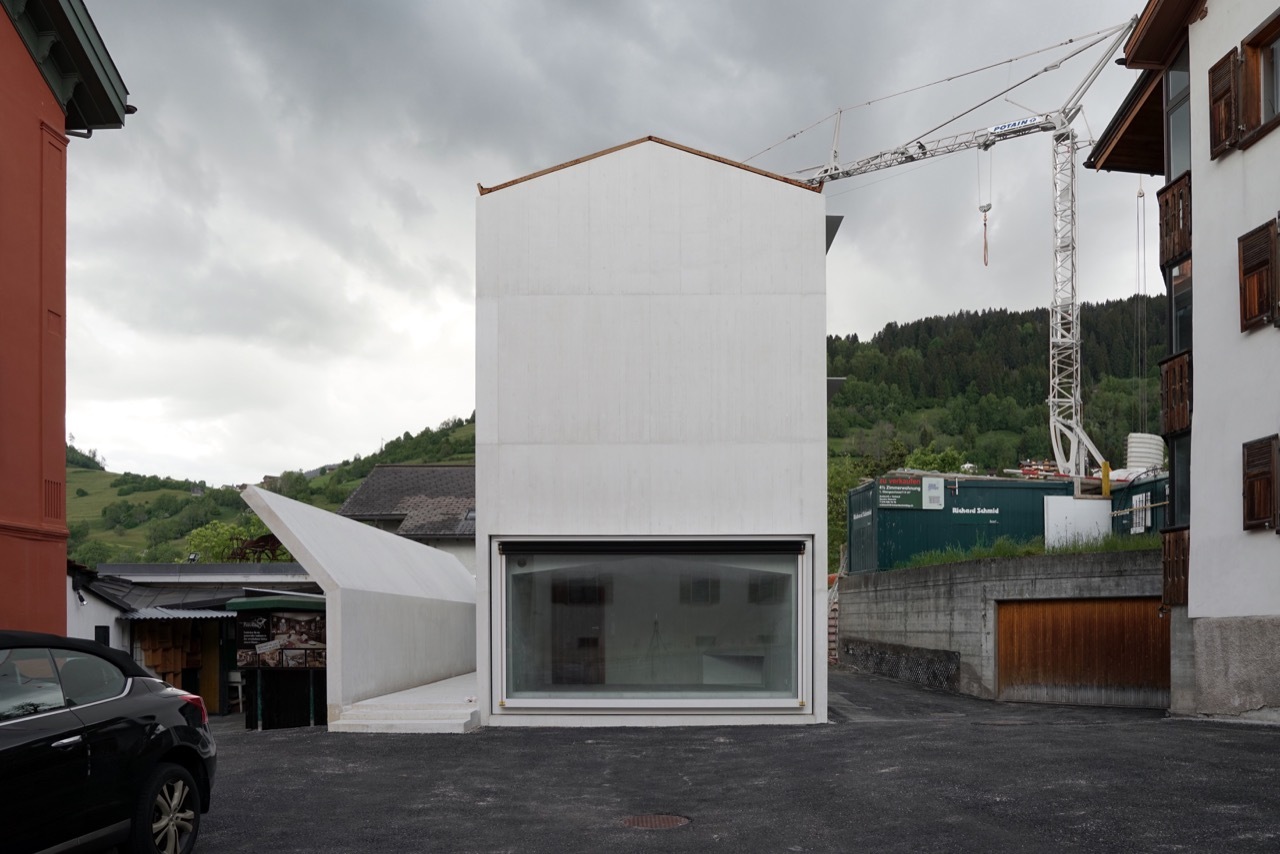
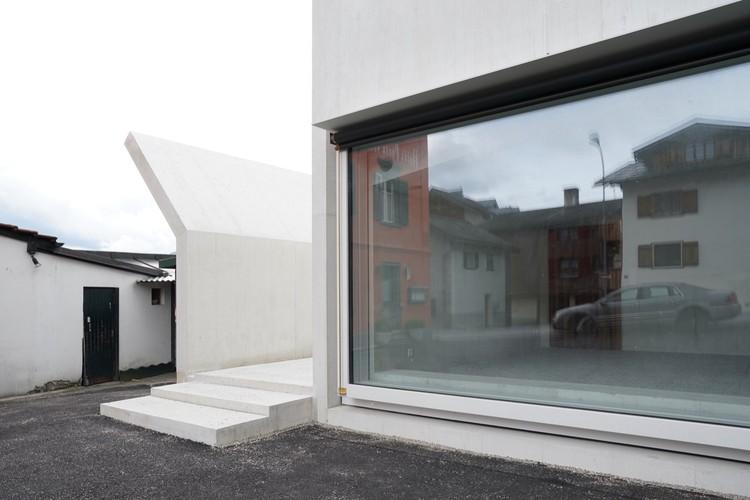
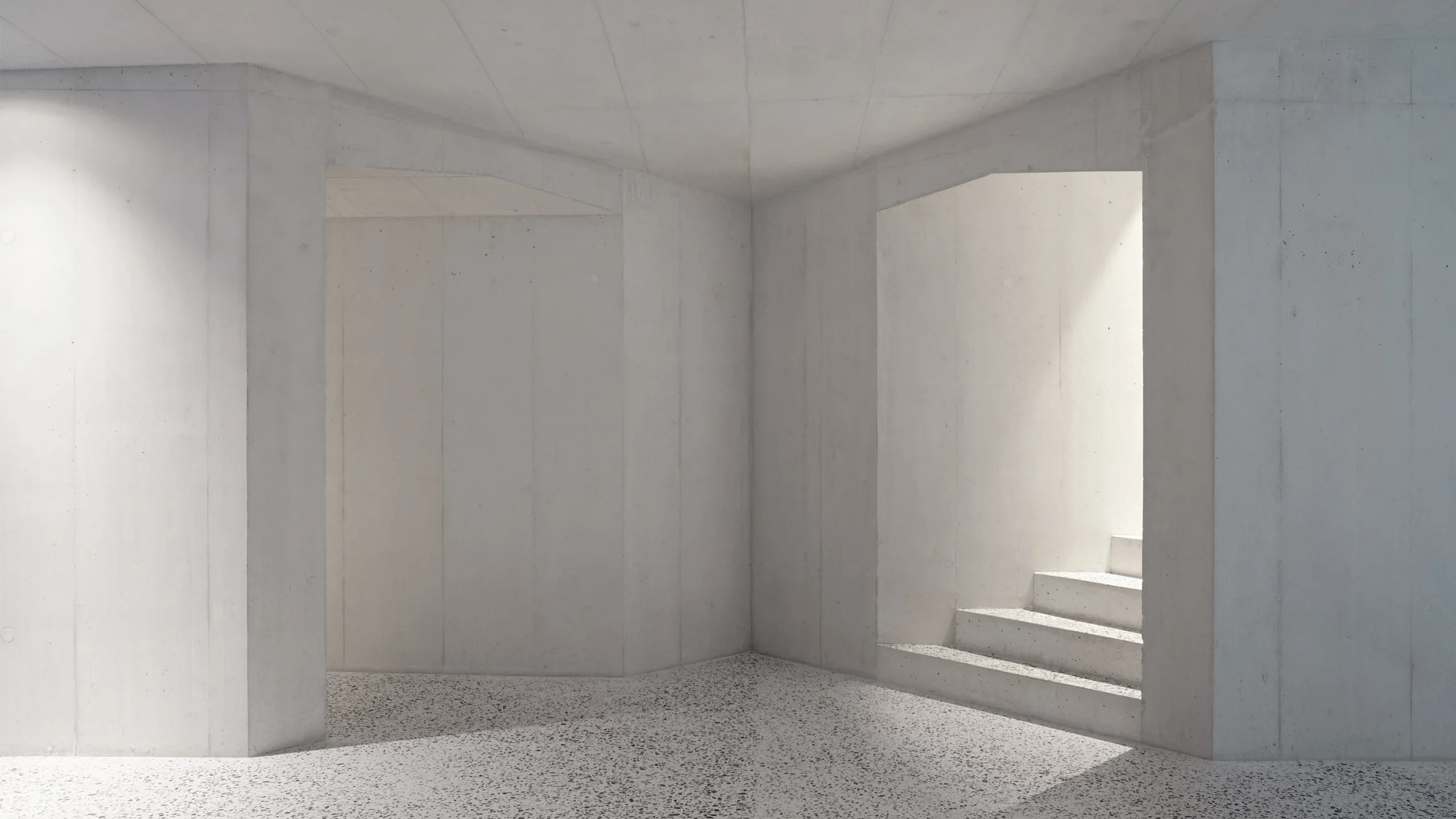
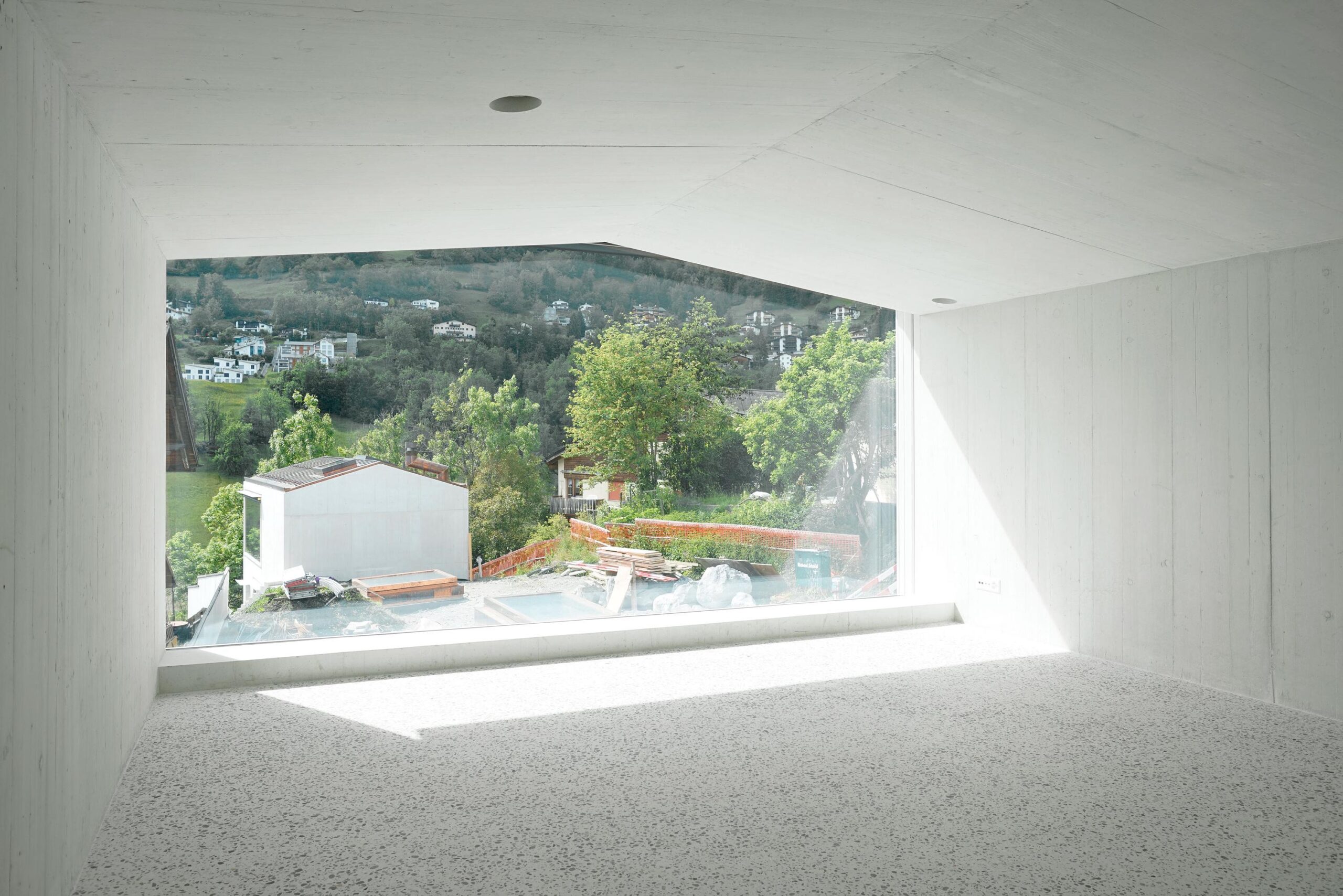
Meanwhile, Olgiati’s House in Laax stands at the opposite extreme of structural density: a radical volume of tinted exposed concrete where an imposing central column supports a pyramidal roof, organizing the living spaces in an introverted and unexpected way. Both dwellings represent the two souls of contemporary Swiss architecture: on the one hand, extreme lightness and industrialized assembly; on the other, monolithic strength, poetic geometry, and the gravity of matter.
MArch Valencia. Arquitectura y Diseño
© 2026 MArch Valencia. Arquitectura y Diseño
Privacy policy | Cookies policy | Terms of use