
Omotesando: Tokyo’s Urban Museum
DATE
04.05.2026
Located in the heart of Shibuya, Omotesando Avenue has established itself as a vanguard showcase where luxury brands sell fashion while exhibiting architectural manifestos. This “urban museum” allows for a walking tour through an unparalleled concentration of talent, where Pritzker Prize winners and other international award recipients have transformed the commercial landscape into a laboratory of forms, textures, and technology.
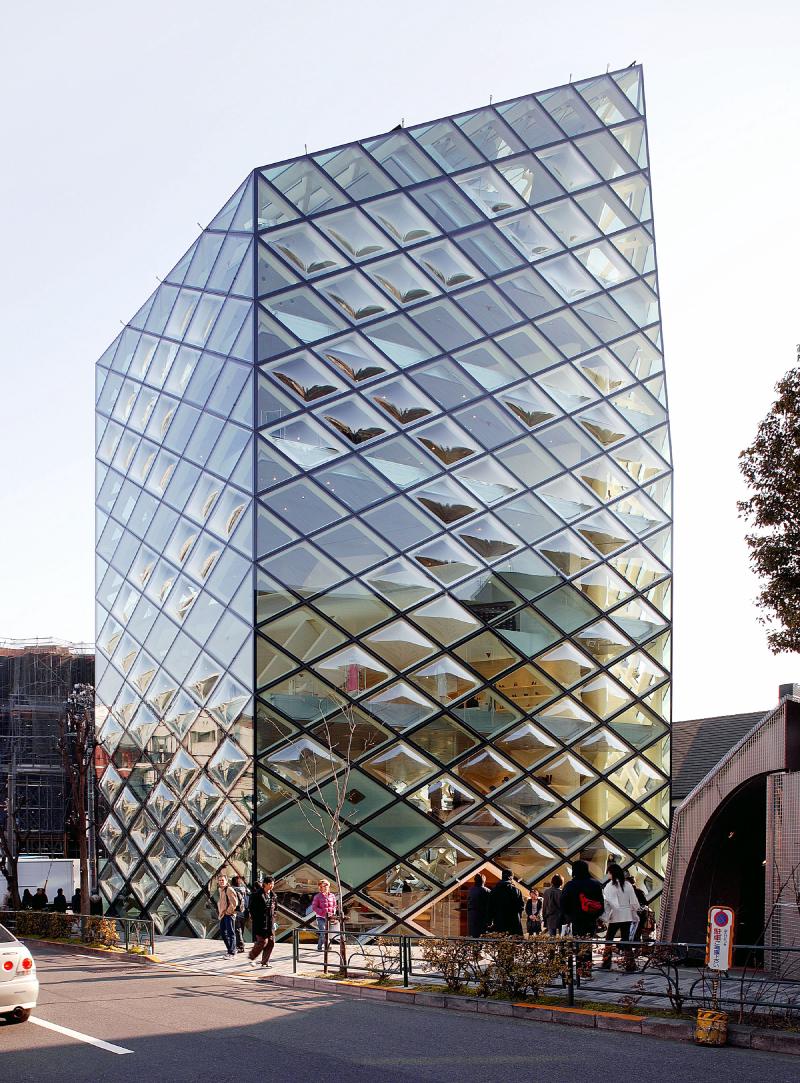
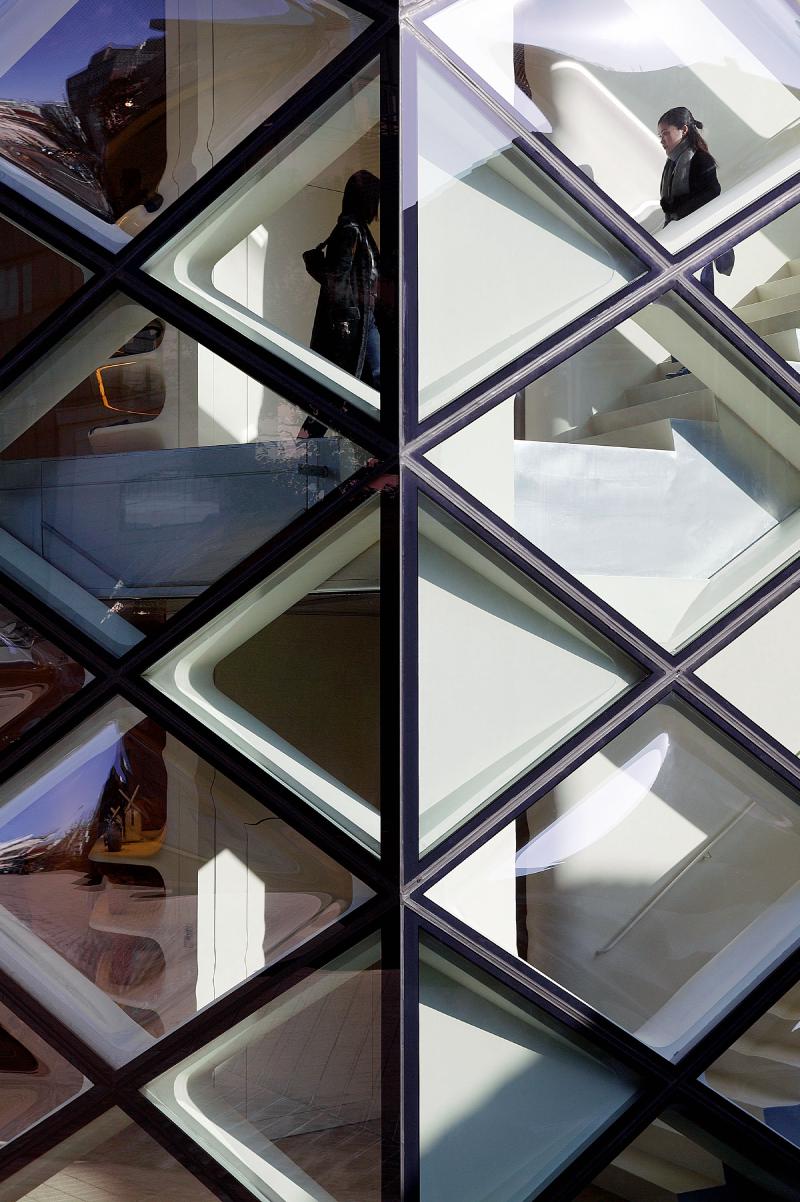
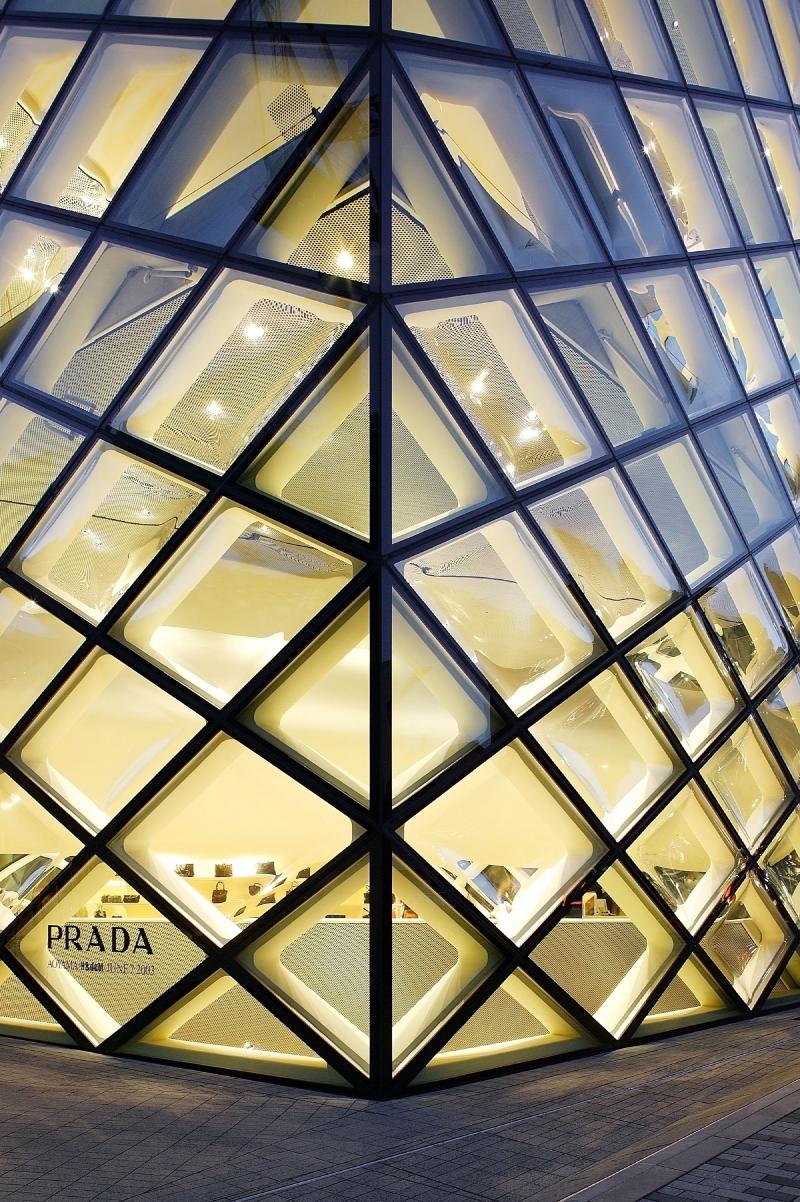
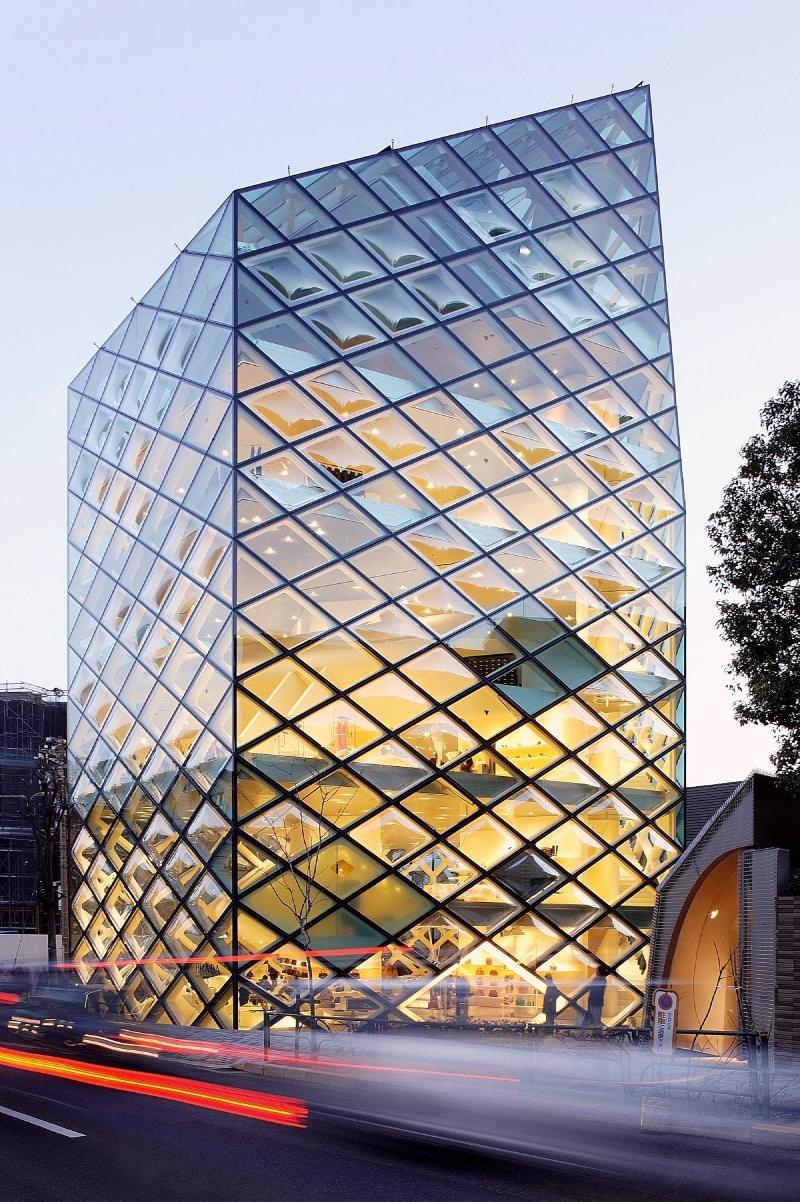
The Prada building, designed by Herzog & de Meuron, is perhaps the district’s most recognizable icon due to its striking honeycomb glass structure. Its curved facade, composed of concave, convex, and flat glass panels, creates a dynamic visual effect that makes the building appear to breathe or mutate depending on the daylight. Far from being a simple storefront, the design integrates the structure with the building’s skin, eliminating the traditional distinction between walls and windows to offer a continuous and playful spatial experience.
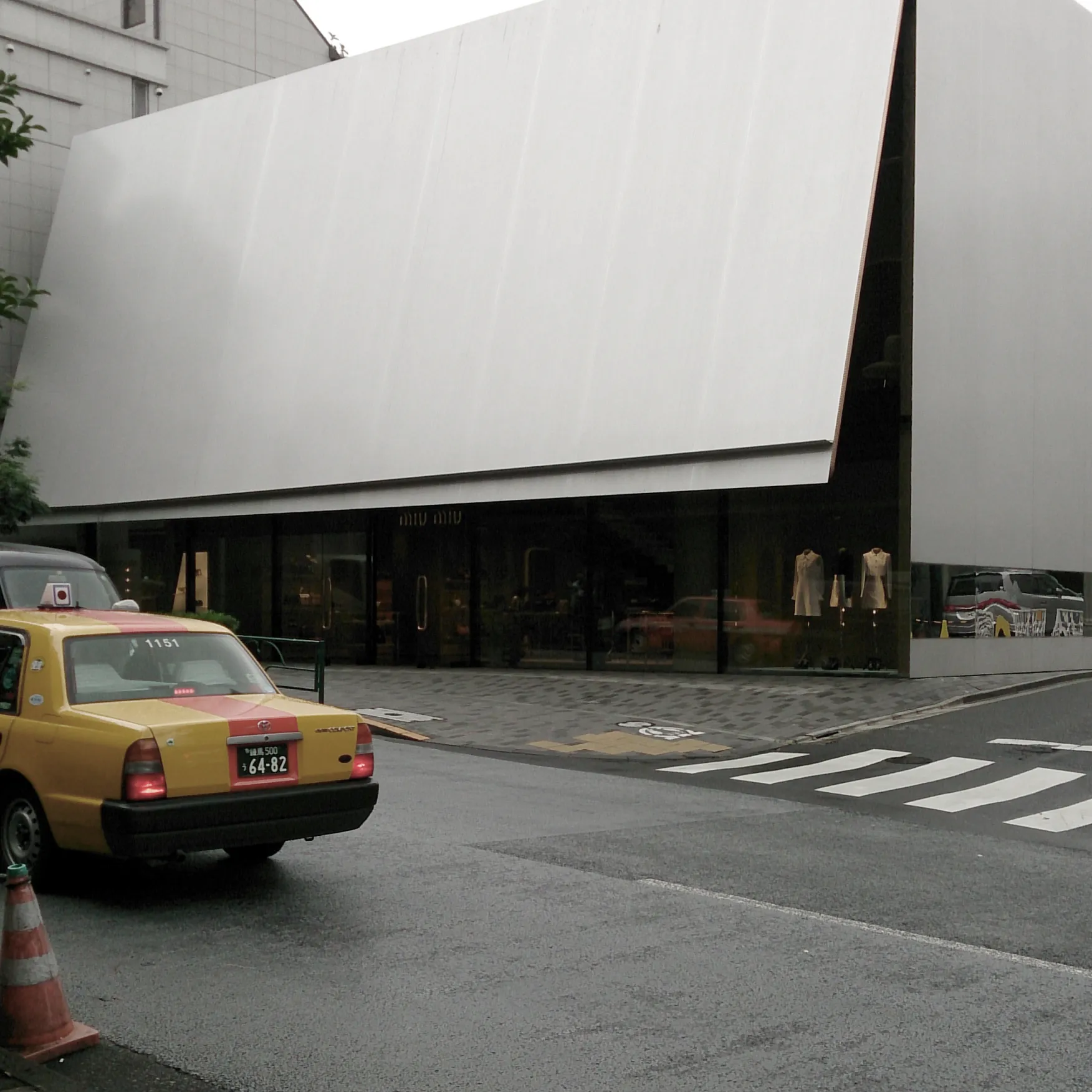
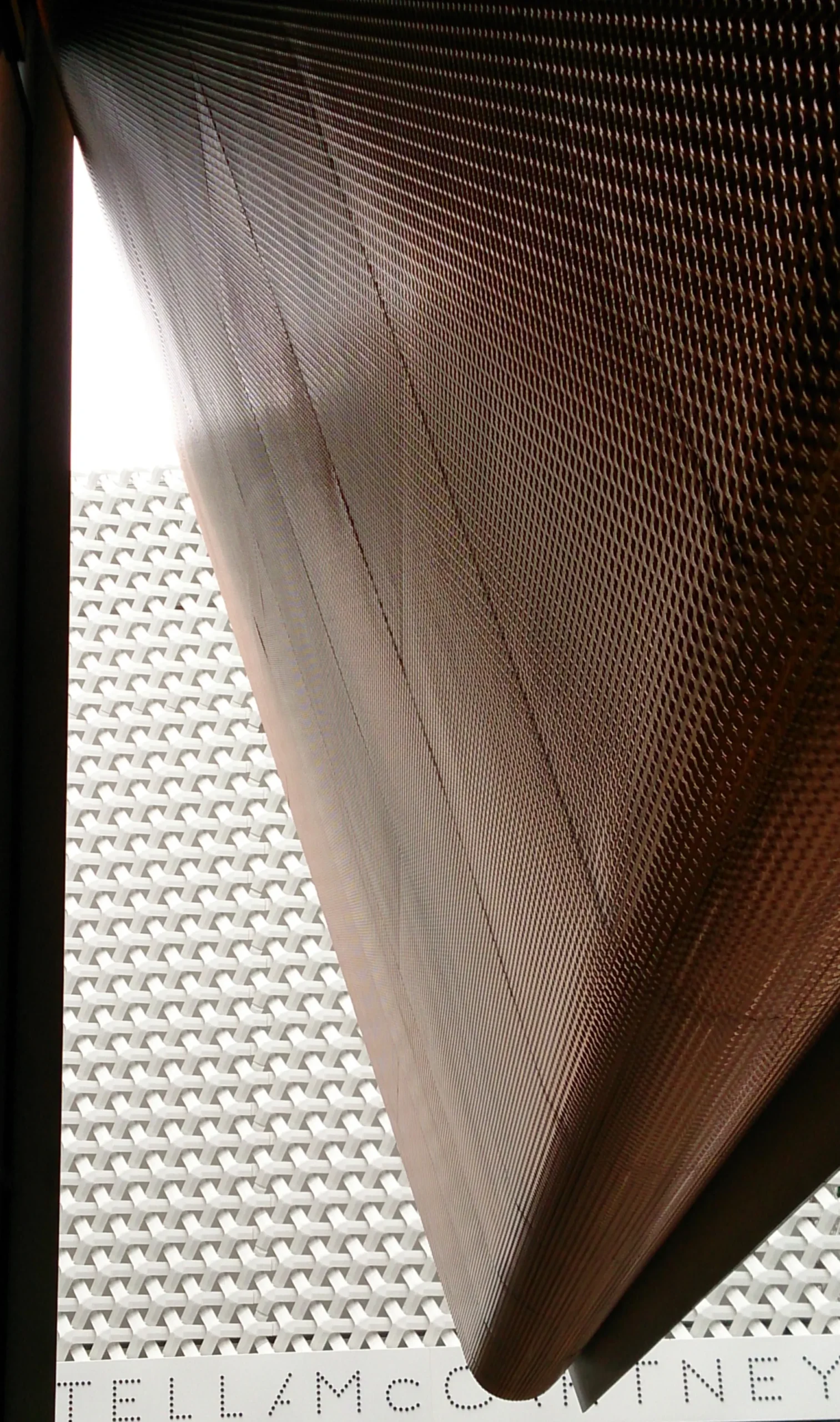
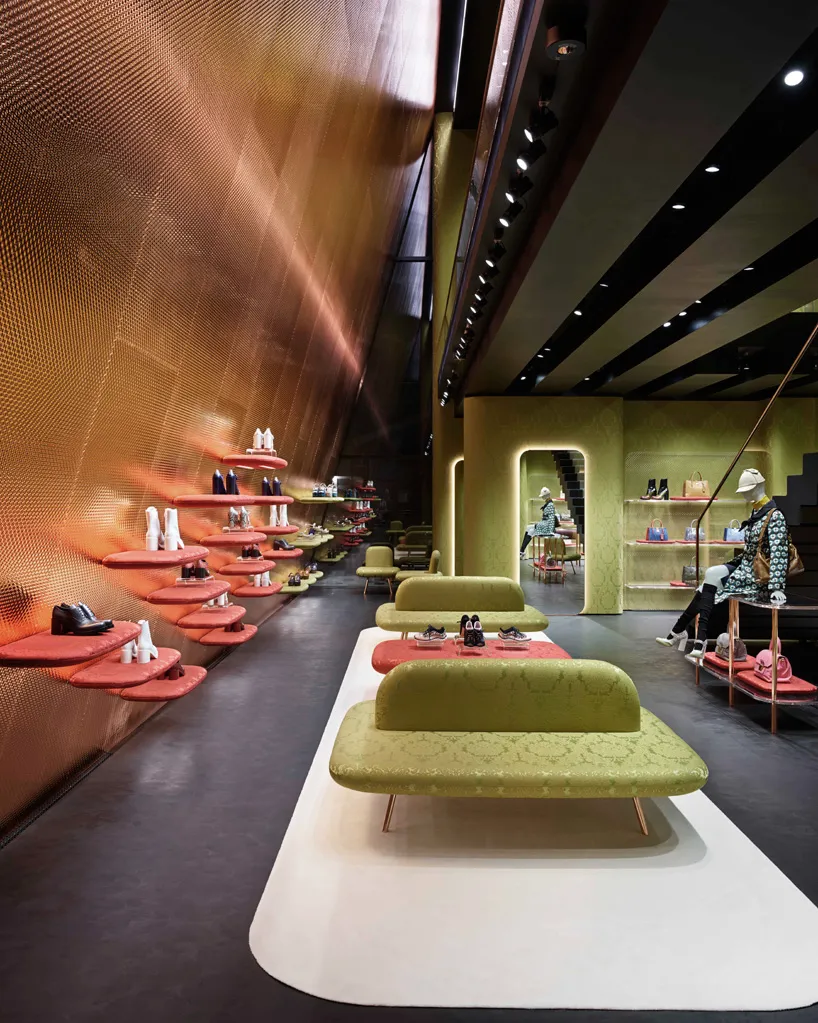
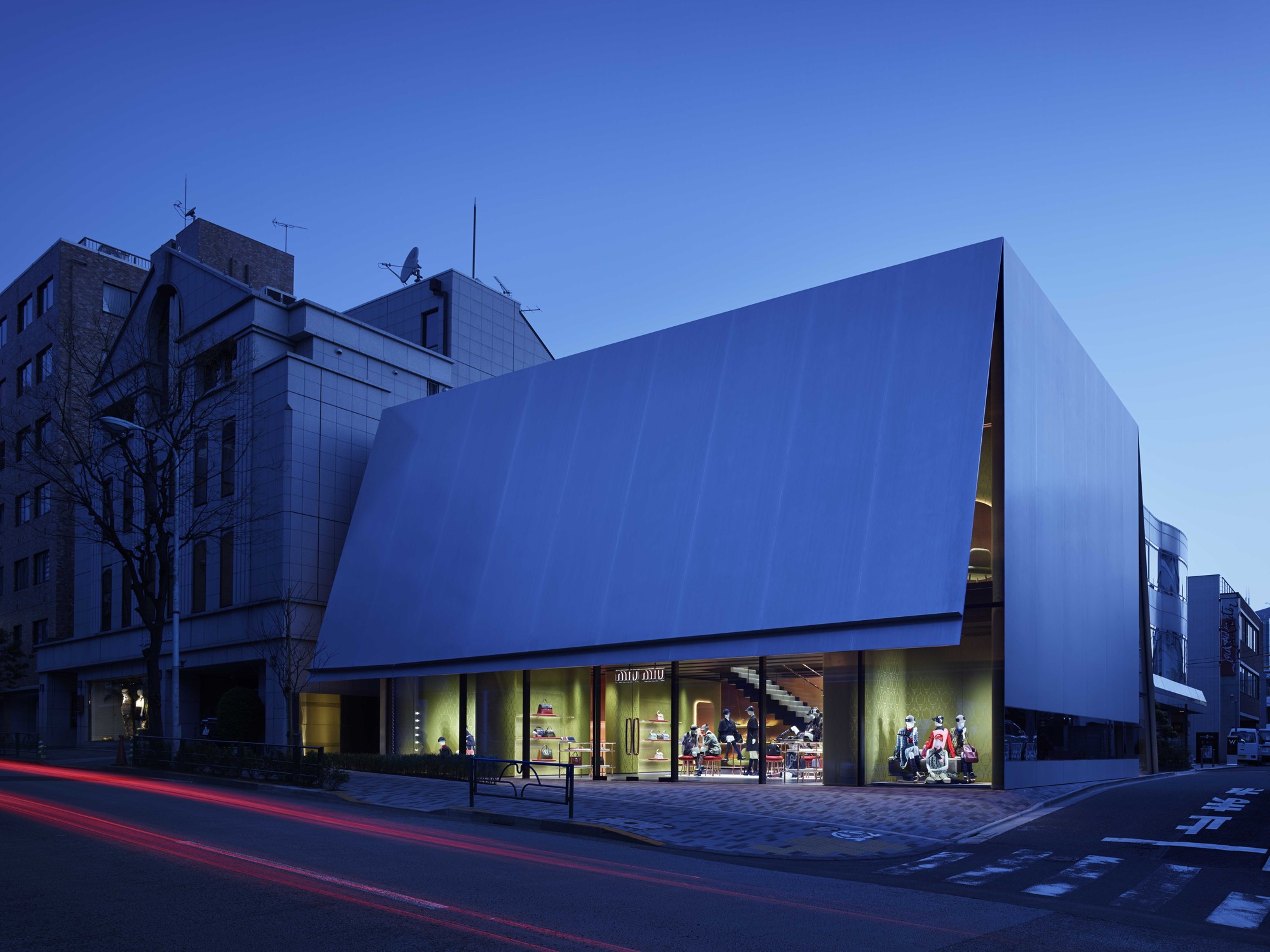
Just a few steps away, the same architects, Herzog & de Meuron, surprise with a radically opposite language for Miu Miu. Instead of the total transparency of Prada, this building presents itself as an opaque and mysterious metallic box, whose facade resembles a large steel sheet slightly lifted at the corners, much like the hem of a skirt or a half-open gift. This design seeks to create a more intimate and domestic atmosphere inside, contrasting the coldness of the exterior with the warmth of the internal textures, underscoring the brand’s exclusivity.
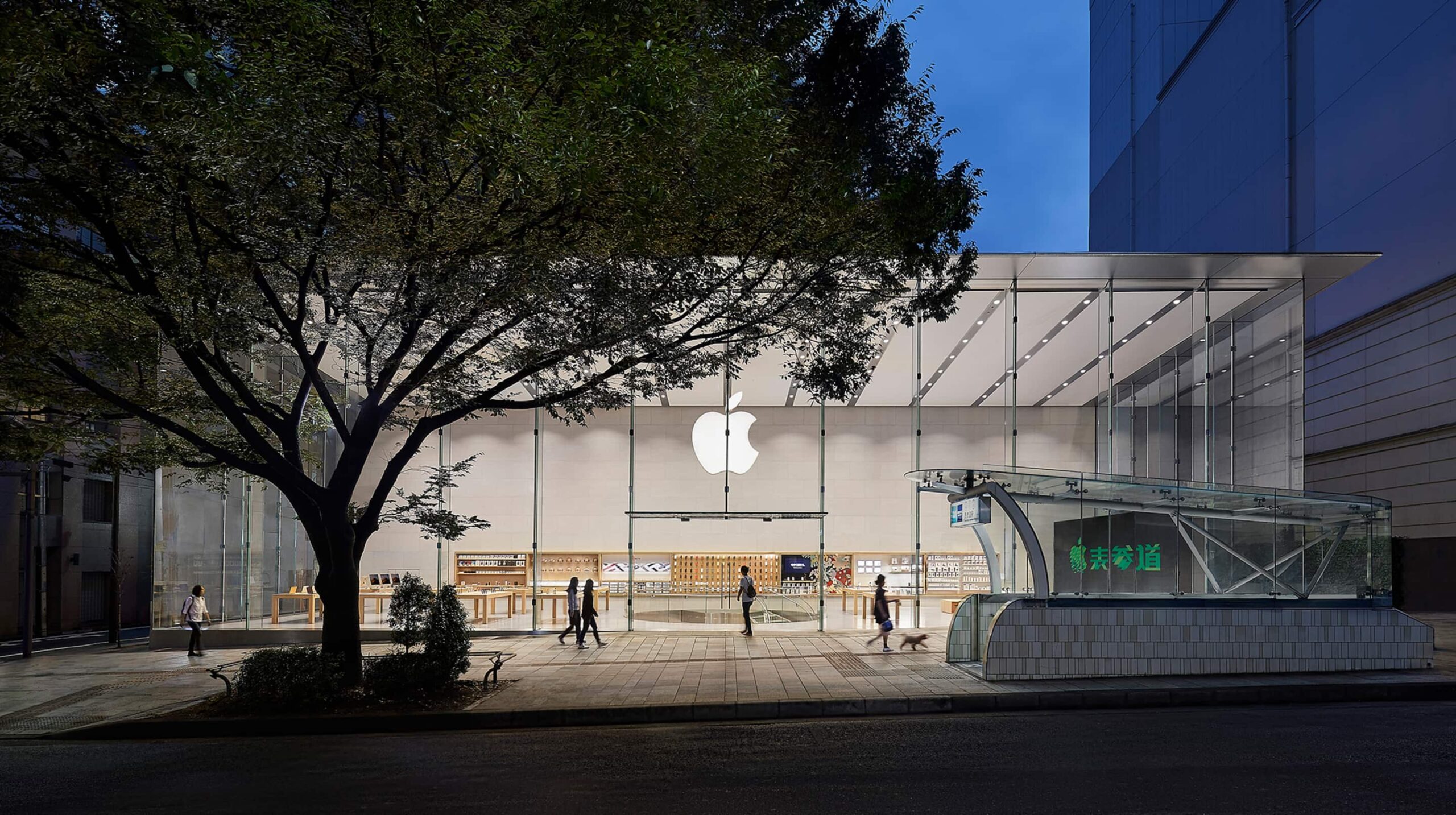
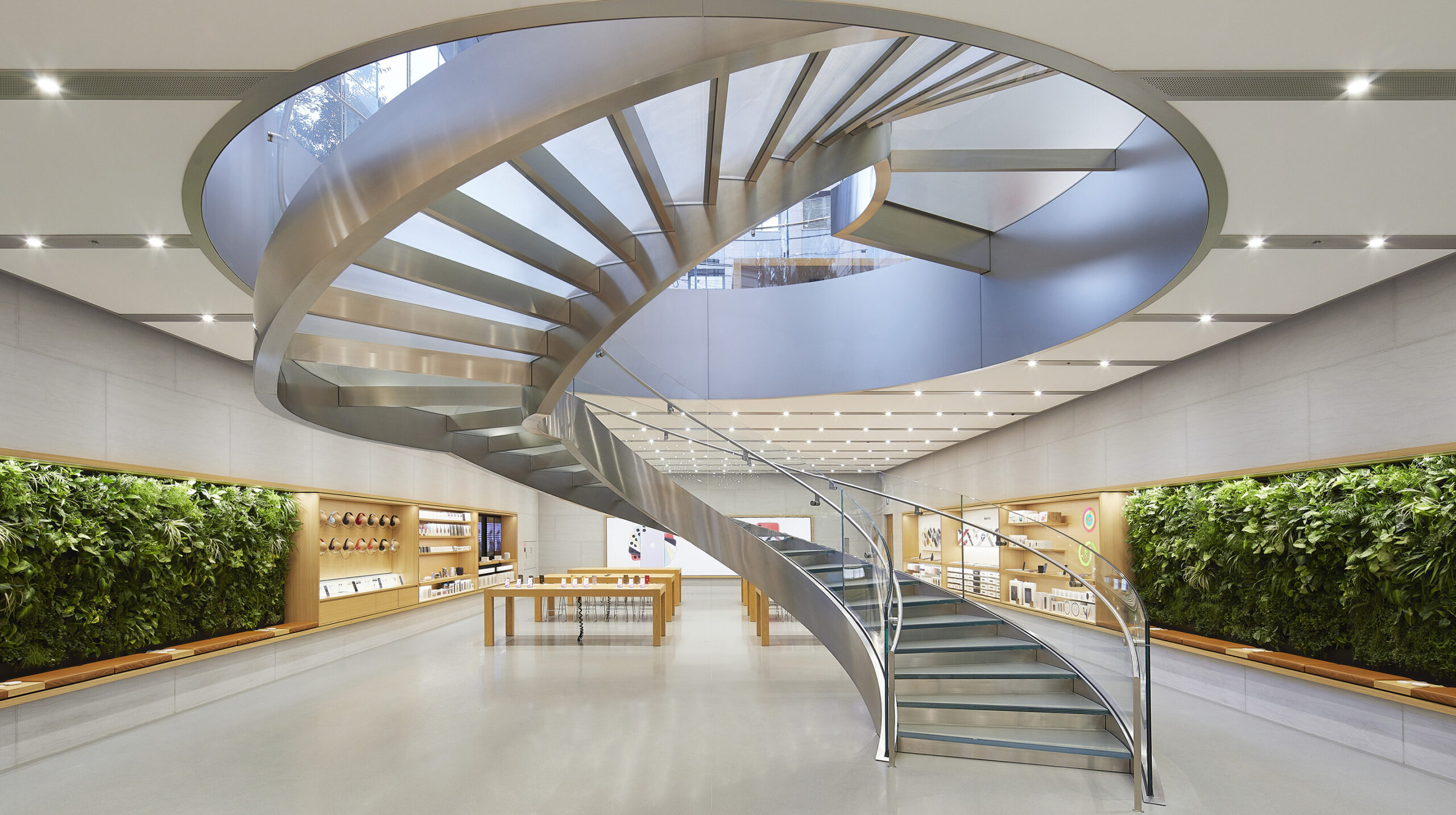
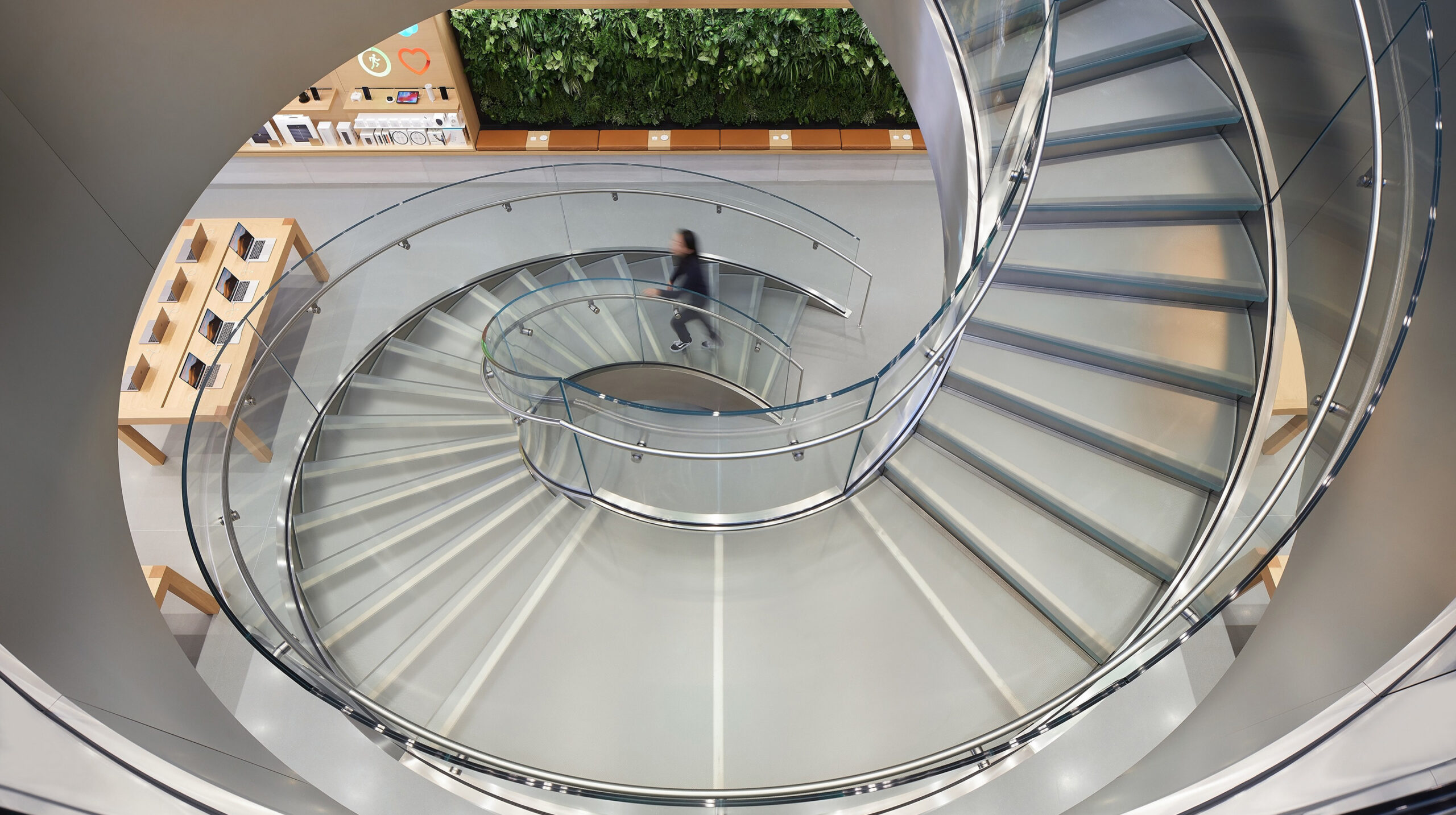
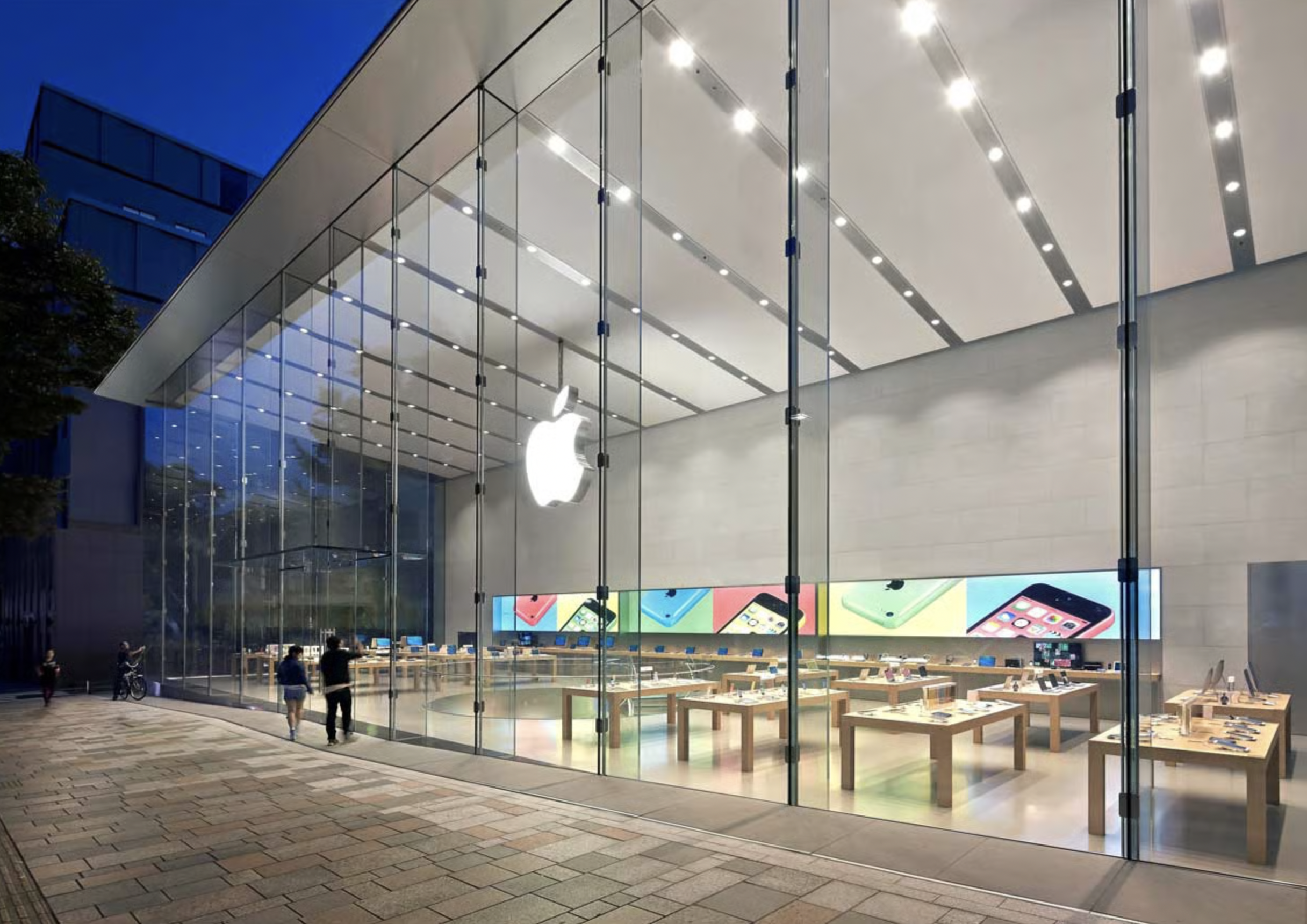
The Apple Store Omotesando, designed by Jun Mitsui, stands out for a minimalist elegance that pays tribute to transparency and the surrounding nature. The building is essentially a high-rise glass box that allows the iconic canopies of the avenue’s Zelkova trees to be reflected and visually integrated into the store’s interior. With a structural design that makes its thin metallic roof appear to float, the space celebrates openness and light, becoming a visual bridge between cutting-edge technology and Tokyo’s green urban environment.
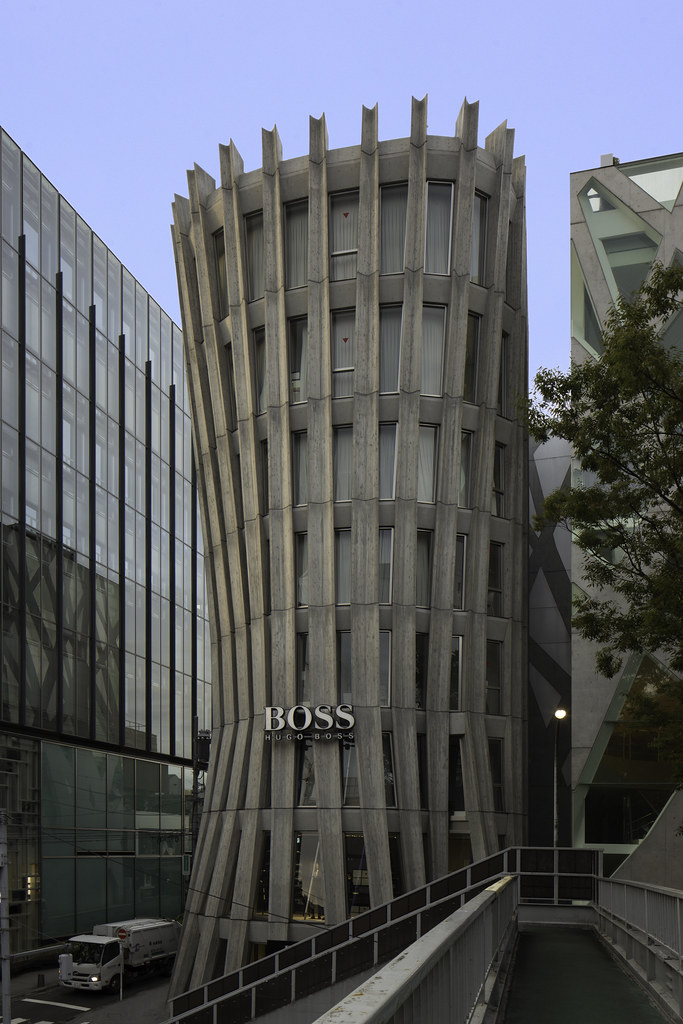
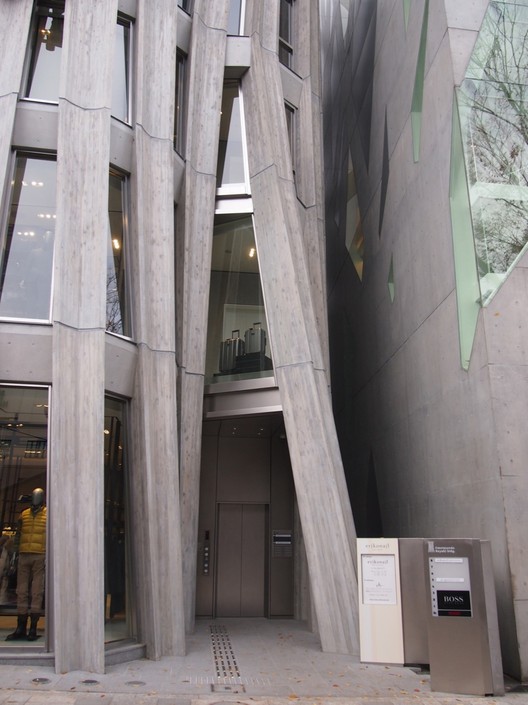
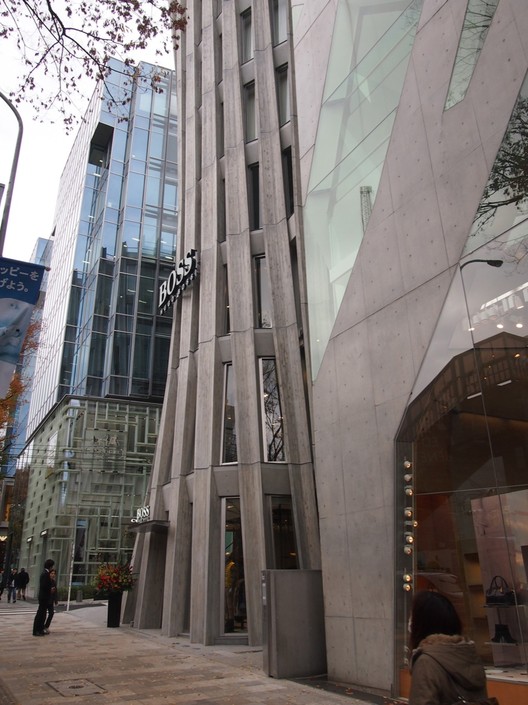
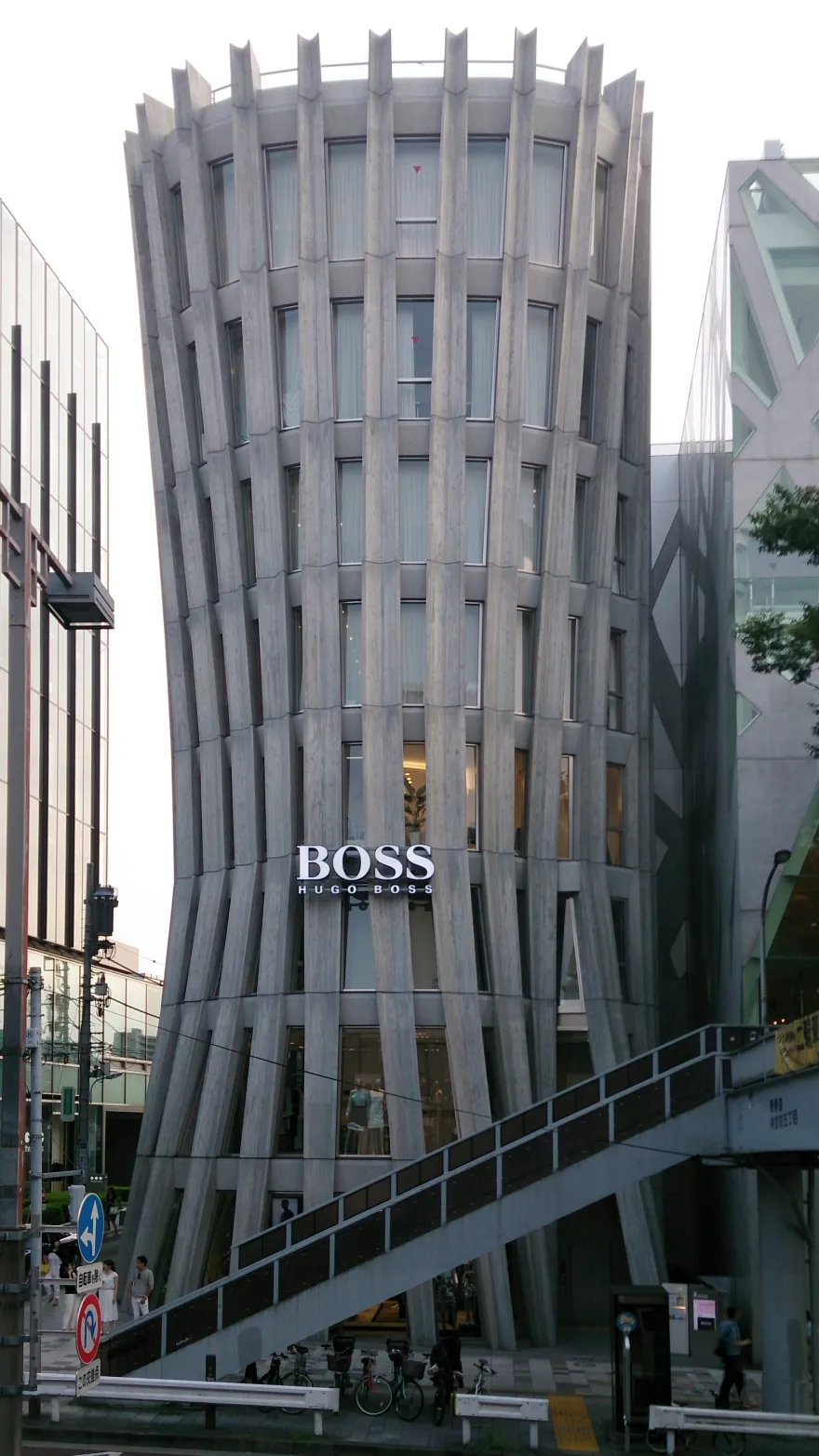
The Hugo Boss building in Omotesando, designed by architect Norihiko Dan, stands as a piece of great sculptural power that breaks away from the district’s prevailing orthogonality. Its design is characterized by a series of exposed concrete columns that branch out and widen organically toward the top, mimicking the structure of a tree. This solution not only responds to an aesthetic logic that dialogues with the Zelkova trees lining the avenue but also addresses the challenge of an irregular and narrow plot, allowing the structure to support the building while freeing up the interior space. The facade, where concrete and glass intertwine in concave forms, creates a sculptural presence that shifts according to the observer’s perspective, solidifying the building as a landmark of robust elegance within Tokyo’s urban museum.
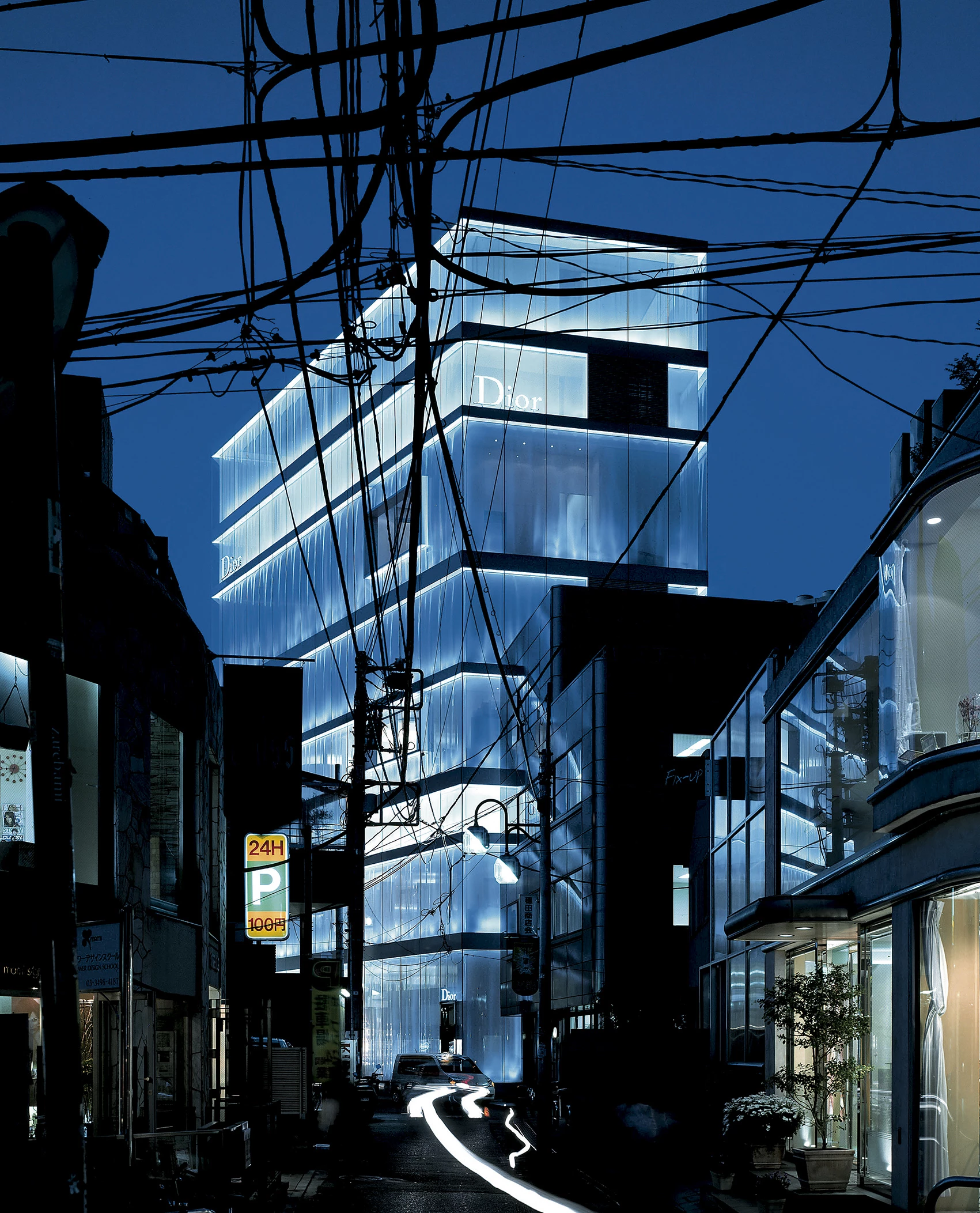
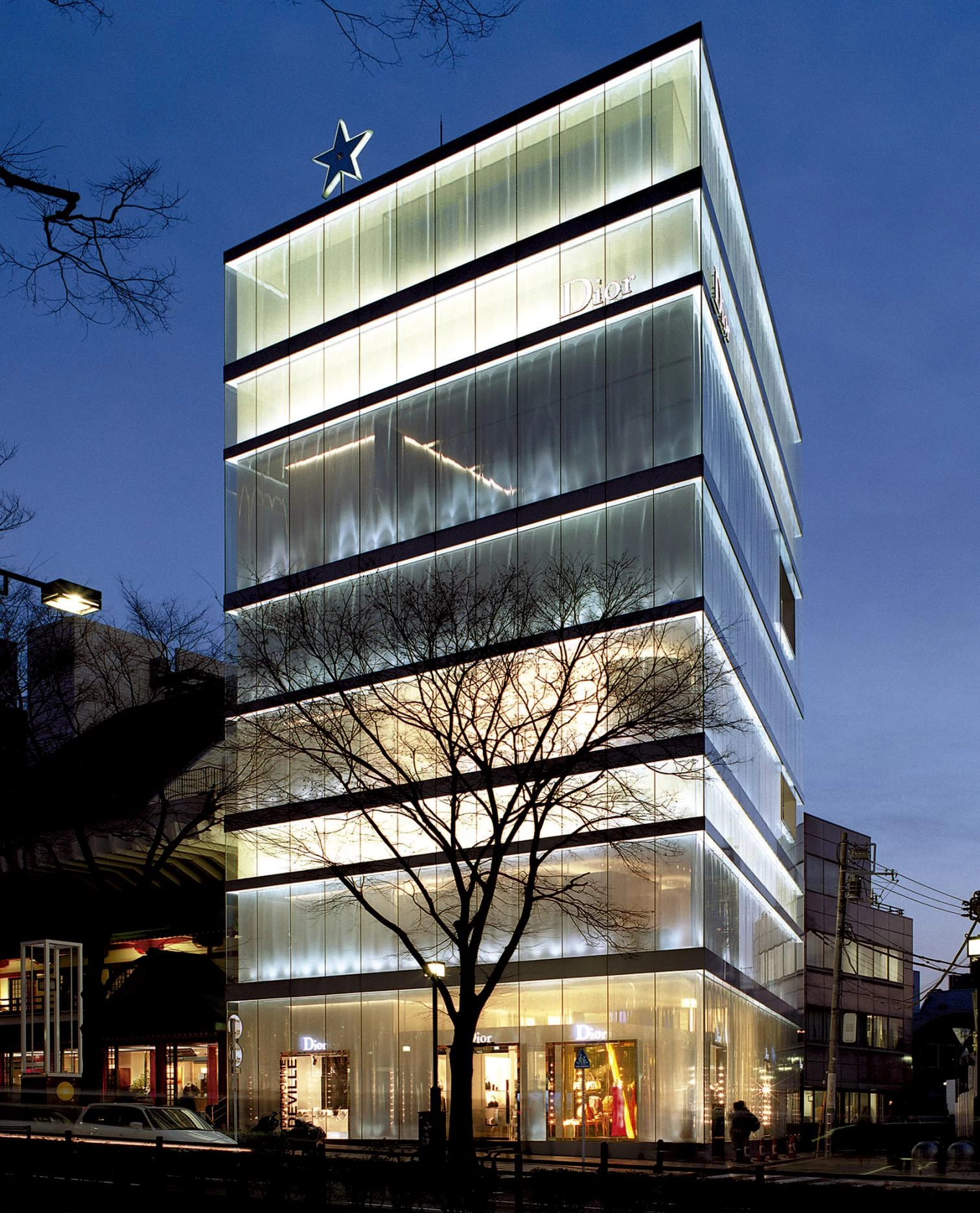
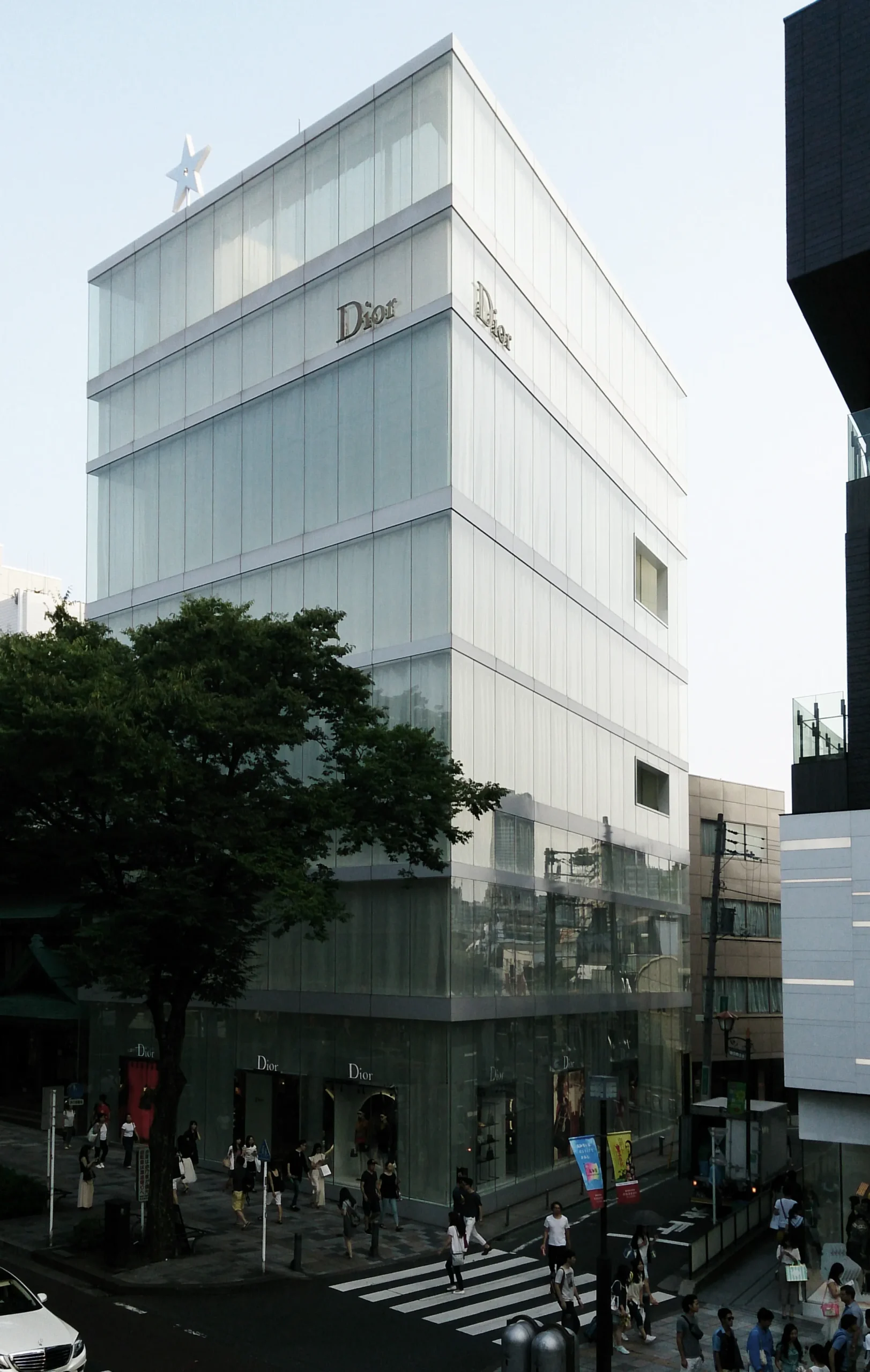
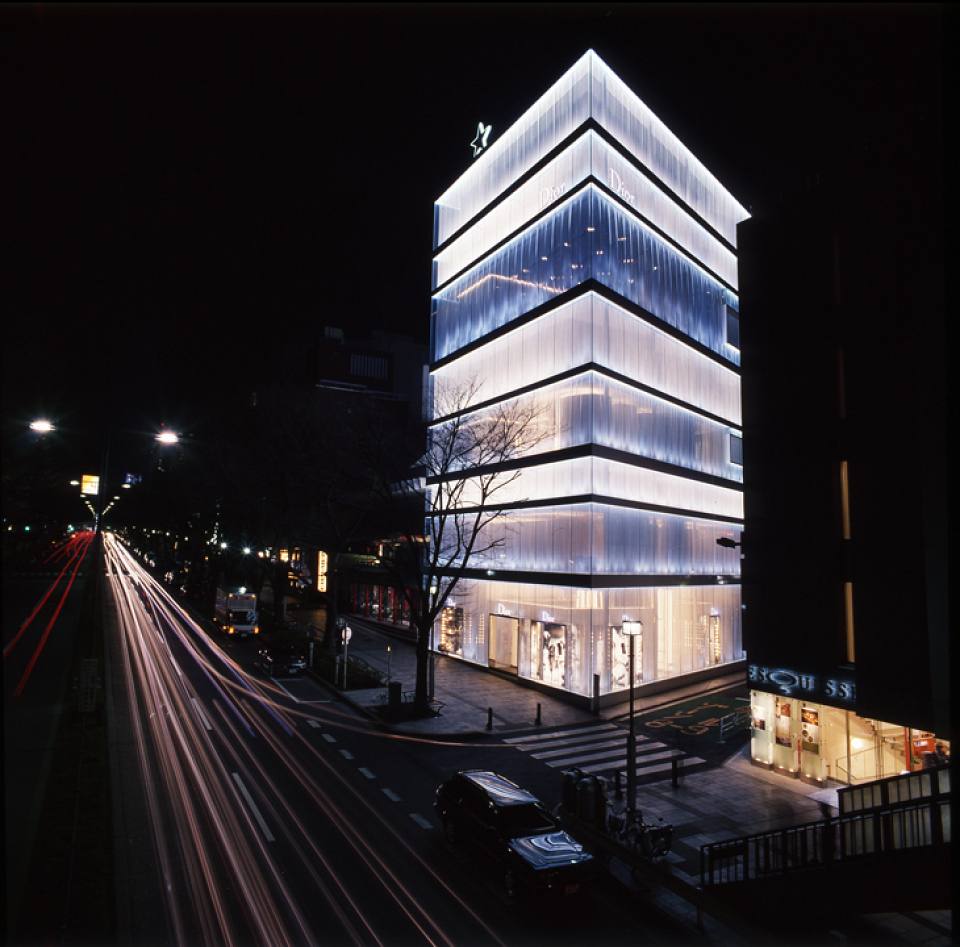
Finally, the Dior building, designed by the studio SANAA (Kazuyo Sejima and Ryue Nishizawa), manifests as a tower of ethereal lightness and sophistication. Enveloped in a transparent glass skin behind which delicate sheets of wavy acrylic hang—emulating the folds of haute couture fabric—the building appears to be covered by a veil. The arrangement of floor slabs at different heights creates a unique visual rhythm that, at night, transforms the construction into a soft and glowing urban lantern, capturing the ephemeral and elegant essence of the French fashion house.
Taken together, Omotesando is not merely a commercial avenue, but a living manifesto where architecture transcends its function to become narrative, identity, and experience. Each building, rather than competing, engages in dialogue with the others and with its surroundings, constructing an urban narrative in which formal innovation, construction precision, and a sensitivity to light and material define a new model of the city. Walking along this artery of Tokyo is, in essence, to move through an ever-evolving exhibition, where architecture is not observed from a distance, but inhabited, experienced, and felt as an inseparable part of contemporary life.
MArch Valencia. Arquitectura y Diseño
© 2026 MArch Valencia. Arquitectura y Diseño
Privacy policy | Cookies policy | Terms of use