
The Rebirth of the Guangzhou Shipyard by Kengo Kuma
DATE
04.06.2026
Kengo Kuma’s project in Guangzhou reconverts a historic shipyard on the Pearl River into a multifunctional complex. The proposal transforms the former naval workshops into a cultural and public epicenter, bridging 20th-century industrial memory with contemporary urban dynamics.
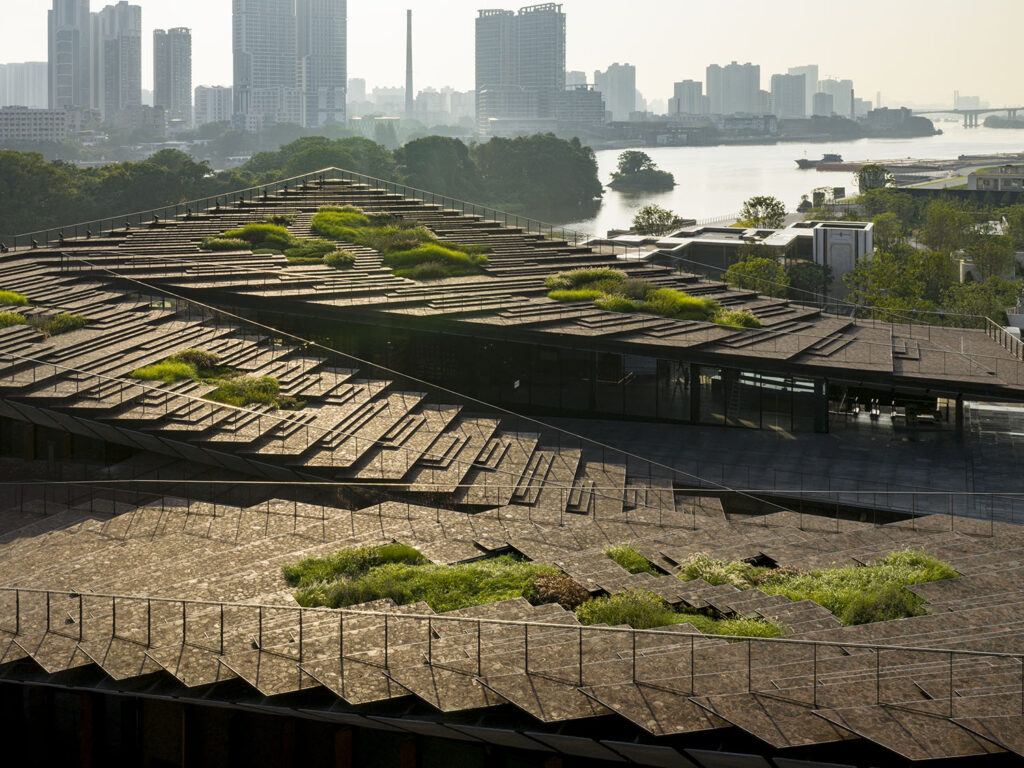
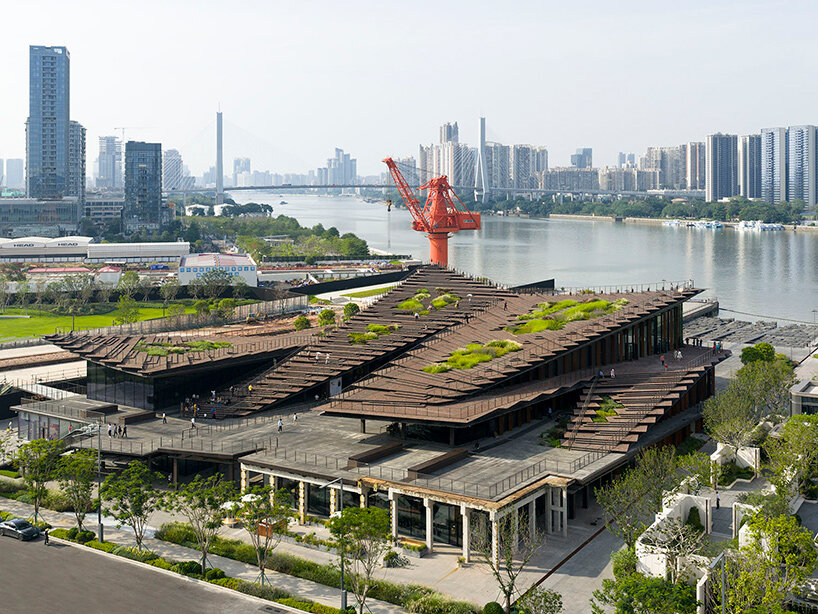
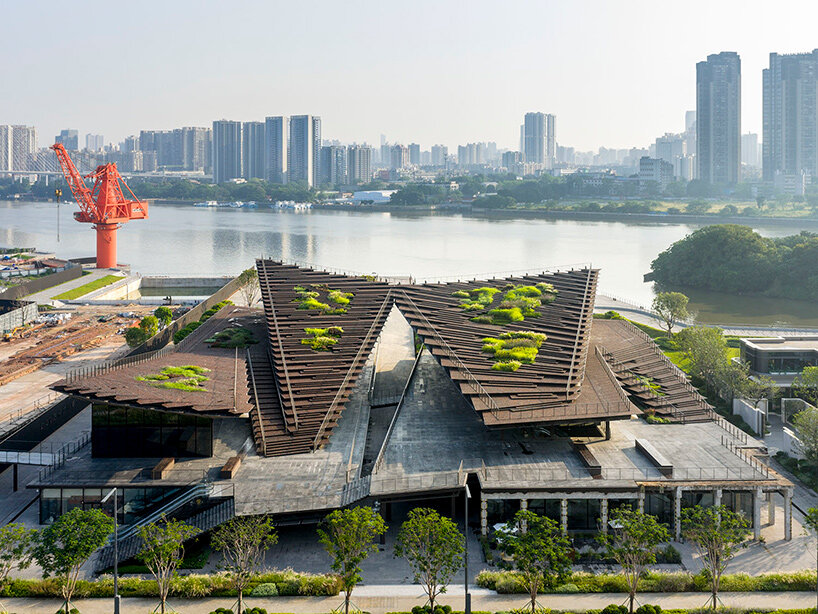
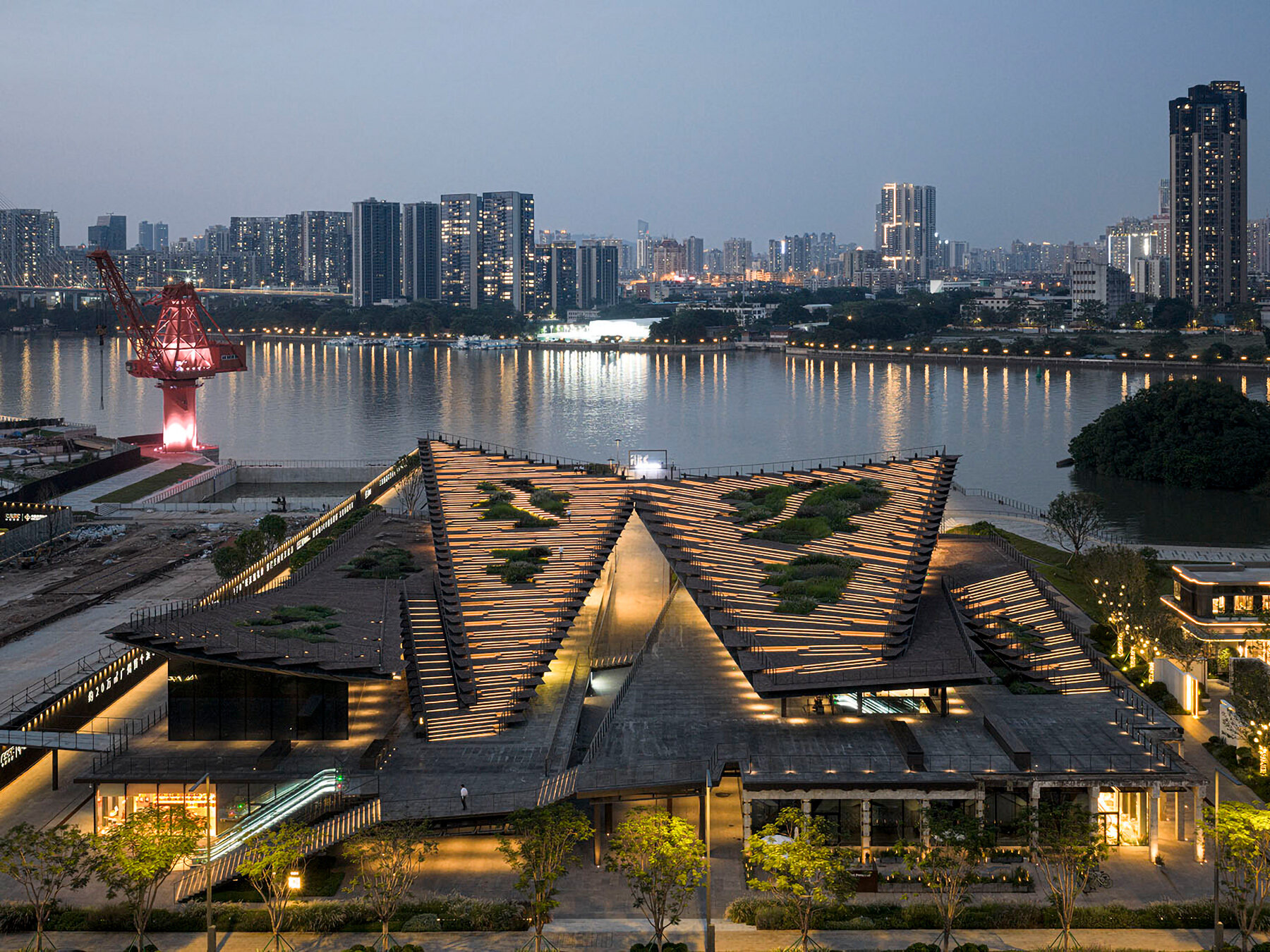
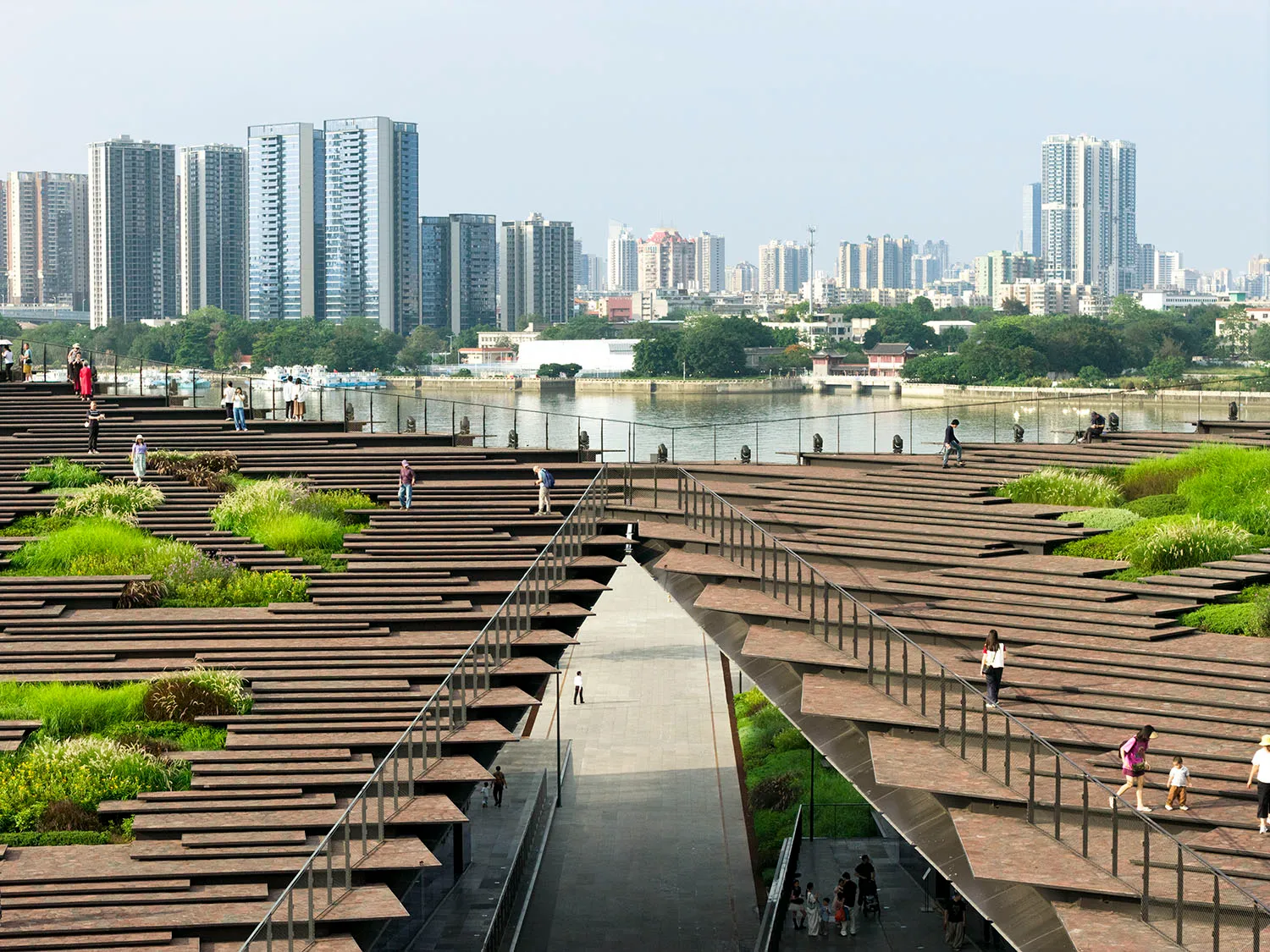
The true heart and defining feature of the project is its spectacular walkable rooftop, conceived as an extension of the urban fabric itself. Kengo Kuma has designed a roof sculpted in the shape of a slope or a stepped hill that invites citizens to walk over it, turning the building’s fifth facade into an ever-moving public viewpoint. This artificial topography breaks away from the geometric rigidity of the old industrial sheds and generates a new outdoor socialization space from which to contemplate panoramic views of the river, brilliantly blurring the boundaries between architecture, engineering, and landscape.
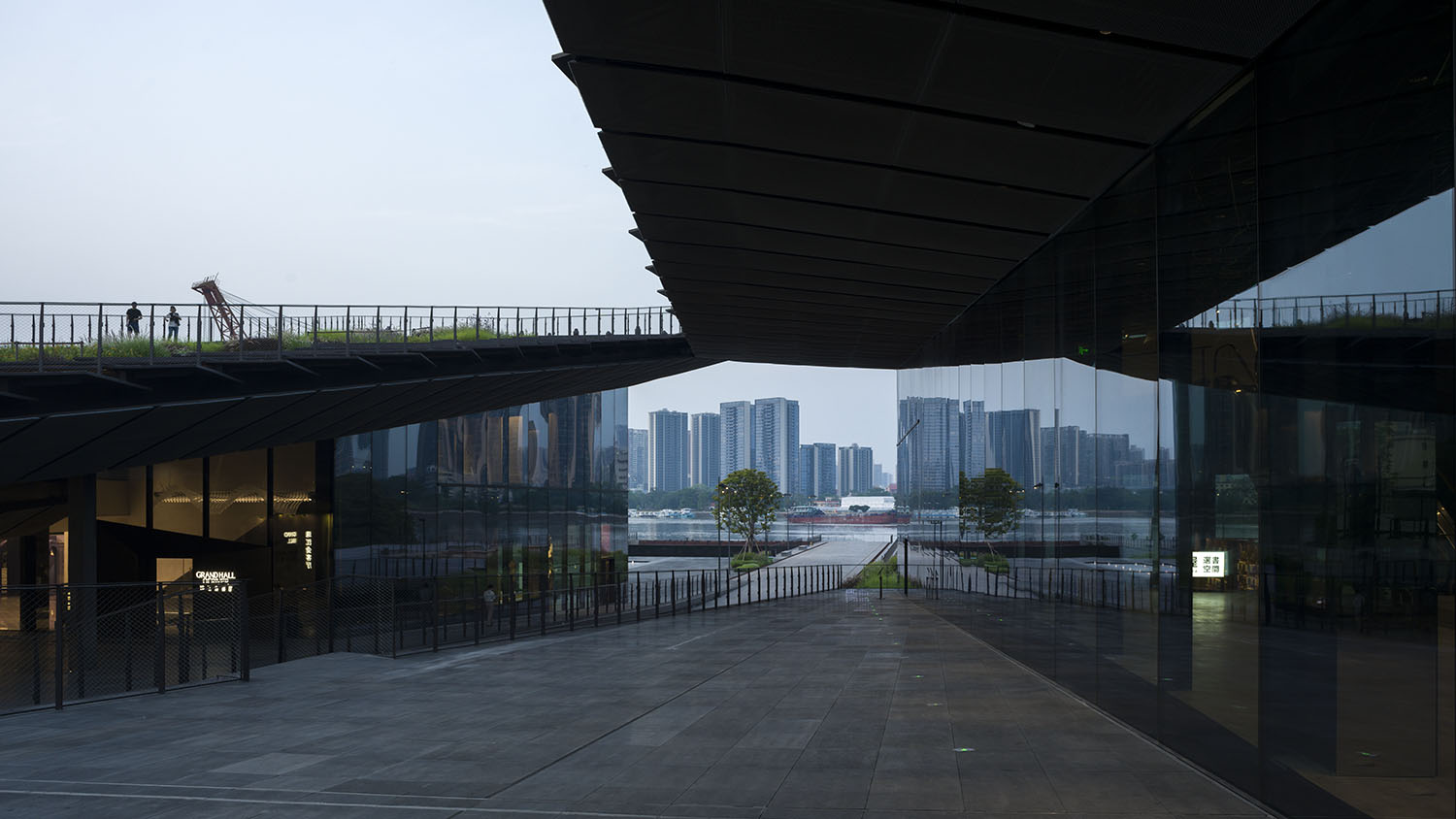
The undisputed material protagonist of the project is volcanic stone, used extensively to clad and pave the entire large walkable roof. The studio selected this material for its porous texture, its palette of dark tones, and its deep connection to the earth, which contrasts beautifully with the lightness of the new glass enclosures and the pre-existing steel structures. Walking across this rugged, natural surface, visitors experience a disconnection from conventional urban asphalt, immersing themselves in a tactile atmosphere that pays homage to the solidity and tectonic strength that once characterized the shipyard’s construction activities.
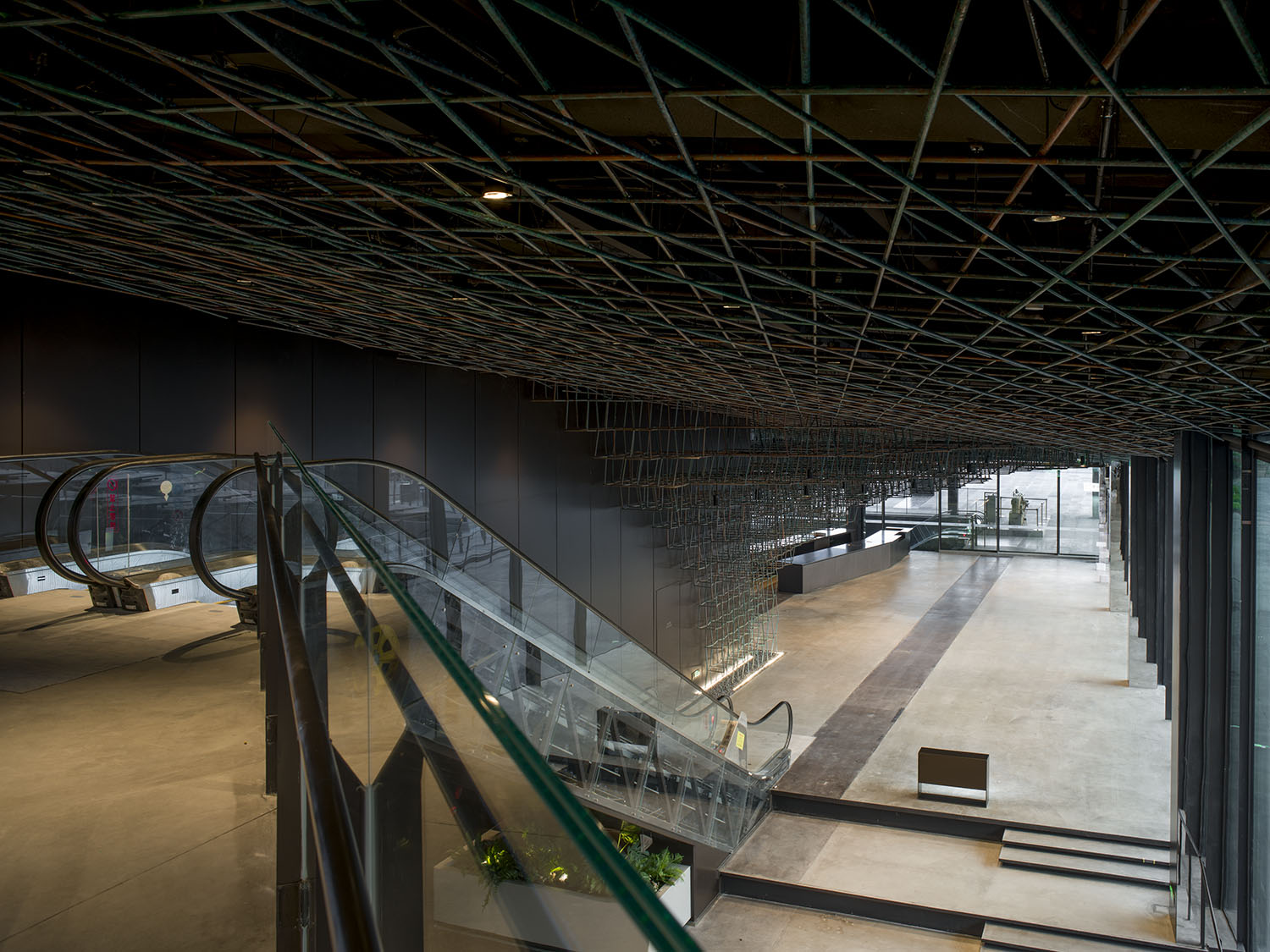
On the interior, the design respects the monumental scale and structural skeleton of the original workshops, adapting them to their new commercial and cultural uses through subtle interventions. The vast voids where vessels were once assembled are now transformed into spacious atriums flooded with natural light, thanks to the strategic insertion of skylights and glazed facades. The interior pathway is conceived as a fluid sequence where the rough textures of concrete and salvaged metal coexist with the warmth of wood and the fragmented geometries so characteristic of Kuma’s architectural language, offering a spatial experience rich in historical and contemporary nuances.
The transformation of the Guangzhou shipyard is a manifesto on how contemporary architecture can regenerate the city without erasing its identity markers. Kengo Kuma & Associates has shown that industrial pre-existences are an opportunity to inject material poetry and high-quality public space into the urban fabric. By combining the solid presence of volcanic stone with the audacity of a walkable rooftop, the project returns the riverfront to the citizens while sealing an eternal pact between Guangzhou’s port past and its vision for the future.
MArch Valencia. Arquitectura y Diseño
© 2026 MArch Valencia. Arquitectura y Diseño
Privacy policy | Cookies policy | Terms of use