



Prototyping with Andrés Alfaro Hofmann
DATE
09.11.2026
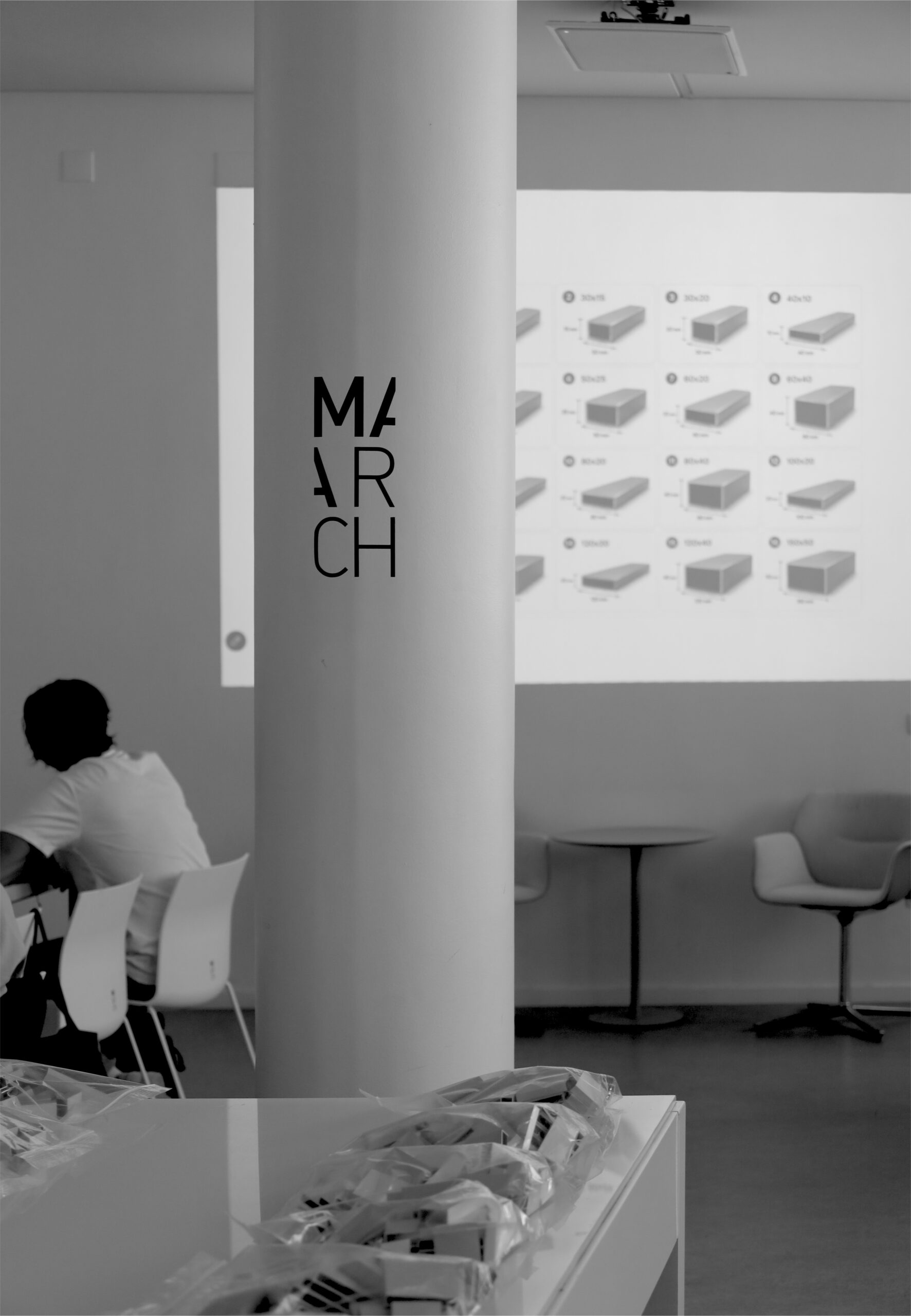
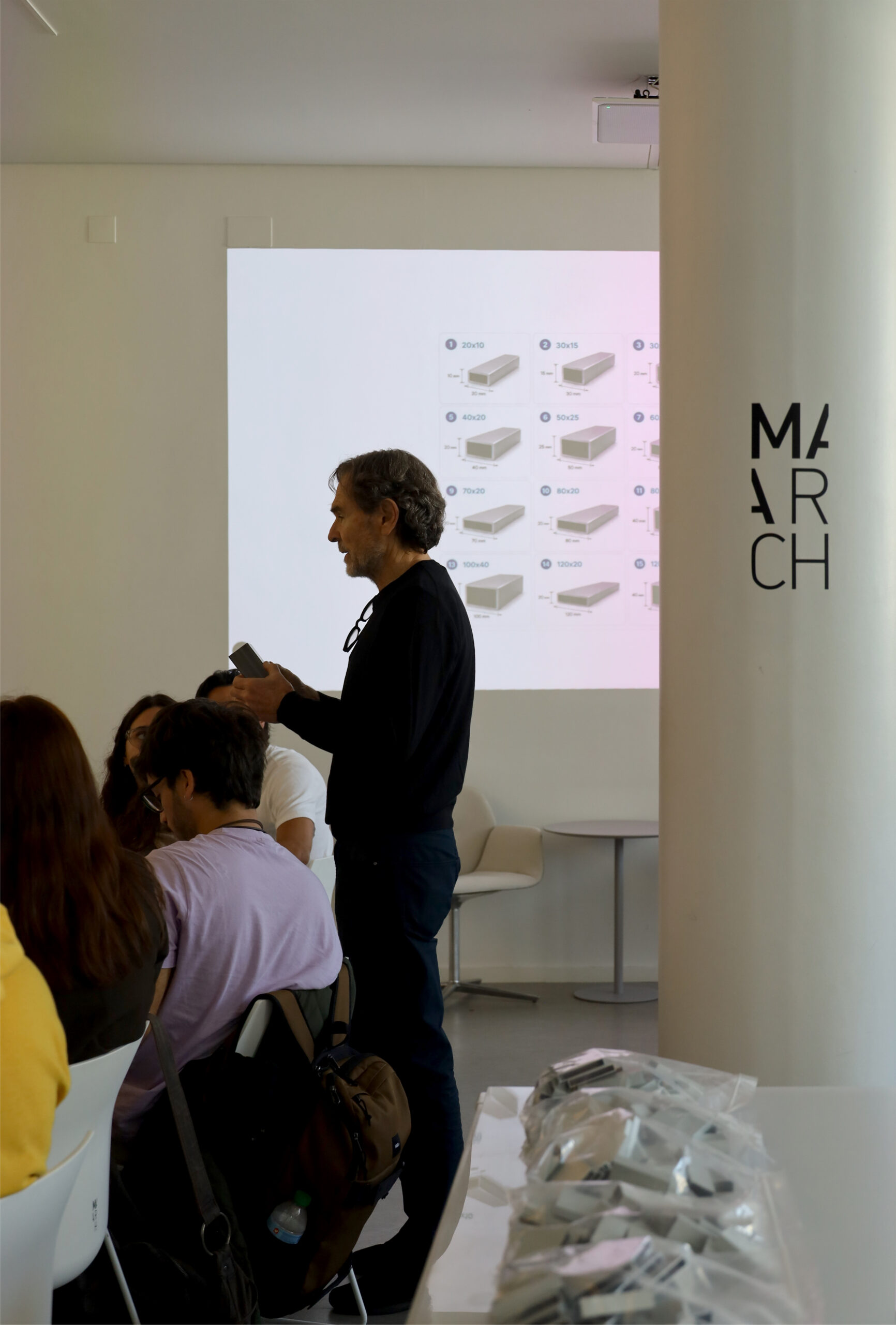
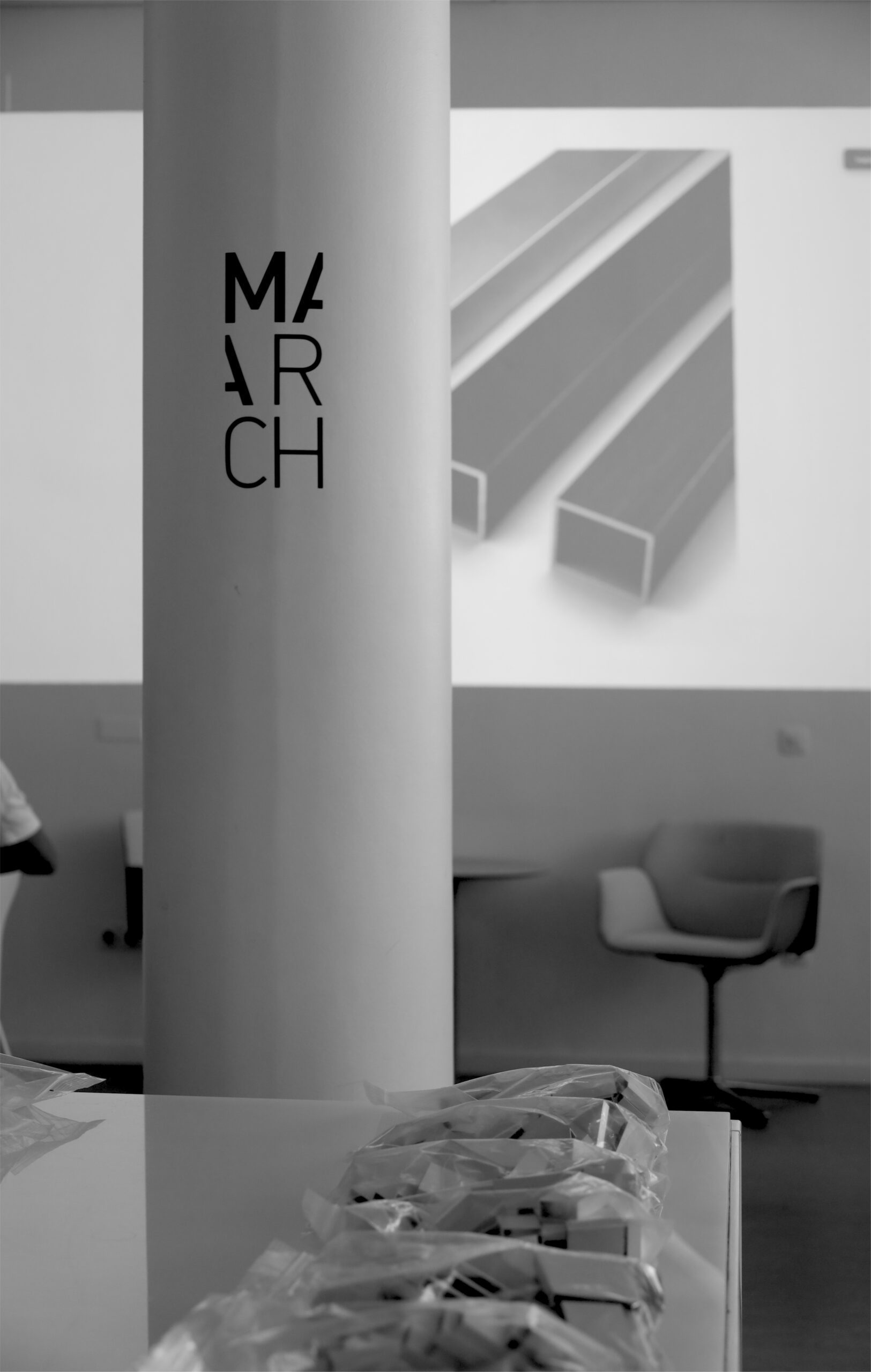
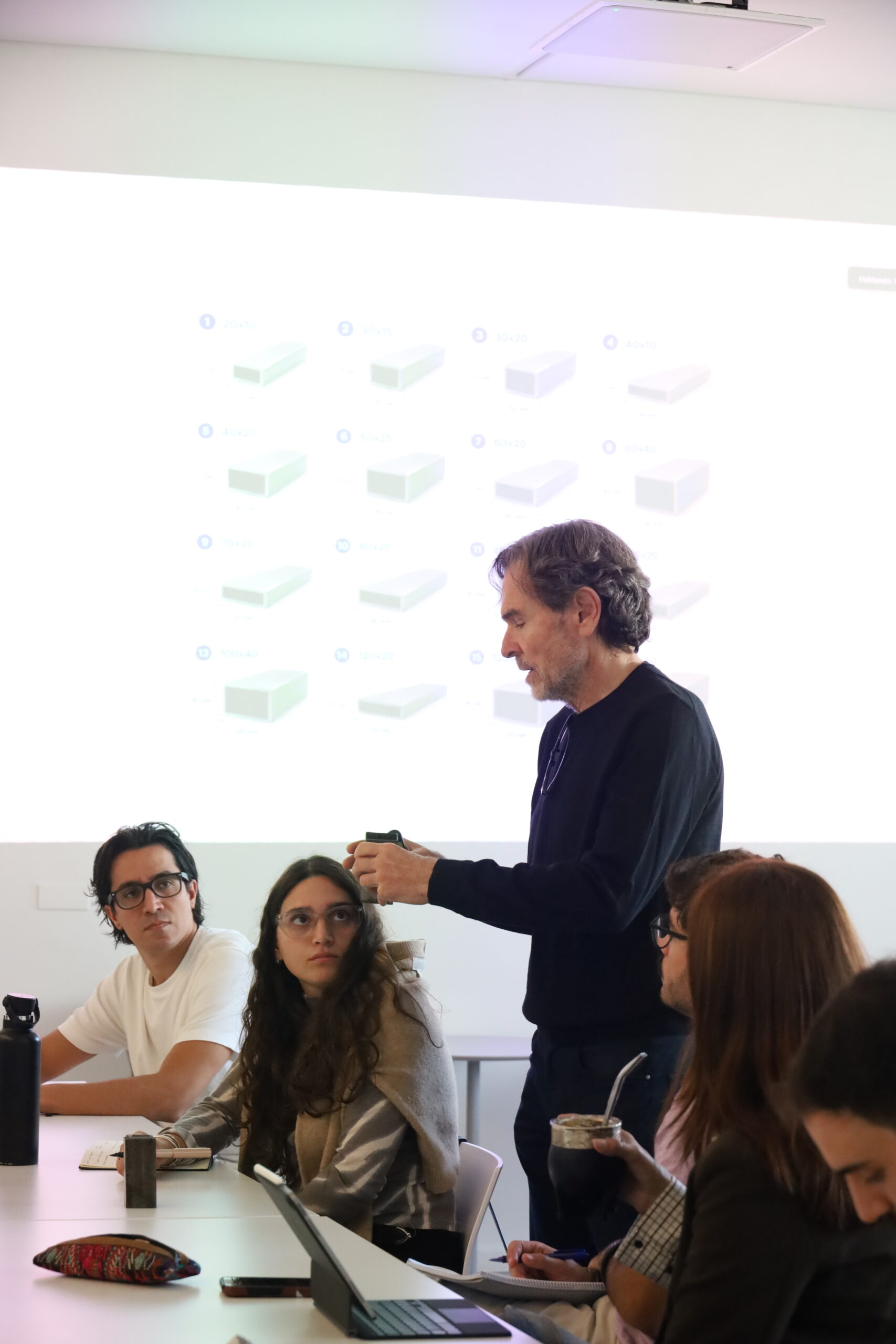
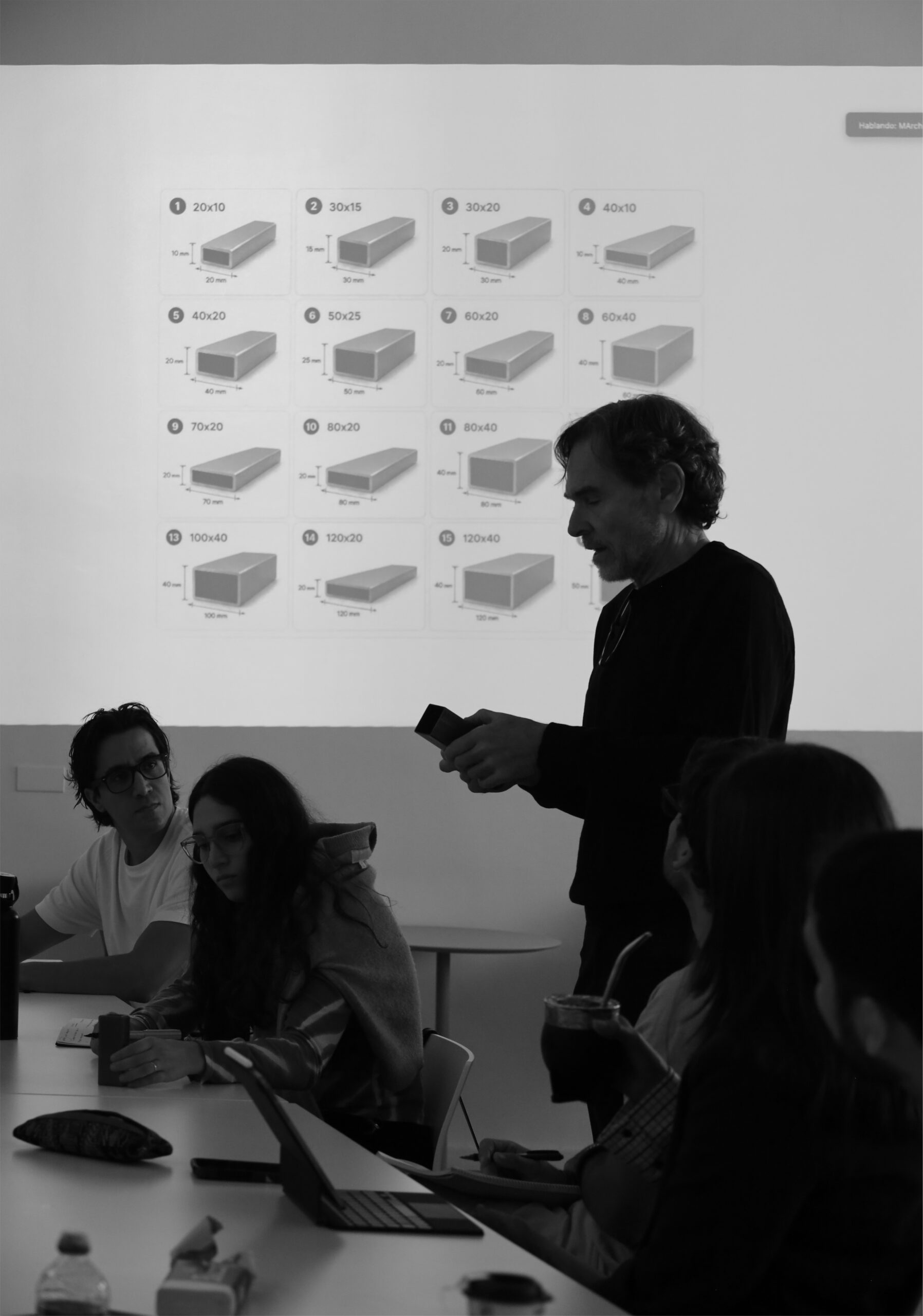
The prototyping session of the postgraduate MArch in industrialized architecture, taught by Andrés Alfaro Hofmann, has offered an integral and technical vision on the contemporary experimentation and application of materials in architecture.
Throughout the class, three major families of materials—metal, wood, and stone—have been analyzed, combining the theoretical methodology with the study of practical cases developed by the study of Fran Silvestre Architects. This approach has allowed understanding how rapid prototyping and the deep knowledge of the properties of each element are key to construction innovation.
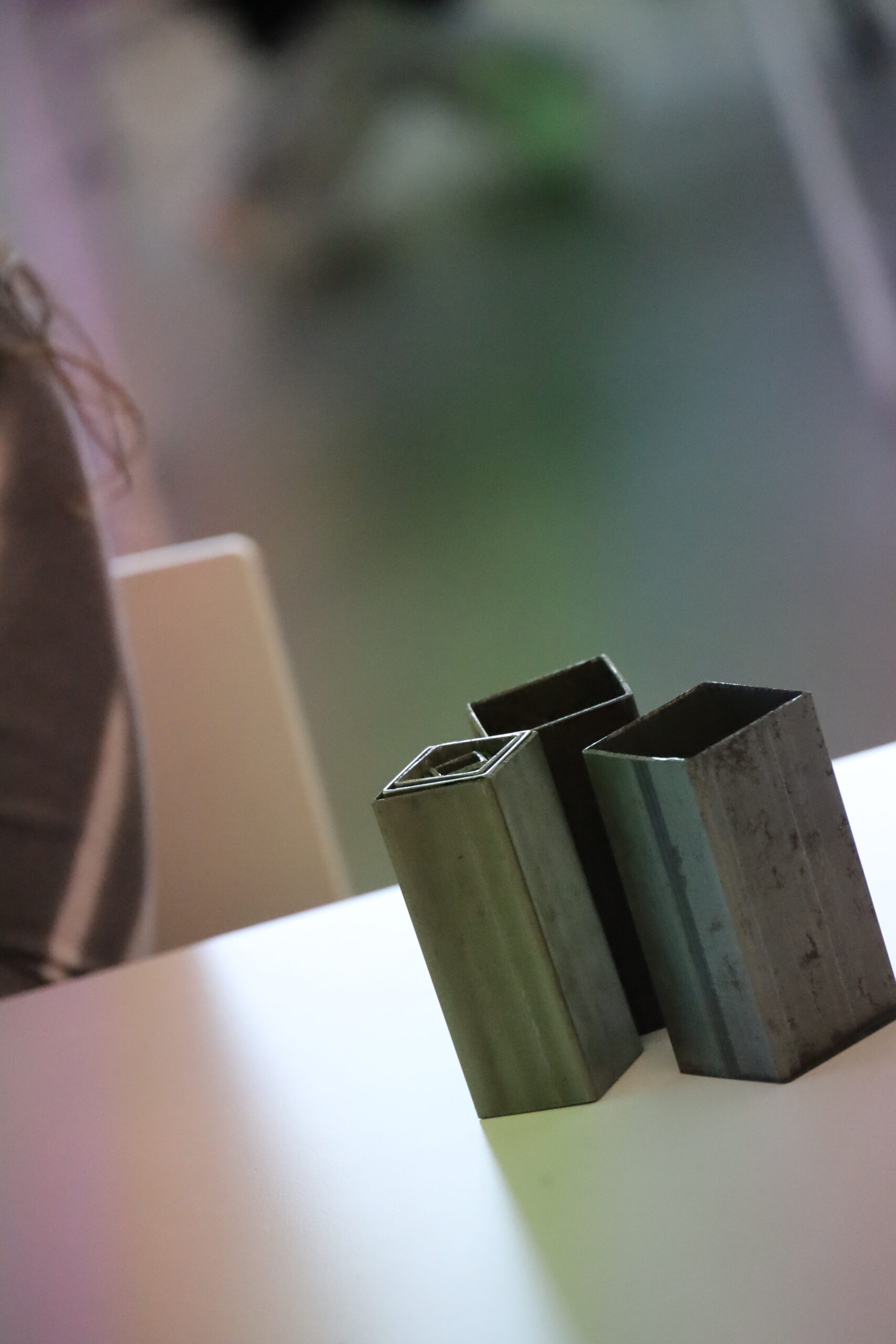
Regarding metal, its structural and surface versatility in industrialization has been addressed. Alfaro Hofmann has explained the usual techniques of shaping, precision cutting and assembly of metal profiles and sheets, as well as their behavior under thermal shaping or anodization. The study’s research has focused on how to reduce construction tolerances and optimize lightness and rigidity in facade elements or unique carpentry, allowing the integration of metal as a standardized high-performance component.
In the block dedicated to wood, the session has reviewed the transition from the use of battens and solid wood to derived boards and industrialized composites. Based on the analyzed samples, options such as agglomerated boards, fiber boards (MDF), plywood and battened boards or with composite cores have been differentiated. The focus has been on how these formats stabilize the natural deformations of the material, enabling precise CNC machining and modular solutions for cladding and interior design in the studio’s projects.
The analysis of natural stone has highlighted the innovative technologies for its lightening and application in large formats without drastically increasing the weight of the structure. Through advanced solutions such as the Stonesize® compositions, it has been shown how thin sheets of natural stone (5 mm to 7 mm) are combined with fiberglass sheets and honeycomb-type aluminum cores of 20 mm (StoneSize® SSHF) or with ultracompressed panels (StoneSize® SSUC). These sandwich compositions allow the manipulation of marbles, travertine and limestone stones with high structural resistance and versatility of industrialized assembly.
The class has emphasized the importance of the prototyping phase within the architectural design process. The presentation of real case studies from Fran Silvestre Arquitectos has demonstrated that empirical research in the workshop, combined with continuous dialogue with the manufacturing industry, transforms technical detail into a conceptual tool. In this way, the MArch students have been able to verify how dimensional control and the correct selection of material combinations translate into clean lines architectures, construction efficiency and technical precision.


MArch Valencia. Arquitectura y Diseño
© 2026 MArch Valencia. Arquitectura y Diseño
Privacy policy | Cookies policy | Terms of use